
Are Space Constraints Ruining Your Signal Integrity? How Do Waveguide Bends Function in Complex Microwave Systems?
Overcome RF space constraints without losing signal integrity. Learn the function of E-Bends, H-Bends, and Mitered waveguide bends for complex microwave routing.
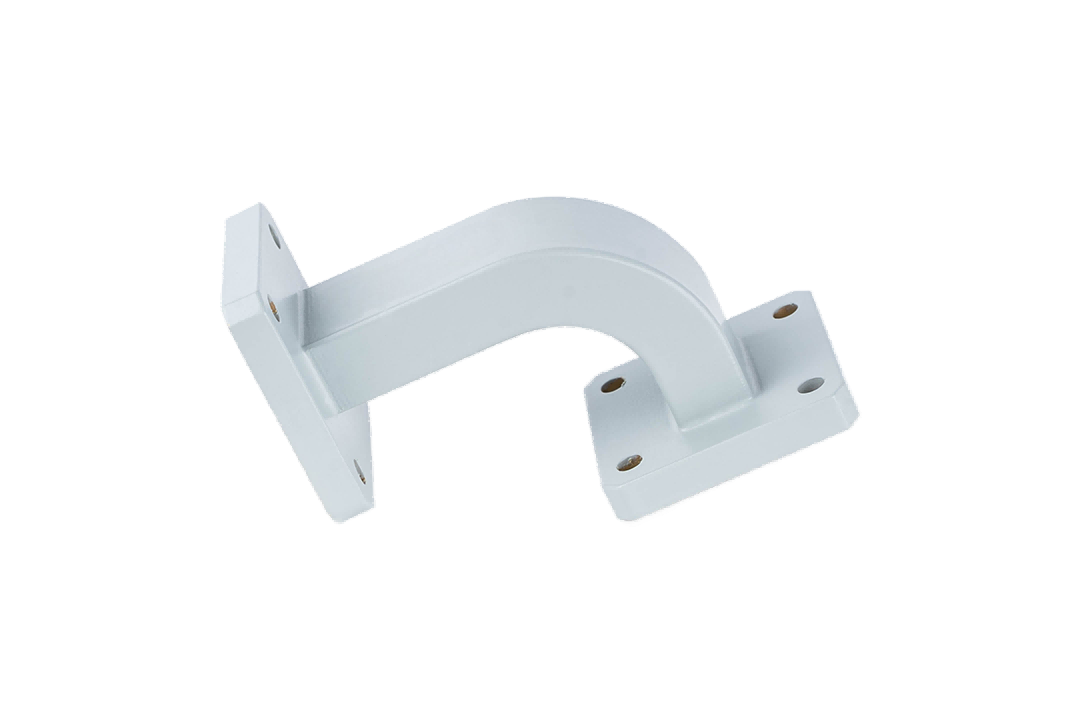
Are Space Constraints Ruining Your Signal Integrity? How Do Waveguide Bends Function in Complex Microwave Systems?
In an ideal world, every RF and microwave system would be laid out in a perfectly straight line. The transmitter, the transmission line, and the antenna would align flawlessly, allowing electromagnetic energy to flow with zero physical obstruction.
However, system integrators and RF engineers do not work in an ideal world. They work inside the cramped payloads of Unmanned Aerial Vehicles (UAVs), the densely packed equipment racks of 5G mmWave base stations, and the complex, multi-level architectures of commercial satellite earth stations. In these environments, mechanical space is a luxury, and transmission lines must navigate tight corners, bypass other equipment, and route signals through labyrinthine enclosures.
Because rigid waveguides cannot simply be bent like flexible coaxial cables, engineers must rely on a highly specialized, precision-machined component: the Waveguide Bend.
While they may appear to be simple "elbow joints," waveguide bends are actually complex electromagnetic structures. If a bend is poorly manufactured, it will distort the electromagnetic field, cause severe impedance mismatches, and generate reflected power (high VSWR) that can permanently damage your High-Power Amplifiers (HPAs).
In this comprehensive guide, we will explore the critical function of waveguide bends, decode the physics behind E-Bends and H-Bends, and demonstrate how partnering with an agile, industrial-grade manufacturer can solve your most complex RF routing challenges without delaying your project timelines.
The Physics of Routing: Why You Can't Just "Bend a Pipe"
To understand the function of a waveguide bend, we must first understand how energy travels inside a waveguide. A rectangular waveguide confines and guides electromagnetic waves through a hollow metallic tube. The dimensions of this tube (the broad wall 'a' and the narrow wall 'b') are mathematically calculated to support specific frequency bands (such as X-band, Ku-band, or Ka-band).
If you were to take a standard metal pipe and bend it over your knee, the cross-section at the apex of the bend would flatten and deform. If this happens in a waveguide, the internal dimensions change. This dimensional change instantly alters the characteristic impedance of the transmission line.
When an electromagnetic wave hits this impedance mismatch, a portion of the energy reflects backward. This creates a Voltage Standing Wave Ratio (VSWR) spike. In high-power systems like defense radar or EMC testing chambers, this reflected energy travels back into the transmitter, causing thermal overload and catastrophic amplifier failure.
The primary function of a high-quality waveguide bend is to change the direction of the signal path while maintaining the exact internal cross-sectional dimensions throughout the entire curve. This requires advanced CNC machining, precision mandrel bending, or electroforming. A premium bend ensures that the electromagnetic wave glides around the corner with near-zero insertion loss and absolute phase stability.
Decoding the Terminology: E-Bends vs. H-Bends
When routing a waveguide system, you must specify the plane in which the bend occurs. Because electromagnetic waves consist of an Electric field (E-field) and a Magnetic field (H-field) perpendicular to each other, waveguide bends are categorized into two distinct types:
1. The E-Bend (Electric Plane Bend)
An E-bend changes the direction of the waveguide in the plane of the Electric field. In a standard rectangular waveguide operating in the dominant TE10 mode, the E-field lines run parallel to the narrow wall (dimension 'b').
Therefore, an E-bend curves along the broad wall, causing the narrow wall to bend. If you look at an E-bend, the cross-section remains rectangular, but the bend distorts the electric field lines as they travel around the corner. To compensate for this and prevent reflections, the radius of the bend must be carefully calculated—typically greater than two wavelengths (2λ) for a swept bend.
2. The H-Bend (Magnetic Plane Bend)
An H-bend changes the direction of the waveguide in the plane of the Magnetic field. The H-field lines run parallel to the broad wall (dimension 'a').
Therefore, an H-bend curves along the narrow wall, causing the broad wall to bend. Because the broad wall determines the cutoff frequency of the waveguide, H-bends are particularly sensitive to dimensional inaccuracies. A poorly machined H-bend can inadvertently choke off the lower frequencies of your operating band.
A quick way to remember the difference in the field: If you lay a rectangular waveguide flat on a table (broad wall facing up) and bend it left or right, that is an H-Bend. If you bend it up toward the ceiling or down toward the floor, that is an E-Bend.
Mechanical Configurations: Swept Bends vs. Mitered Bends
Beyond the E-plane and H-plane, engineers must also choose the mechanical style of the bend based on their spatial constraints and power handling requirements.
| Bend Configuration | Design Characteristics | Primary Application & Benefits |
|---|---|---|
| Swept Bend (Radius Bend) | A smooth, continuous, gradual curve (typically 90 degrees, 45 degrees, or custom angles). | Maximum Signal Integrity. Offers the lowest insertion loss and highest power handling. Ideal for Satcom earth stations, medical LINACs, and high-power radar where space allows for a gradual radius. |
| Mitered Bend (Right-Angle Bend) | A sharp, hard 90-degree corner. The outer corner is "mitered" (cut at a precise angle) to reflect the wave around the corner. | Ultra-Compact Routing. Used when mechanical space is severely restricted, such as inside UAV payloads, compact 5G transceivers, or dense EMC test racks. Slightly lower power handling than swept bends. |
Critical Industry Applications for Waveguide Bends
Waveguide bends are the critical connective tissue in any complex RF architecture. They are indispensable in:
- Satellite Communications (Satcom): Routing high-power uplink signals from indoor amplifiers, through complex building conduits, and up to the outdoor antenna feed horn without losing signal strength.
- 5G mmWave Telecommunications: Navigating the densely packed internal enclosures of high-frequency base stations where traditional coaxial cables suffer from unacceptable dielectric loss.
- EMC / EMI Testing Chambers: Routing pure, isolated RF signals from the control room into the anechoic chamber, often requiring multiple E-bends and H-bends to navigate the chamber's shielded walls.
- Defense and Aerospace: Fitting high-power radar transmission lines into the highly restricted, irregular spaces of aircraft radomes and naval vessels.
Overcoming Supply Chain Fragility with Agile Manufacturing
Designing a flawless RF routing architecture is a significant engineering achievement. However, the true challenge for system integrators today is securing these custom routing components on time to meet strict project deadlines.
For decades, the RF industry has relied on a handful of legacy Western manufacturers. While their quality is established, their rigid, bureaucratic supply chains often result in agonizing 16 to 24-week lead times. When you are deploying a new 5G infrastructure or upgrading a critical defense radar, waiting half a year for a specific 90-degree H-bend is unacceptable. It stalls projects, frustrates stakeholders, and delays your time-to-market.
You need a partner who matches your engineering rigor with manufacturing agility.
Conclusion: Navigate Complexity with Confidence
In the high-stakes world of microwave engineering, a waveguide bend is far more than a simple corner; it is a highly engineered component critical to maintaining the impedance and phase stability of your entire RF architecture. By understanding the physics of E-plane and H-plane routing, and by selecting the appropriate swept or mitered configurations, engineers can overcome severe space constraints without sacrificing signal integrity.
By prioritizing critical specifications like internal surface finish and VSWR, and by partnering with an agile manufacturer dedicated to industrial-grade excellence, you can build a resilient, high-performance RF system that is delivered on time, every time.
Ready to Solve Your Complex RF Routing Challenges?
Don't let mechanical space constraints compromise your signal integrity, and don't let rigid supply chains delay your project launches. Whether you need precision Swept E-Bends for a high-power Satcom uplink or ultra-compact Mitered H-Bends for a UAV payload, AO Microwave delivers the reliability and responsiveness you need.
Contact our engineering team today for a technical consultation, and let us help you build a resilient, high-performance RF routing architecture.