
Are Terminology Mix-Ups Delaying Your Project? Waveguide to Coaxial Adapter vs Waveguide Transition: What’s the Difference?
Waveguide adapter vs transition: What's the difference? Avoid RF impedance mismatches and discover custom, precision solutions up to 110 GHz for your system.
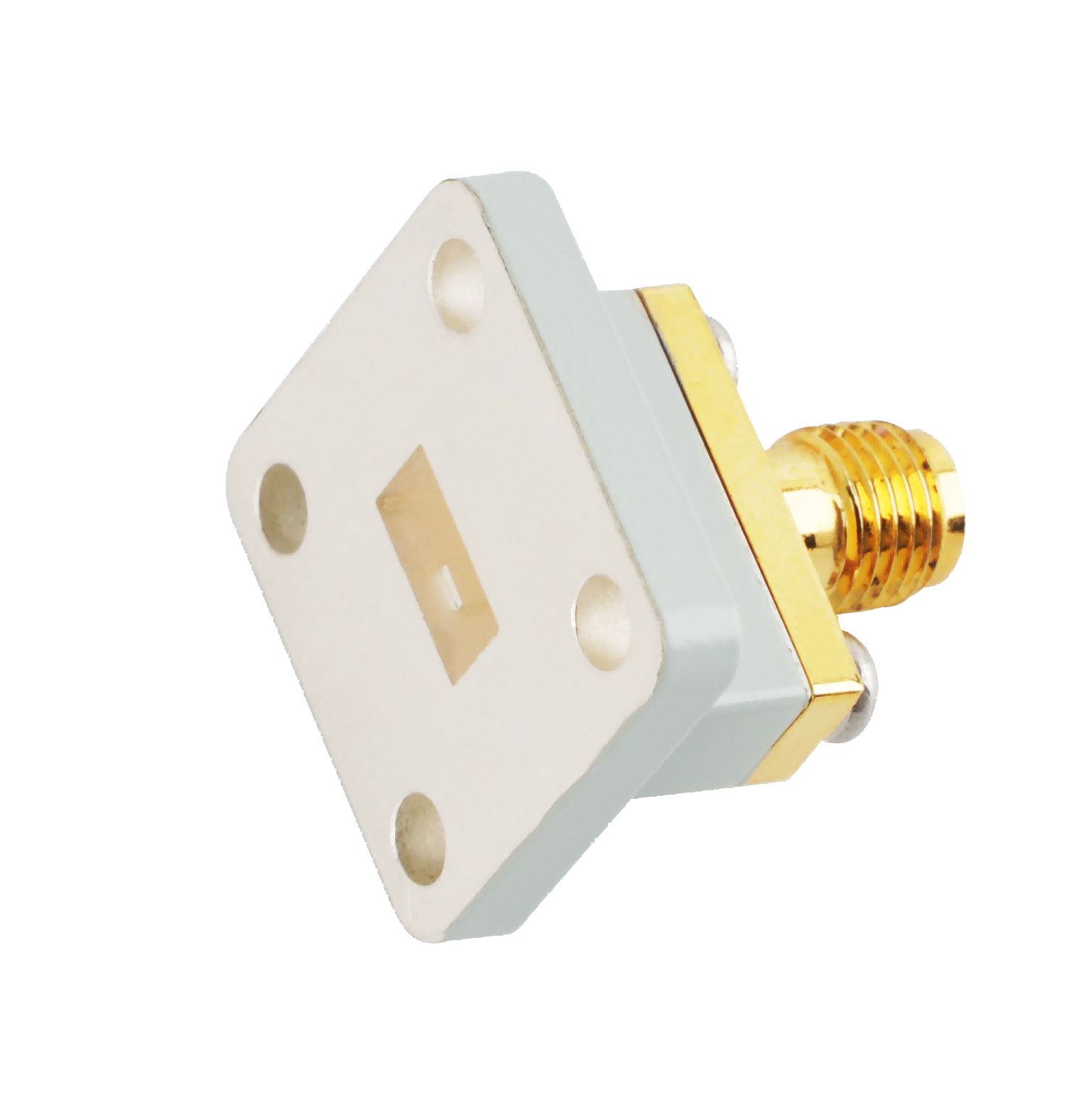
Are Terminology Mix-Ups Delaying Your Project? Waveguide to Coaxial Adapter vs Waveguide Transition: What’s the Difference?
In the fast-paced world of RF and microwave engineering, precision is everything. Whether you are designing a 5G mmWave backhaul, upgrading a commercial satellite earth station, or configuring a highly sensitive EMC testing laboratory, every component in your transmission line must be specified with absolute accuracy.
However, when it comes to routing signals between different parts of a system, a common terminology mix-up frequently causes procurement delays and architectural flaws: confusing a Waveguide to Coaxial Adapter with a Waveguide Transition.
While both components are broadly used to "transition" a signal from one state to another, their internal physics, mechanical structures, and engineering applications are entirely different. Specifying the wrong component will not only halt your system integration but can also lead to severe impedance mismatches, catastrophic Voltage Standing Wave Ratio (VSWR) spikes, and degraded signal integrity.
If you are asking, "Waveguide to Coaxial Adapter vs Waveguide Transition: What’s the difference?", this guide is designed for you. We will demystify the electromagnetic physics behind both components, clarify their specific industry applications, and demonstrate how partnering with an agile, industrial-grade manufacturer can streamline your procurement and protect your project timelines.
The Core Difference: Changing the Medium vs. Changing the Dimension
To clear up the confusion immediately, here is the fundamental distinction between the two components:
- A Waveguide to Coaxial Adapter changes the transmission medium. It converts a signal traveling through a hollow metal waveguide into a signal traveling through a coaxial cable (or vice versa).
- A Waveguide Transition changes the physical dimensions or shape of the waveguide. The signal remains entirely within the hollow waveguide medium, but moves from one size (e.g., WR-90) to another (e.g., WR-75), or from a rectangular shape to a circular shape.
Deep Dive: The Waveguide to Coaxial Adapter
The Waveguide to Coaxial Adapter is an electromagnetic bridge. It solves the complex engineering challenge of converting the Transverse Electric (TE10) mode of a waveguide into the Transverse Electromagnetic (TEM) mode of a coaxial cable.
Inside the adapter, the center pin of the coaxial connector extends into the waveguide cavity, acting as a precisely tuned antenna (probe). This probe radiates or receives the electric field, while a shorting plate reflects the energy forward to ensure maximum power transfer.
Primary Applications:
- Test & Measurement: Connecting rigid waveguide components (like horn antennas) to the coaxial ports of Vector Network Analyzers (VNAs) or spectrum analyzers.
- System Integration: Bridging the gap between a coaxial transceiver module and a high-power waveguide antenna feed in 5G and Satcom systems.
The AO Microwave Advantage (Up to 110 GHz):
Because the coaxial connector is often the bottleneck for frequency and power, AO Microwave manufactures adapters tailored to your exact requirements. We support frequencies from 0.32 GHz all the way up to 110 GHz (W-band), offering a full spectrum of precision connectors:
- High Power: N-Type and 7/16 DIN for radar and EMC testing.
- High Frequency: SMA, 2.92mm, 2.4mm, 1.85mm, and ultra-precision 1.0mm connectors for cutting-edge millimeter-wave research and automotive radar.
Deep Dive: The Waveguide Transition
A Waveguide Transition (often called a Waveguide Taper or Step Transition) is purely a mechanical and electromagnetic reshaping tool. It does not involve coaxial cables or probes. Instead, it smoothly tapers the internal dimensions of the waveguide to match a different size or shape.
Because waveguide impedance is directly tied to its physical dimensions, abruptly bolting a large waveguide to a small one would cause a massive VSWR spike. A transition solves this by gradually tapering the walls over a specific length (usually multiple wavelengths), ensuring a smooth impedance transformation and near-zero reflection.
Primary Applications:
- Rectangular to Rectangular (Step Transitions): Connecting components of different frequency bands. For example, transitioning from a WR-112 waveguide run to a WR-90 component in a wideband radar system.
- Rectangular to Circular Transitions: Essential in satellite communications. They convert the linear polarization of a rectangular waveguide into the circular polarization required by conical horn antennas or rotary joints.
The internal taper of a waveguide transition must be flawlessly smooth. Any CNC machining chatter marks, steps, or rough surface finishes inside the transition will disrupt the electromagnetic field, causing insertion loss and phase distortion. Premium transitions require advanced electroforming or high-precision milling to guarantee absolute signal integrity.
Head-to-Head Comparison Guide
To help procurement teams and system integrators make quick, accurate decisions, here is a side-by-side comparison:
| Feature | Waveguide to Coaxial Adapter | Waveguide Transition |
|---|---|---|
| Primary Function | Converts transmission medium (Waveguide ↔ Coax). | Changes waveguide size or shape (Waveguide ↔ Waveguide). |
| Electromagnetic Mode | Mode Conversion (TE10 ↔ TEM). | Mode Preservation or Transformation (e.g., TE10 ↔ TE11). |
| Physical Interfaces | One Waveguide Flange + One Coaxial Connector. | Two Waveguide Flanges (of different sizes/shapes). |
| Power Handling | Limited by the coaxial connector (e.g., SMA melts at high CW power). | Extremely High (Limited only by the smaller waveguide size). |
| Typical Use Case | Connecting a VNA to a waveguide horn antenna. | Connecting a WR-90 transmitter to a WR-75 antenna feed. |
Overcoming Supply Chain Fragility with Agile Manufacturing
Understanding the technical difference between an adapter and a transition is only the first step. The true challenge for system integrators today is securing these precision components on time to meet strict project deadlines.
For decades, the RF industry has relied on a handful of legacy Western manufacturers. While their quality is established, their rigid, bureaucratic supply chains often result in agonizing 16 to 24-week lead times. When you are deploying a new satellite earth station or setting up a critical EMC test bench, waiting half a year for a custom transition or a 110 GHz adapter is unacceptable. It stalls projects, frustrates stakeholders, and delays your time-to-market.
You need a partner who matches your engineering rigor with manufacturing agility.
We believe that your supplier should be a strategic partner, not a bottleneck. As a professional manufacturer, AO Microwave offers deep customization capabilities for both Waveguide to Coaxial Adapters and Waveguide Transitions. Whether you need a unique flange-to-connector combination, a custom taper length for specific VSWR requirements, or ultra-high-frequency support up to 110 GHz, our engineering team can design and manufacture the exact component you need. Combined with our agile manufacturing process, we deliver these tailored, industrial-grade solutions rapidly, ensuring your project stays on schedule without compromising on signal integrity.
Conclusion: Specify with Confidence, Integrate with Precision
In the high-stakes world of microwave engineering, terminology matters. By clearly understanding the difference between a Waveguide to Coaxial Adapter (changing the medium) and a Waveguide Transition (changing the dimension), you can eliminate procurement errors, prevent impedance mismatches, and ensure flawless signal routing across your entire architecture.
By partnering with a manufacturer that offers an extensive frequency range, diverse connector and flange options, and robust customization capabilities, you empower your engineering team to innovate without limitations.
Ready to Optimize Your RF Routing Architecture?
Don't let terminology mix-ups or rigid supply chains delay your project launches. Whether you need precision 1.0mm Waveguide to Coaxial Adapters for a 110 GHz research project, or custom Rectangular-to-Circular Transitions for a Satcom antenna feed, AO Microwave has the expertise and manufacturing agility to deliver exactly what you need.
Contact our engineering team today to discuss your specific requirements, and let us provide the perfect tailored solution for your RF system.