
Jun 26, 2026News & Insights
How to Extend the Lifespan of a Waveguide Switch?
In microwave and millimeter-wave systems , a waveguide switch is a critical component responsible for routing RF signals between different transmission paths. These switches are widely used in rad
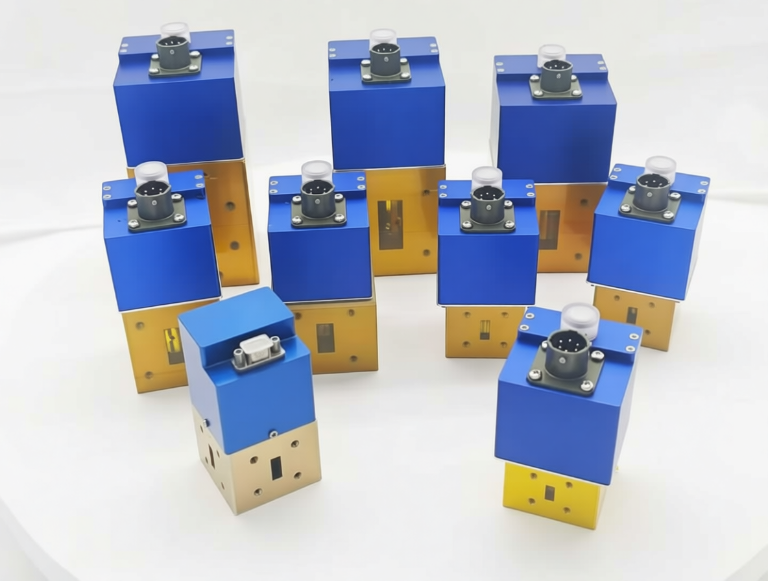
In microwave and millimeter-wave systems, a waveguide switch is a critical component responsible for routing RF signals between different transmission paths. These switches are widely used in radar systems, satellite communications, and RF test setups, where reliability and long-term performance are essential.
However, like all mechanical and electromechanical devices, waveguide switches are subject to wear over time. Improper usage, environmental exposure, and incorrect installation can significantly reduce their lifespan.
The good news is that with proper design selection, installation practices, and maintenance, the lifespan of a microwave waveguide switch can be extended significantly—often reaching hundreds of thousands to millions of switching cycles depending on the type.
In this article, we will explore practical and proven ways to extend the lifespan of RF waveguide switches.
Understand the Typical Lifespan of a Waveguide Switch
Before discussing optimization methods, it is important to understand typical lifespan benchmarks.
Different types of waveguide switches have different durability levels:
Switch Type | Typical Lifespan |
|---|---|
Manual waveguide switch | 50,000 – 100,000 cycles |
Electromechanical switch | 500,000 – 2,000,000 cycles |
PIN diode waveguide switch | Up to billions of cycles |
In addition to switching cycles, RF performance stability is also critical. For example:
- Insertion loss drift is typically < 0.1 dB over lifecycle for high-quality switches
- Isolation degradation should remain within 1–3 dB variation
- Mechanical repeatability tolerance is often within ±0.01 mm
High-quality products manufactured by companies such as AO Microwave are designed to meet these reliability standards.
Use Proper Installation Torque
One of the most overlooked factors affecting waveguide switch lifespan is torque control during installation.
Improper torque can lead to:
- flange deformation
- uneven pressure distribution
- RF leakage
- mechanical stress on internal switching mechanisms
Recommended Practice
- Use calibrated torque tools
- Apply uniform torque across all screws
- Follow manufacturer torque specifications (typically 0.5–1.5 N·m depending on flange size)
Correct torque ensures stable mechanical alignment and reduces long-term wear.
Minimize Unnecessary Switching Cycles
Each switching operation introduces mechanical wear, especially in electromechanical waveguide switches.
Key Insight
Reducing unnecessary switching can significantly extend lifespan.
Best Practices
- Avoid frequent switching in non-critical operations
- Use control logic to minimize redundant switching
- Select PIN diode switches for high-speed, high-frequency switching environments
For systems requiring continuous switching, choosing the right technology is essential.
Maintain a Clean and Controlled Environment
Environmental conditions play a major role in waveguide switch reliability.
Common Environmental Risks
- dust contamination
- humidity and condensation
- temperature fluctuations
- corrosion
Recommended Conditions
- Temperature: -10°C to +50°C (typical operating range)
- Humidity: < 70% RH (non-condensing)
- Clean, dust-free environment
In harsh environments such as outdoor radar or satellite installations, proper sealing and protective enclosures are critical.
Ensure Proper Waveguide Alignment
Misalignment between waveguide flanges is a major cause of premature failure.
Even a small alignment error can cause:
- increased insertion loss
- RF leakage
- mechanical stress on the switch
Best Practices
- Ensure flat and clean flange surfaces
- Avoid forcing connections
- Use alignment pins where applicable
Precision machining and strict tolerance control—such as those implemented by AO Microwave—help minimize alignment issues.
Regular Inspection and Preventive Maintenance
Preventive maintenance can significantly extend the lifespan of a microwave waveguide switch.
Inspection Checklist
- Check flange surfaces for wear or damage
- Inspect screws and fastening conditions
- Verify switching smoothness
- Monitor RF performance (insertion loss and isolation)
Recommended Maintenance Interval
- Light use: every 6–12 months
- Heavy use: every 3–6 months
Early detection of issues can prevent costly failures.
Avoid Overloading RF Power
Waveguide switches are designed for specific power handling limits.
Exceeding these limits can cause:
- overheating
- arcing inside the waveguide
- permanent damage to internal components
Key Recommendation
Always operate within rated power levels and include safety margins when designing RF systems.
Choose High-Quality Waveguide Switches
Not all waveguide switches are built to the same standard.
Key quality factors include:
- precision machining
- material quality
- surface finishing
- mechanical durability
- RF performance stability
Reliable manufacturers such as AO Microwave design waveguide switches with strict quality control to ensure long service life in demanding microwave applications.
Conclusion
Extending the lifespan of a waveguide switch requires a combination of proper installation, controlled operation, and regular maintenance.
By focusing on key factors such as torque control, environmental protection, switching frequency, alignment, and power handling, engineers can significantly improve the durability and reliability of microwave switching systems.