
Waveguide Coupler vs Power Divider: Which Component Does Your RF System Actually Need?
Waveguide coupler vs power divider: what is the difference? Learn when to use a splitter for RF distribution and a coupler for VSWR monitoring to protect your system.
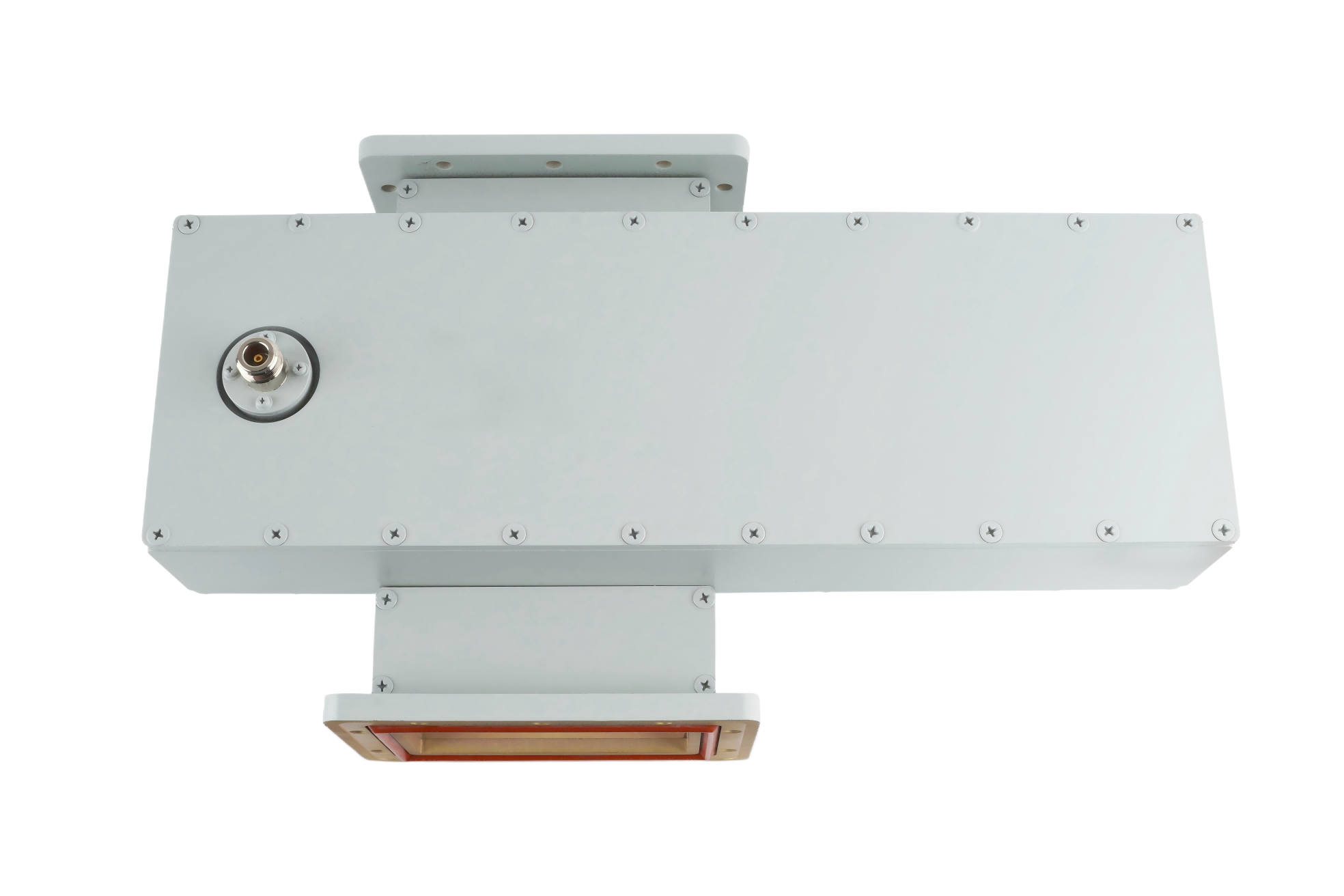
Waveguide Coupler vs Power Divider: Which Component Does Your RF System Actually Need?
If you are an RF engineer designing a new 5G mmWave base station, or a procurement manager sourcing components for a satellite earth station, you are constantly dealing with the challenge of managing electromagnetic energy. At some point in your system architecture, you will need to route, split, or monitor your high-frequency signals.
This is where one of the most common points of confusion in the RF industry arises: What is the difference between a waveguide coupler and a waveguide power divider?
On a schematic diagram, they might look similar—both take an input signal and provide multiple outputs. However, their internal physics, primary functions, and real-world applications are entirely different. Specifying a power divider when you actually need a directional coupler will not only ruin your system's performance but could also lead to catastrophic damage to your high-power amplifiers.
With the global RF and microwave components market projected to exceed $30 billion by 2028, optimizing your system architecture is more critical than ever. In this comprehensive guide, we will break down the "Waveguide Coupler vs. Power Divider" dilemma, explain exactly how each component works, and help you make the right, cost-effective choice for your next project.

While they may look similar externally, waveguide couplers and power dividers serve entirely different functions in RF signal management and power distribution.
The Short Answer: Distribution vs. Observation
If you are short on time, here is the fundamental difference between the two components:
- A Waveguide Power Divider is designed for Distribution. Its job is to take a main RF signal and split it into two (or more) equal or unequal parts to feed multiple antennas or subsystems. It is about sharing the power.
- A Waveguide Directional Coupler is designed for Observation. Its job is to sample a tiny, precise fraction of the main RF signal for measurement or monitoring purposes, without disrupting the main power flow. It is about inspecting the power.
Deep Dive: What is a Waveguide Power Divider?
A waveguide power divider (often referred to as a power splitter) is a passive microwave component that divides an input signal into multiple output signals. The most common type is the 3dB Power Divider, which splits the input power exactly in half (50/50) between two output ports.
How It Works
In waveguide technology, power division is typically achieved using specific geometric structures, such as a Y-Junction, a T-Junction, or a Magic Tee. When the electromagnetic wave enters the input port, the physical shape of the waveguide forces the wave to split and travel down the diverging paths.
A high-quality power divider must maintain excellent impedance matching at all ports to ensure that the split signals do not reflect back into the source. Furthermore, it must provide high isolation between the output ports, meaning a signal entering Output Port 1 should not leak into Output Port 2.
Primary Applications for Power Dividers
- Phased Array Antennas: In defense radar and 5G networks, a single high-power signal must be divided equally to feed dozens or hundreds of individual antenna elements.
- Amplifier Combining: Power dividers can be used in reverse as Power Combiners. If you have two 500W solid-state power amplifiers (SSPAs), you can use a combiner to merge their outputs into a single 1000W signal for satellite uplinks.
- Signal Routing: Distributing a common local oscillator (LO) signal to multiple receivers in a telecommunications rack.
Deep Dive: What is a Waveguide Directional Coupler?
A waveguide directional coupler is a passive device that couples a known, small amount of power from the main transmission line to a secondary port. Unlike a divider, which splits power significantly (e.g., half and half), a coupler only "siphons off" a tiny fraction—usually 1/100th (20dB), 1/1000th (30dB), or 1/10000th (40dB) of the main signal.
How It Works
A coupler consists of a main waveguide and a secondary (coupled) waveguide sharing a common wall. This wall has precisely machined holes (apertures). As the main signal passes by, a tiny amount of energy leaks through the holes into the secondary waveguide. Because of the precise spacing of these holes, the coupler is directional—it can distinguish between forward-traveling waves and reverse-traveling (reflected) waves.
Primary Applications for Directional Couplers
- VSWR Monitoring: Detecting reflected power caused by a damaged antenna or radome. If the reflected power spikes, the coupler sends a signal to shut down the amplifier before it burns out.
- Power Measurement: Providing a safe, low-power sample of a multi-kilowatt radar pulse so it can be measured by sensitive laboratory equipment in an EMC testing chamber.
- Signal Injection: Injecting a small test signal into a receiver line without disconnecting the main antenna feed.
Head-to-Head Comparison: Coupler vs. Divider
To help procurement teams and system integrators make quick, accurate decisions, here is a technical comparison of the two components:
| Feature | Waveguide Power Divider | Waveguide Directional Coupler |
|---|---|---|
| Primary Function | Splits power to feed multiple paths. | Samples power for monitoring/measurement. |
| Power Ratio | Usually equal (e.g., 3dB / 50-50 split). | Highly unequal (e.g., 30dB, 40dB, 50dB). |
| Insertion Loss (Main Line) | High (At least 3dB due to the split, plus minor material loss). | Extremely Low (Usually < 0.1dB, as the main signal is barely touched). |
| Directivity | Not applicable (focuses on Isolation between output ports). | Critical specification. High directivity is required to separate forward/reflected waves. |
| Typical Use Case | Feeding a phased array antenna system. | Protecting an amplifier by monitoring VSWR. |
The "Aerospace-Grade" Trap: How to Optimize Your BOM Costs
Whether your system requires a precision Magic Tee power divider or a high-directivity broadwall coupler, one of the biggest challenges procurement managers face is budget control. There is a pervasive myth in the RF industry that to guarantee system reliability, you must purchase ultra-expensive "aerospace-grade" components from legacy Western brands.
This is a costly misconception that drains project budgets.
Unless your component is being launched into deep space on a satellite, you likely do not need to pay the massive premium for aerospace-grade certification, deep-space outgassing tests, or exotic lightweight alloys. For the vast majority of terrestrial applications—including 5G base stations, commercial UAV ground links, EMC testing laboratories, and medical linear accelerators—high-quality industrial-grade RF components are the perfect solution.
How to Specify the Right Component for Your Project
When you are ready to order, ensure you have the following specifications clearly defined to avoid supply chain delays:
- Frequency Band: Specify the exact operating frequency (e.g., X-Band, 8.2 to 12.4 GHz) or the specific WR size (e.g., WR-90).
- For Dividers: Specify the split ratio (usually 2-way, 4-way, or 8-way) and the required isolation between output ports.
- For Couplers: Specify the Coupling Factor (e.g., 30dB or 40dB) and the required Directivity (e.g., >35dB for accurate VSWR monitoring).
- Flange Type: Ensure the flanges (e.g., Cover, Choke, CPRG) match your existing system architecture perfectly to prevent RF leakage.
Conclusion: Build a Smarter, More Efficient RF Architecture
Understanding the difference between a waveguide coupler and a power divider is fundamental to designing a safe, efficient, and high-performing RF system. Use a power divider when you need to distribute your signal to multiple destinations, and use a directional coupler when you need to monitor your system's health and protect your expensive amplifiers.
More importantly, optimizing your system doesn't have to mean blowing your budget. By partnering with a reliable manufacturer of industrial-grade RF components, you can achieve world-class performance while keeping your supply chain agile and cost-effective.
Ready to Optimize Your RF System Architecture?
Don't let confusing specifications or overpriced components delay your next project. Whether you need a precision Magic Tee power divider for a radar array or a high-directivity coupler for an EMC lab, AO Microwave has the industrial-grade solutions you need.
Contact our engineering sales team today for a technical consultation or a custom quote, and let us help you build a more reliable, cost-effective RF system.