
Jun 26, 2026News & Insights
What Is the Purpose of a Microwave Anechoic Chamber?
In RF engineering, antenna design, and microwave system development , measurement accuracy is essential. Even small electromagnetic reflections can significantly affect the results of antenna pattern
In RF engineering, antenna design, and microwave system development, measurement accuracy is essential. Even small electromagnetic reflections can significantly affect the results of antenna pattern measurements, radar system testing, or wireless communication evaluations.
To solve this problem, engineers use a specialized facility known as a microwave anechoic chamber.
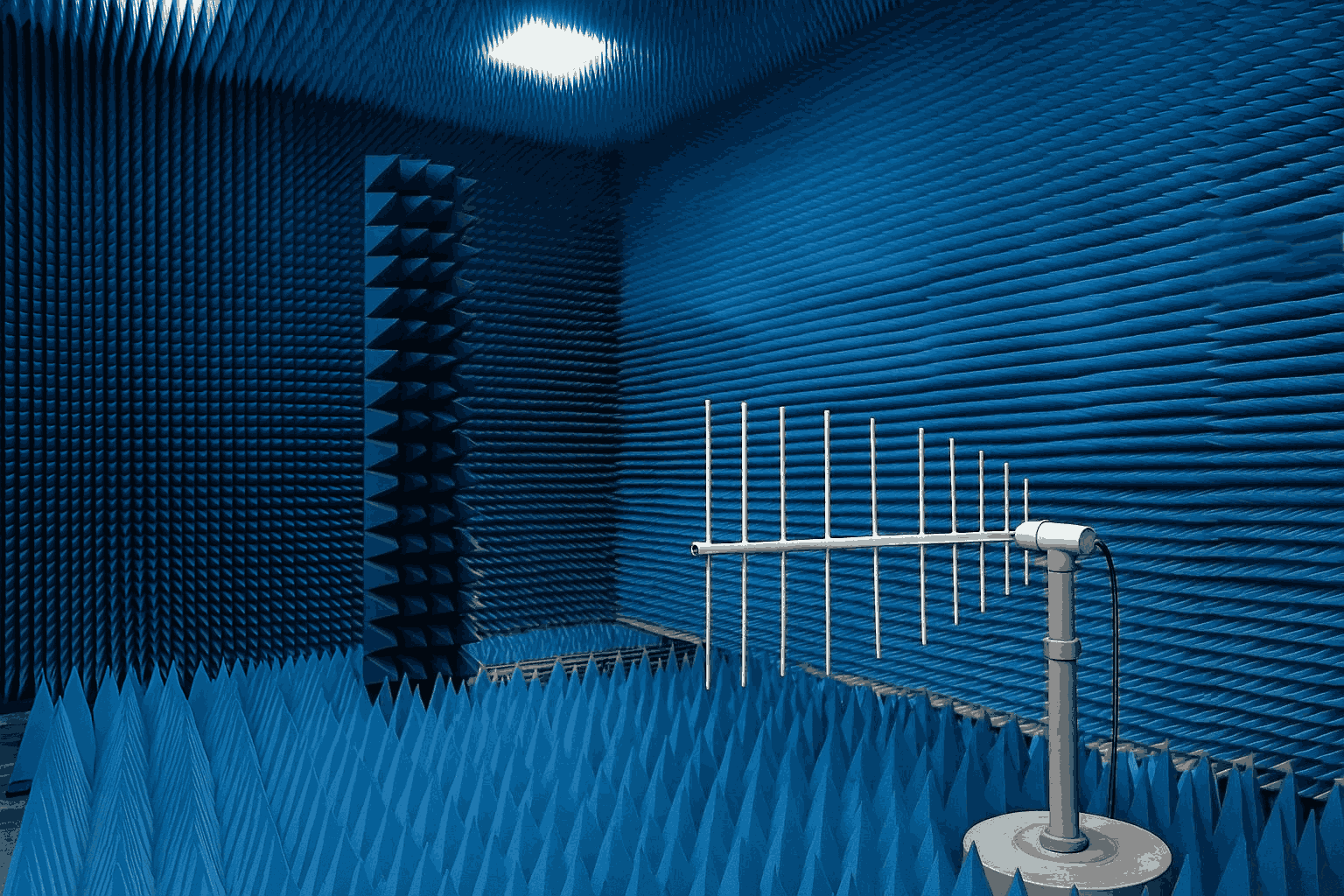
A microwave anechoic chamber is designed to eliminate electromagnetic reflections and external interference, creating an environment that closely simulates free-space conditions. This allows engineers to perform highly accurate RF testing, antenna measurements, microwave component validation, and EMC testing.
Today, microwave anechoic chambers play a critical role in industries such as:
- Satellite communications
- Aerospace and defense
- Automotive radar systems
- Wireless communication infrastructure
- Electromagnetic compatibility testing
Manufacturers of precision RF components, including AO Microwave, rely on these testing environments to validate the performance of high-frequency microwave hardware.
How Does a Microwave Anechoic Chamber Work?
A microwave anechoic chamber is essentially a shielded room designed to absorb electromagnetic energy rather than reflect it.
The interior surfaces—including the walls, ceiling, and sometimes the floor—are covered with RF absorbing materials, typically pyramidal absorbers made from carbon-loaded foam or ferrite materials.
These absorbers prevent microwave signals from reflecting back into the measurement area.
Instead of bouncing around the room, the electromagnetic waves are absorbed, which creates an environment that behaves like open free space.
This allows engineers to accurately measure:
- Antenna radiation patterns
- RF signal strength
- Microwave component performance
- Electromagnetic interference (EMI)
- Electromagnetic compatibility (EMC)
High-quality RF hardware—including waveguide assemblies, coaxial cable assemblies, RF adapters, and microwave connectors—is typically used to connect measurement instruments to the device under test.
Companies such as AO Microwave design precision microwave components to ensure minimal signal loss and maximum measurement accuracy in these testing environments.
Why Are Microwave Anechoic Chambers Important?
Without an anechoic chamber, microwave signals reflect from surrounding surfaces such as walls, equipment, and laboratory structures.
These reflections introduce multiple measurement problems:
- Signal distortion
- Multipath interference
- Incorrect radiation pattern measurements
- Reduced measurement repeatability
By eliminating reflections, a microwave anechoic chamber provides a controlled electromagnetic environment, allowing engineers to obtain reliable and repeatable measurement results.
This is particularly important for high-frequency applications above 10 GHz, where signal wavelengths become very small and reflections can significantly impact measurement accuracy.
Key Applications of Microwave Anechoic Chambers
Antenna Radiation Pattern Measurement
One of the most common uses of microwave anechoic chambers is antenna testing.
Engineers measure several important antenna parameters, including:
- Antenna gain
- Radiation pattern
- Beamwidth
- Side-lobe levels
- Polarization characteristics
These measurements are critical for antennas used in:
- Satellite communication systems
- 5G base stations
- radar systems
- wireless communication networks
Precise antenna measurements require stable signal transmission through high-performance RF cable assemblies and waveguide components, often provided by specialized manufacturers like AO Microwave.
RF and Microwave Component Testing
Microwave anechoic chambers are also used to test the performance of various RF and microwave components, including:
- Waveguide couplers
- Waveguide adapters
- RF cable assemblies
- Microwave filters
- RF connectors
- Antenna feeds
These components must perform reliably in high-frequency communication systems such as satellite ground stations, radar systems, and microwave communication links.
Testing inside an anechoic chamber ensures that measurements are not affected by environmental reflections.
EMC and EMI Testing
Another important application is electromagnetic compatibility testing (EMC).
Electronic devices must comply with strict international standards to ensure they:
- Do not generate excessive electromagnetic emissions
- Are resistant to external electromagnetic interference
Semi-anechoic chambers are often used for EMC and EMI testing in compliance with regulatory standards.
Automotive Radar Testing
Modern vehicles rely heavily on microwave radar systems for safety and automation.
Microwave anechoic chambers allow engineers to test:
- 24 GHz radar sensors
- 77 GHz automotive radar
- collision avoidance systems
- autonomous driving sensors
These measurements ensure radar sensors perform reliably in real-world conditions.
Types of Microwave Anechoic Chambers
Different testing applications require different chamber designs.
Fully Anechoic Chamber (FAC)
A fully anechoic chamber includes RF absorbers on all surfaces, including the floor.
This type of chamber is typically used for:
- high-precision antenna measurements
- satellite antenna testing
- microwave system validation
Semi-Anechoic Chamber (SAC)
A semi-anechoic chamber has a reflective floor and absorber-lined walls and ceiling.
It is commonly used for:
- EMC testing
- electronic device certification
- EMI measurements
Compact Antenna Test Range (CATR)
A compact antenna test range uses reflectors to simulate far-field conditions within a relatively small space.
This type of chamber is often used to test:
- large antennas
- satellite communication systems
- aerospace radar equipment
Equipment Used in Microwave Anechoic Chamber Testing
A typical microwave measurement system inside an anechoic chamber may include:
- Vector Network Analyzer (VNA)
- RF signal generator
- microwave power amplifiers
- antenna positioning systems
- microwave antennas
- precision RF interconnects
The signal path often includes waveguide components, RF adapters, and coaxial cable assemblies to maintain signal integrity throughout the measurement process.
Manufacturers such as AO Microwave provide high-performance microwave hardware designed for demanding RF testing environments.
How Anechoic Chambers Support Modern RF Technologies
As wireless technologies continue to evolve, the demand for accurate microwave measurements continues to grow.
Microwave anechoic chambers are now essential for testing technologies such as:
- 5G and future 6G communication systems
- satellite internet networks
- millimeter-wave radar
- autonomous vehicle sensors
- high-frequency microwave components
Accurate RF measurements help engineers develop more efficient communication systems, more reliable radar sensors, and more advanced microwave technologies.
Conclusion
A microwave anechoic chamber is a fundamental tool for accurate RF testing, antenna measurement, EMC testing, and microwave system development.
By eliminating electromagnetic reflections and external interference, it creates a controlled environment that simulates free-space conditions. This allows engineers to evaluate antennas, microwave components, radar systems, and wireless communication devices with high precision.
As industries continue to push the limits of high-frequency communication, radar technology, and satellite systems, microwave anechoic chambers will remain an essential part of modern RF engineering and microwave measurement infrastructure.
Companies such as AO Microwave support these advanced technologies by providing precision RF and microwave components used in high-performance testing and communication systems.