
Jun 26, 2026News & Insights
What's the Coaxial Suspension Line Filter?
A coaxial suspension line filter is a high-performance RF and microwave filter designed to deliver low insertion loss, high Q factor, and excellent frequency selectivity . It uses suspended condu
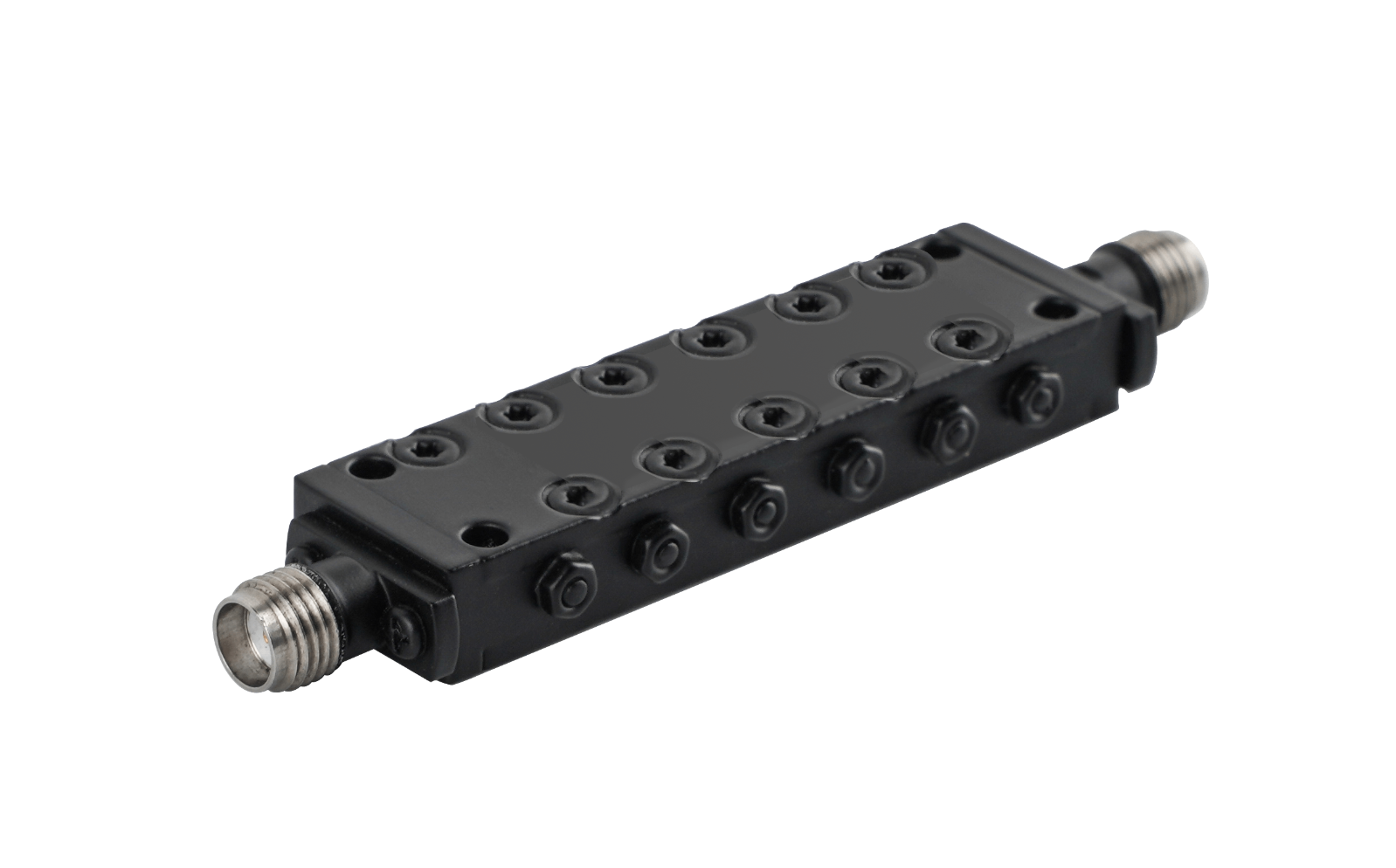
A coaxial suspension line filter is a high-performance RF and microwave filter designed to deliver low insertion loss, high Q factor, and excellent frequency selectivity. It uses suspended conductive elements inside a coaxial cavity, minimizing dielectric losses and enabling superior performance compared to traditional filter technologies.
This type of filter is widely used in satellite communications, radar systems, and RF test equipment, where signal integrity and efficiency are critical. Manufacturers such as AO Microwave develop coaxial suspension line filters to meet the growing demand for stable, low-loss filtering solutions in modern RF systems.
How Does a Coaxial Suspension Line Filter Work?
The operation of a coaxial suspension line filter is based on resonance and electromagnetic coupling.
Basic working process:
- The RF signal enters the coaxial cavity
- Suspended resonators create frequency-selective responses
- Desired frequencies pass through with minimal loss
- Unwanted signals are attenuated
Key structural advantage:
- Resonators are suspended in air or low-loss medium
- No direct dielectric contact → significantly reduced energy dissipation
Performance result:
- low insertion loss
- high Q factor
- stable frequency response across temperature
Why Use a Coaxial Suspension Line Filter?
Ultra-Low Insertion Loss
Typical insertion loss:
- 0.3 – 0.8 dB for high-quality designs
Lower insertion loss means:
- improved system efficiency
- reduced signal degradation
- better overall RF performance
High Q Factor for Sharp Selectivity
High Q factor enables:
- steep filter skirts
- strong adjacent channel rejection
- cleaner signal transmission
This is especially important in crowded spectrum environments.
High Power Handling Capability
These filters can handle:
- tens to hundreds of watts
- scalable for high-power RF systems
Ideal for:
- radar transmitters
- satellite uplink systems
Excellent Thermal and Frequency Stability
Due to minimal dielectric influence:
- reduced thermal drift
- stable long-term operation
- consistent performance across environments
Coaxial Suspension Line Filter vs Other RF Filters
Filter Type | Insertion Loss | Q Factor | Power Handling | Size |
|---|---|---|---|---|
Coaxial Suspension Line | Very Low | Very High | High | Medium |
Microstrip Filter | Medium–High | Medium | Low | Compact |
Waveguide Filter | Very Low | Very High | Very High | Large |
Cavity Filter | Low | High | Medium–High | Medium |
Key Insight
If your application requires a balance of low loss, high selectivity, and manageable size, a coaxial suspension line filter is often the optimal choice.
How to Choose the Right Coaxial Suspension Line Filter
Selecting the correct filter is critical for system performance. Engineers should evaluate the following parameters:
1. Frequency Range
Ensure the filter fully covers your operating band:
- L, S, C, X, Ku, Ka bands
- or custom-defined frequency ranges
2. Insertion Loss
Recommended targets:
- High-performance systems: ≤ 0.5 dB
- Standard systems: ≤ 1.0 dB
3. Bandwidth
- Narrowband → higher selectivity
- Wideband → broader signal coverage
4. Rejection Level
Typical requirements:
- 40–60 dB for standard applications
- >80 dB for high-performance systems
5. Power Handling
Always match the filter to your system’s power level and include a 20–30% safety margin.
6. Mechanical Constraints
Consider:
- installation space
- weight limitations
- connector or interface type (SMA, N-type, waveguide)
Manufacturers such as AO Microwave offer customized designs to meet specific system requirements.
Engineering Selection Guide
Application | Recommended Filter Type | Key Priority |
|---|---|---|
RF Test Systems | Suspension Line | Low loss + stability |
Satellite Uplink | Suspension Line | Power + selectivity |
Compact Devices | Microstrip | Size |
High-Power Radar | Waveguide Filter | Power handling |
This table helps engineers quickly identify the most suitable filter type based on application needs.
Real-World Applications and Challenges
Satellite Communications
Challenges:
- signal interference
- link loss
Solution:
→ Use low-loss, high-Q filters to maintain signal integrity
Radar Systems
Challenges:
- high power operation
- frequency stability
Solution:
→ Suspension line filters ensure stable performance under demanding conditions
RF Test and Measurement
Challenges:
- measurement accuracy
- signal contamination
Solution:
→ High-selectivity filters improve test reliability
Solutions from AO Microwave are widely used in these environments to enhance RF performance.
Common Mistakes to Avoid
- Ignoring Q factor → poor selectivity
- Underestimating power requirements → overheating
- Choosing based on cost alone → reduced reliability
- Overlooking thermal effects → frequency drift
Why High-Quality Filters Matter
Investing in high-quality coaxial suspension line filters provides:
- lower system loss
- improved signal quality
- long-term stability
- reduced maintenance costs
AO Microwave designs precision RF filters with strict quality control to ensure reliable performance in demanding applications.
Request a Custom RF Filter Solution
Selecting the right filter is not always straightforward—especially for complex RF systems.
If your project involves:
- custom frequency ranges
- strict insertion loss requirements
- high power handling
- compact mechanical constraints
You may benefit from a custom coaxial suspension line filter solution.
Provide the following details to get expert support:
- Frequency range (GHz)
- Bandwidth
- Insertion loss target
- Rejection requirement
- Power level (W)
- Interface type (SMA, N, waveguide)
- Application (radar, satellite, test system, etc.)
The engineering team at AO Microwave can help you design a solution tailored to your exact RF system requirements.
Conclusion
A coaxial suspension line filter is a powerful solution for RF systems requiring low insertion loss, high Q factor, and excellent signal selectivity.
By carefully evaluating key parameters such as frequency range, bandwidth, rejection level, and power handling, engineers can significantly improve system performance.
For modern microwave applications, choosing the right filter is essential to achieving reliable and efficient signal processing.