
Why Are Coaxial Suspension Line Filters Used?
Why are coaxial suspension line filters used? Discover how air dielectrics provide ultra-low loss and high power handling for bandpass, low-pass, and high-pass RF filters.
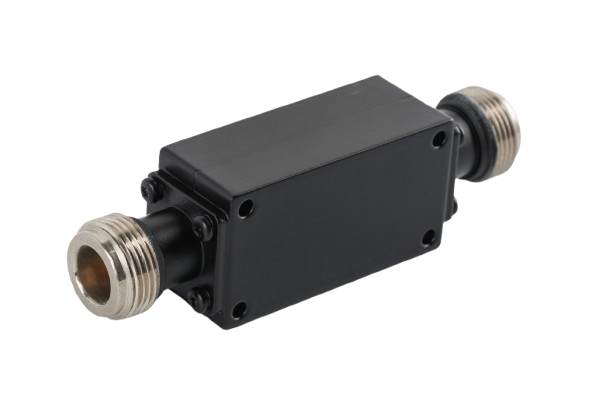
Why Are Coaxial Suspension Line Filters Used
In the demanding world of RF and microwave engineering, system integrators constantly face a frustrating architectural compromise. When designing a transmission line, do you choose the compact, broadband flexibility of a standard coaxial filter, or do you opt for the ultra-low loss and massive power handling of a bulky waveguide filter?
Standard coaxial filters, which rely on solid dielectrics like PTFE (Teflon), are excellent for saving space. However, at higher microwave frequencies, these solid dielectrics absorb electromagnetic energy, converting your precious RF signal into heat. This leads to unacceptable insertion loss and severe power limitations. On the other hand, waveguide filters use air as a dielectric, offering pristine signal integrity—but their massive physical footprint makes them impossible to integrate into dense enclosures like UAV payloads, compact radar modules, or modern 5G transceivers.
To bridge this gap, engineers rely on a brilliant hybrid technology: the Coaxial Suspension Line Filter.
By combining the mechanical convenience of coaxial connectors with the low-loss physics of an air dielectric, suspension line filters offer the ultimate "best of both worlds" solution. In this comprehensive guide, we will explore the physics behind suspended line technology, detail its three primary configurations, and demonstrate how this architecture can solve your most complex signal routing challenges.
The Physics of the Suspension Line: How Does It Work?
The genius of a coaxial suspension line filter lies in its internal geometry. In a traditional coaxial cable or filter, the center conductor is fully encased in a solid dielectric material to keep it centered within the outer shield.
In a suspension line (also known as suspended substrate or suspended stripline) architecture, the solid dielectric is almost entirely removed. The center conductor is physically "suspended" in the middle of the outer metallic housing, supported only by minimal, strategically placed dielectric standoffs or a very thin, low-loss substrate.
Because the primary dielectric medium surrounding the conductor is now air, the electromagnetic wave travels with near-zero resistance. This unique physical structure unlocks three massive engineering advantages:
- Ultra-Low Insertion Loss: By eliminating the solid Teflon/PTFE, dielectric absorption is virtually eradicated. This allows the filter to achieve insertion loss profiles that rival bulky waveguide filters, preserving your signal strength and improving receiver sensitivity.
- Superior Power Handling: Without a solid dielectric to melt or degrade under thermal stress, suspension line filters can handle significantly higher Continuous Wave (CW) and Peak power levels than standard coaxial filters.
- Broadband Performance: The suspended architecture suppresses the excitation of higher-order spurious modes, allowing these filters to operate cleanly over much wider frequency bands without unwanted resonances.
Suspending a conductor in mid-air while maintaining exact impedance matching is a severe manufacturing challenge. If the suspended element vibrates or shifts due to thermal expansion or mechanical shock, the filter's center frequency and VSWR will drift wildly. Premium suspension line filters require uncompromising CNC machining and advanced thermal-compensation designs to ensure rock-solid stability in harsh environments.
3 Critical Applications: Choosing the Right Suspension Line Filter
Because of their exceptional Q-factor (selectivity) and low loss, coaxial suspension line filters are deployed across various mission-critical applications. Depending on the specific interference you need to eliminate, engineers utilize three primary configurations:
1. Isolating the Signal: Bandpass Filters
In congested RF environments like satellite earth stations or 5G cell towers, receivers are constantly bombarded by out-of-band noise. When isolating a specific frequency band is critical, engineers rely on precision coaxial suspension line bandpass filters. These filters deliver incredibly steep rejection skirts—acting like a brick wall against adjacent channel interference—while allowing the desired passband energy to flow through with minimal insertion loss.
2. Suppressing Harmonics: Low-Pass Filters
High-Power Amplifiers (HPAs) are notorious for generating unwanted high-frequency harmonics alongside the fundamental signal. If these harmonics reach the antenna, they can cause severe regulatory compliance issues and degrade system efficiency. To protect the transmission path, coaxial suspension line low-pass filters provide a clean, low-loss route for the fundamental frequency while aggressively absorbing and attenuating the destructive high-frequency harmonics.
3. Eliminating Low-Frequency Noise: High-Pass Filters
Conversely, wideband receivers and radar systems are often plagued by low-frequency noise, ground-loop interference, or low-band jamming signals. In these scenarios, coaxial suspension line high-pass filters act as an impenetrable barrier. They block the low-frequency clutter, ensuring that only the pristine, high-frequency data reaches your sensitive signal processing equipment.
Overcoming Supply Chain Fragility with Agile Manufacturing
Designing a flawless RF architecture using suspension line technology is a significant engineering achievement. However, the true challenge for system integrators today is securing these precision components on time to meet strict project deadlines.
For decades, the RF industry has relied on a handful of legacy Western manufacturers. While their quality is established, their rigid, bureaucratic supply chains often result in agonizing 16 to 24-week lead times. When you are deploying a new radar system or upgrading a critical EMC test bench, waiting half a year for a custom filter is unacceptable. It stalls projects, frustrates stakeholders, and delays your time-to-market.
You need a partner who matches your engineering rigor with manufacturing agility.
We believe that your supplier should be a strategic partner, not a bottleneck. As a professional manufacturer, AO Microwave offers deep customization capabilities for Coaxial Suspension Line Filters. Whether you need a specific rejection profile, a custom mechanical footprint to fit a dense enclosure, or specialized connectors, our engineering team can design and manufacture the exact filter you need. Combined with our agile manufacturing process, we deliver these tailored, industrial-grade solutions rapidly, ensuring your project stays on schedule without compromising on signal integrity.
Conclusion: The Ultimate Bridge Between Size and Performance
In the high-stakes world of microwave engineering, you no longer have to choose between the compact size of a coaxial component and the pristine performance of a waveguide. By utilizing an air dielectric and a suspended conductor, Coaxial Suspension Line Filters provide the ultra-low insertion loss, high power handling, and steep selectivity required for modern RF architectures.
By understanding the physics of this technology and partnering with an agile manufacturer dedicated to industrial-grade excellence, you can protect your receivers, suppress harmful harmonics, and build a resilient RF system that is delivered on time, every time.
Ready to Optimize Your RF Filtering Architecture?
Don't let dielectric loss degrade your signal, and don't let rigid supply chains delay your project launches. Whether you need a steep-skirt Bandpass Filter for a Satcom receiver or a high-power Low-Pass Filter for a radar transmitter, AO Microwave has the expertise and manufacturing agility to deliver exactly what you need.
Contact our engineering team today to discuss your specific frequency and power requirements, and let us provide the perfect tailored filtering solution for your system.