
Are High-Power Signals Destroying Your RF Equipment? A Complete Guide to Waveguide Attenuators: Types and Applications
What are waveguide attenuators? Learn the differences between fixed, flap, and rotary vane types, their RF applications, and how to reduce your BOM costs.
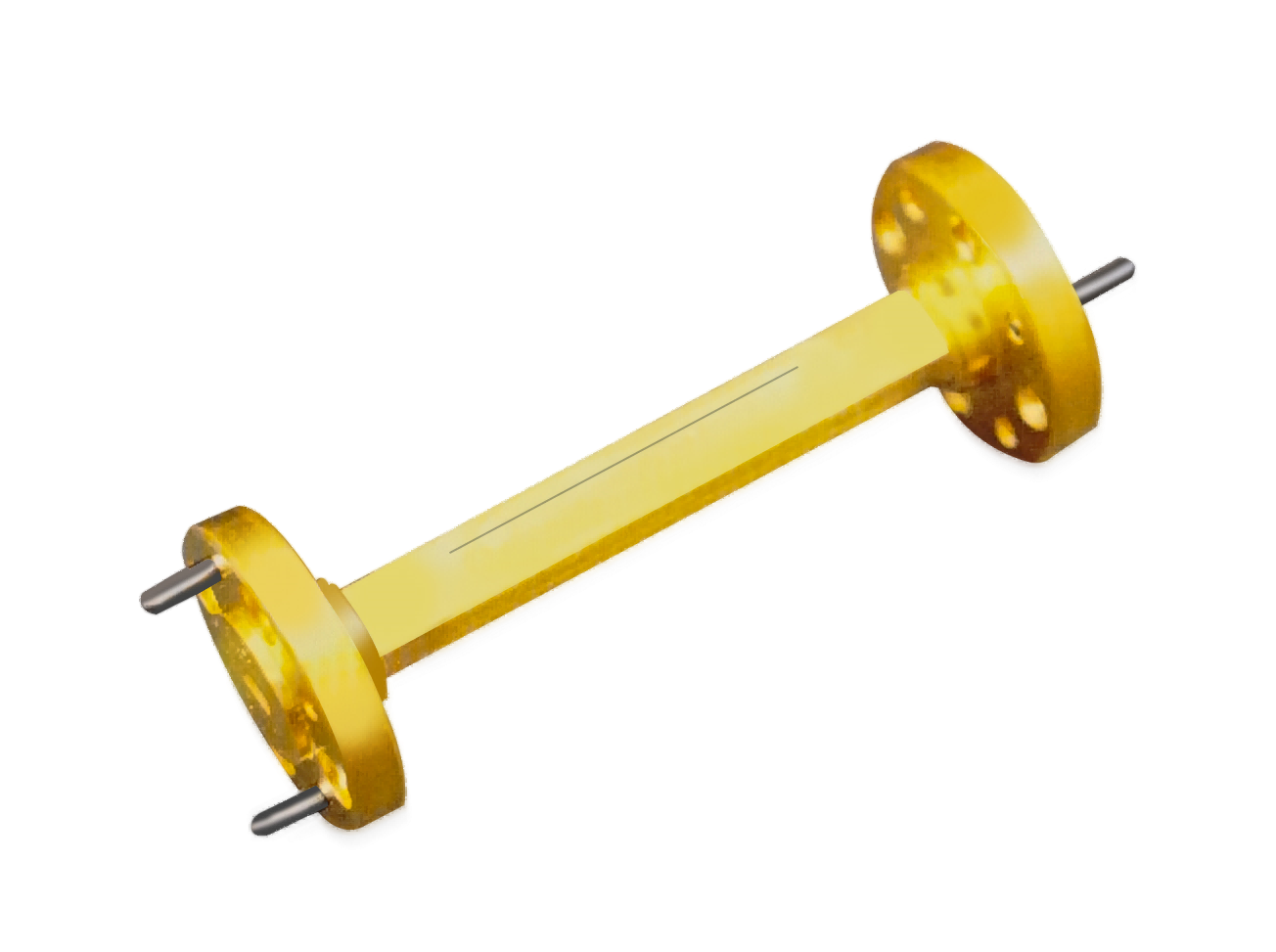
Are High-Power Signals Destroying Your RF Equipment? A Complete Guide to Waveguide Attenuators: Types and Applications
Imagine this scenario: Your engineering team is setting up a critical EMC testing chamber or calibrating a new 5G mmWave transceiver. The transmitter is pushing hundreds of watts of RF power. A junior engineer connects a highly sensitive, $50,000 spectrum analyzer directly to the transmission line to take a reading. In a fraction of a second, the front end of the analyzer is completely incinerated.
This is a nightmare scenario for any laboratory manager or system integrator, yet it happens more often than the industry likes to admit. As the global RF test and measurement market surges—driven by the complexities of 5G, satellite communications, and advanced defense radar—managing high-power signals safely has never been more critical.
How do you protect your delicate receivers and test equipment from being overloaded? How do you accurately control signal levels without distorting the waveform? The answer lies in a fundamental, yet highly engineered passive component: the Waveguide Attenuator.
If you are confused about when to use a fixed attenuator versus a variable one, or if you are struggling with thermal management in high-power applications, this guide is for you. We will break down the physics of waveguide attenuators, explore their types and applications, and show you how to optimize your system architecture without compromising on industrial-grade reliability.
What Is a Waveguide Attenuator and How Does It Work?
A waveguide attenuator is a passive microwave component designed to reduce the power level (amplitude) of an electromagnetic signal as it passes through the waveguide, without significantly altering the signal's frequency or phase.
The Physics of Attenuation:
Unlike a directional coupler (which "siphons off" a portion of the signal to another port), an attenuator actually absorbs the unwanted RF energy. Inside the hollow metal waveguide, manufacturers place a specially designed resistive element—often a ceramic or dielectric card coated with a resistive film (like carbon or nichrome).
As the electromagnetic wave travels through the waveguide and encounters this resistive card, a specific portion of the RF energy is converted directly into heat. The remaining, weakened signal continues to the output port.
Because attenuators convert RF energy into heat, thermal management is their biggest failure point. If you push 100 Watts of continuous wave (CW) power into a 30 dB attenuator that is only rated for 10 Watts, the resistive card will literally catch fire and vaporize, destroying the component and leaving your system unprotected. Always over-specify your average power handling and ensure adequate airflow!
Waveguide Attenuators: Types and Configurations
Depending on whether you need a permanent power reduction or dynamic control during testing, waveguide attenuators fall into two primary categories: Fixed and Variable.
1. Fixed Waveguide Attenuators
Fixed attenuators provide a constant, unchangeable level of attenuation (e.g., 10 dB, 20 dB, 30 dB, or 40 dB). The resistive element is permanently fixed inside the waveguide housing.
Because they have no moving parts, they are incredibly rugged and capable of handling massive amounts of peak and average power. If you are looking to permanently protect a sensitive Low Noise Amplifier (LNA) in a radar receiver, or step down power in a Satcom uplink, integrating precision waveguide fixed attenuators into your architecture is your best defense against thermal overload and system degradation.
- Pros: Extremely rugged, highly reliable, immune to mechanical wear and tear, and capable of excellent VSWR performance.
- Cons: The attenuation level cannot be adjusted.
- Best For: Permanent system integration and protecting delicate receivers from transmitter leakage.
2. Variable Waveguide Attenuators
Variable attenuators allow the user to manually or electronically adjust the level of attenuation. They are indispensable in laboratory environments and test benches. There are two main sub-types:
A. Flap Type (Level-Setting) Variable Attenuator
This design features a resistive card that is lowered into the waveguide through a longitudinal slot in the broad wall. A micrometer or tuning screw controls how deep the card goes into the electromagnetic field. The deeper the card, the higher the attenuation.
- Pros: Simple, cost-effective, and great for general-purpose level setting.
- Cons: The attenuation scale is non-linear, meaning it requires calibration charts for precise readings. Phase shift can occur as the attenuation changes.
B. Rotary Vane Variable Attenuator (The Precision Standard)
This is a highly sophisticated instrument. It consists of three sections: two rectangular-to-circular waveguide transitions at the ends, and a circular rotatable section in the middle. Each section contains a resistive card. By rotating the middle section, the electric field is attenuated based on the precise mathematical angle of rotation.
- Pros: Extremely accurate, highly linear, and direct-reading. It provides attenuation that is independent of frequency, and it introduces almost zero phase shift.
- Cons: Larger, more complex, and more expensive to manufacture.
- Best For: Precision EMC testing, calibration laboratories, and critical measurement setups where exact dB values are required.
Key Industry Applications for Waveguide Attenuators
Where exactly are these components used? If you are working in any of the following sectors, waveguide attenuators are a mandatory part of your RF architecture:
| Industry | Specific Application |
|---|---|
| EMC / EMI Testing | Controlling the exact RF field strength generated by High-Power Amplifiers (HPAs) before it reaches the horn antenna in an anechoic chamber, ensuring compliance with IEC standards. |
| Satellite Communications (Satcom) | Matching signal levels between different stages of a transmitter, or protecting sensitive downconverters (LNBs) from high-power uplink leakage. |
| Defense & Radar Systems | Simulating target distance (range) by attenuating the return signal during radar calibration and testing. |
| Test & Measurement Labs | Extending the dynamic range of power meters and spectrum analyzers. A 30 dB attenuator allows a 1-Watt power meter to safely measure a 1,000-Watt signal. |
| Medical Equipment (LINACs) | Fine-tuning the high-power S-band microwave energy used in linear accelerators for precise radiation therapy dosing. |
Overcoming Supply Chain Fragility with Agile Manufacturing
Designing a flawless RF architecture is a significant engineering achievement. However, the true challenge for system integrators today is securing these precision components on time to meet strict project deadlines.
For decades, the RF industry has relied on a handful of legacy Western manufacturers. While their quality is established, their rigid, bureaucratic supply chains often result in agonizing 16 to 24-week lead times. When you are deploying a new satellite earth station or setting up a critical EMC test bench, waiting half a year for a precision attenuator is unacceptable. It stalls projects, frustrates stakeholders, and delays your time-to-market.
We believe that your supplier should be a strategic partner, not a bottleneck. As a true source manufacturer, AO Microwave offers deep customization capabilities. Whether you need a specific dB value for a Fixed Attenuator, a custom high-power finned design for thermal management, or ultra-high-frequency support, our engineering team can manufacture the exact component you need. Combined with our agile manufacturing process, we deliver these tailored, industrial-grade solutions rapidly, ensuring your project stays on schedule without compromising on signal integrity.
3 Critical Specs to Define When Ordering an Attenuator
To ensure you get the exact component your system needs, always provide your manufacturer with these three specifications:
- Attenuation Value & Accuracy: For fixed attenuators, specify the exact dB value (e.g., 20 dB ± 0.5 dB). For variable attenuators, specify the required range (e.g., 0 to 30 dB).
- Power Handling (Average and Peak): This is critical. Specify the Continuous Wave (CW) average power to ensure the resistive card won't melt, and the Peak Power to ensure the air inside the waveguide won't arc (spark) during high-power pulses.
- VSWR (Voltage Standing Wave Ratio): A good attenuator should absorb power, not reflect it. Specify a low VSWR (typically < 1.15:1 or 1.20:1) to ensure excellent impedance matching with your existing waveguide run.
Conclusion: Protect Your Equipment, Ensure Reliability
In the high-stakes world of RF and microwave engineering, a waveguide attenuator is the ultimate insurance policy. By safely absorbing excess RF energy, these components protect your delicate receivers, extend the range of your test equipment, and ensure your system operates within its designed parameters.
By prioritizing critical specifications like thermal dissipation and VSWR, and by partnering with an agile manufacturer dedicated to industrial-grade excellence, you can build a resilient, high-performance RF system that is delivered on time, every time.
Ready to Safely Manage Your High-Power RF Signals?
Don't let high-power signals destroy your expensive test equipment or compromise your system integration. Whether you need a rugged Fixed Attenuator for a Satcom uplink or a precision Variable Attenuator for an EMC lab, AO Microwave has the industrial-grade solutions you need.
Contact our engineering sales team today for a technical consultation or a custom quote, and let us help you build a safer, more reliable RF architecture.