
Are Cheap Components Endangering Your RF System? Common Problems Caused by Poor Waveguide Terminations
Are cheap waveguide terminations damaging your RF system? Discover how poor dummy loads cause VSWR spikes, thermal meltdowns, and corrupted VNA calibration data.
Are Cheap Components Endangering Your RF System? Common Problems Caused by Poor Waveguide Terminations
In the high-stakes environment of RF and microwave engineering, a system is only as resilient as its weakest component. Engineers routinely invest hundreds of thousands of dollars in state-of-the-art High-Power Amplifiers (HPAs), precision Vector Network Analyzers (VNAs), and complex phased array antennas. Yet, when it comes to capping off an unused port or absorbing test power, there is a dangerous temptation to cut corners on the waveguide termination.
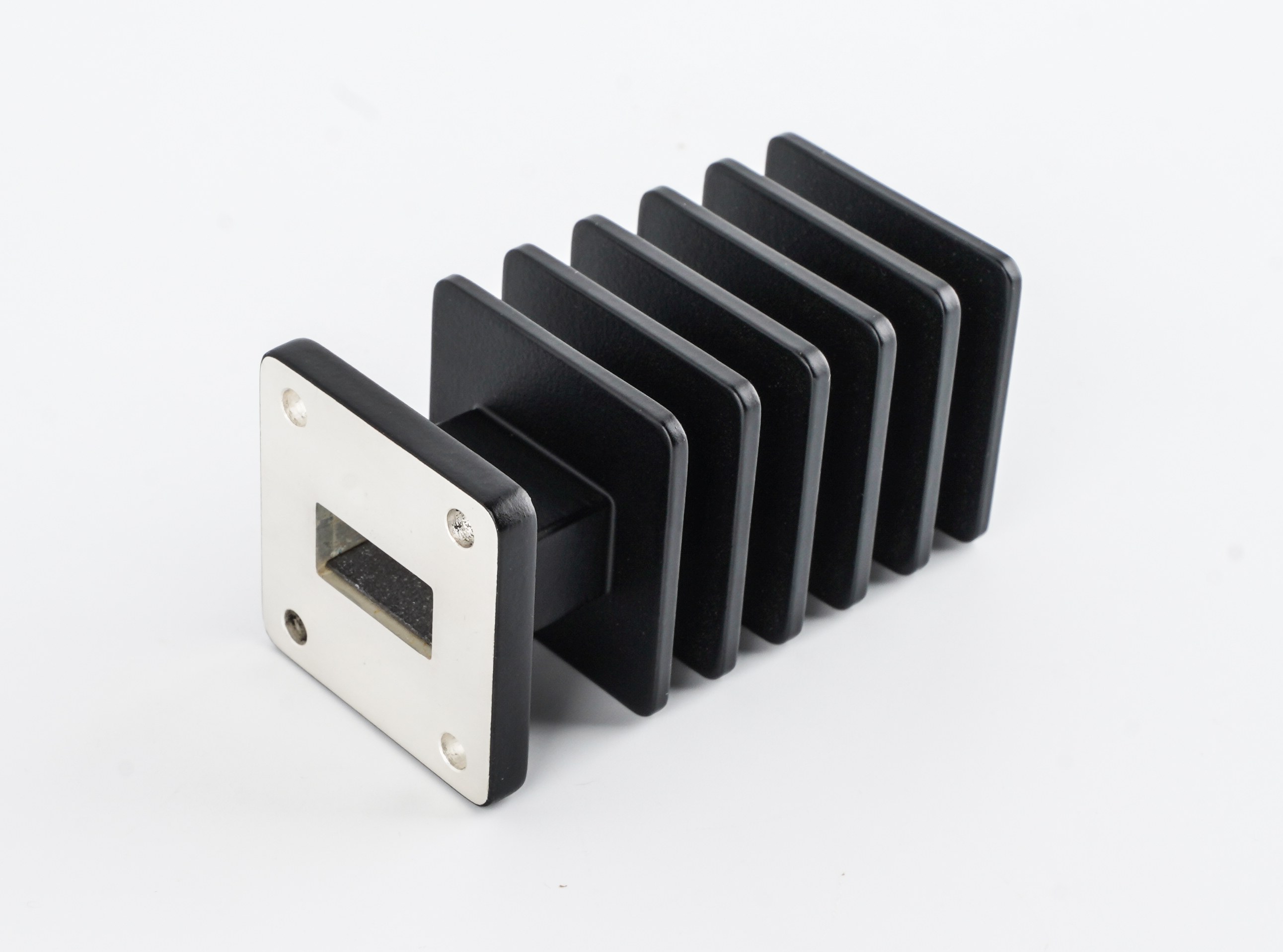
A waveguide termination (or dummy load) is the ultimate "shock absorber" of your RF architecture. Its job is to flawlessly absorb electromagnetic energy and convert it into heat, preventing it from reflecting backward. When a termination is poorly manufactured—whether due to sloppy CNC machining, inferior absorptive materials, or inadequate thermal design—it stops being a protective shield and becomes a ticking time bomb.
If you are experiencing unexplained amplifier shutdowns, corrupted measurement data, or sudden thermal failures, the culprit might be sitting at the very end of your transmission line. In this comprehensive guide, we will diagnose the most common problems caused by poor waveguide terminations, explain the physics behind these failures, and show you how to protect your mission-critical systems.
Problem 1: Catastrophic Amplifier Failure (The VSWR Threat)
The most immediate and destructive problem caused by a sub-par termination is a high Voltage Standing Wave Ratio (VSWR).
A high-quality termination features a precisely tapered absorptive element (usually carbon-impregnated ceramic) that gradually absorbs the RF wave. If this taper is poorly machined, misaligned, or made from cheap materials, it creates an abrupt impedance mismatch. Instead of absorbing the energy, the termination acts like a mirror, reflecting the high-power signal straight back down the waveguide.
When this reflected power collides with the forward power, it creates massive standing waves. In a radar or Satcom system, this reflected energy travels directly back into the transmitter. Within milliseconds, it can cause the magnetron or solid-state amplifier to overheat, arc, and permanently fail.
Problem 2: Thermal Meltdown and Open Circuits
Because a waveguide termination converts 100% of the absorbed RF energy into heat, thermodynamics is just as important as electromagnetics. A common failure in low-quality dummy loads is inadequate thermal dissipation.
If a manufacturer uses inferior housing materials or poorly designed cooling fins, the heat cannot escape fast enough. The internal absorptive element will rapidly exceed its maximum temperature threshold. When this happens, the ceramic element can crack, melt, or even catch fire.
Once the absorptive element is destroyed, the termination effectively becomes an "open circuit." It will instantly stop absorbing power, sending 100% of the lethal RF energy back into your system. To avoid thermal failures without needlessly inflating your budget, we highly recommend reviewing our smart guide to sizing and selecting waveguide loads, which explains how to balance thermal derating, material weight, and environmental factors.
Problem 3: Corrupted VNA Calibration and Test Data
In an EMC testing laboratory or a metrology environment, waveguide terminations are used as the absolute "Match" standard during Vector Network Analyzer (VNA) calibration (such as TRL or SOLT calibration).
If you use a poor-quality termination with a VSWR of 1.10:1 instead of a precision metrology-grade load with a VSWR of < 1.03:1, you are feeding flawed baseline data into your VNA. The analyzer will mathematically "correct" for a perfect match that doesn't actually exist. As a result, every single measurement you take afterward will be fundamentally inaccurate. You could end up failing a perfectly good product or, worse, passing a defective one.
Problem 4: RF Leakage and Flange Arcing
A termination is only effective if it is perfectly mated to the waveguide run. Cheap terminations often suffer from poor mechanical tolerances at the flange face. If the flange is not perfectly flat (due to machining chatter marks or warping), microscopic air gaps will form when it is bolted to your system.
At high power levels, these tiny air gaps cause two severe issues:
- RF Leakage: Electromagnetic energy radiates out of the gap, causing interference with nearby sensitive receivers and posing a radiation hazard to laboratory personnel.
- Flange Arcing: The intense electric field can ionize the air in the gap, causing electrical sparking (arcing) that will pit and permanently damage the flanges of both the termination and your expensive test equipment.
The AO Microwave Advantage: Industrial-Grade Reliability
Protecting your RF architecture requires components manufactured with uncompromising precision. At AO Microwave, we understand that a waveguide termination is an insurance policy for your entire system.
We manufacture premium waveguide terminations and high-power dummy loads covering the entire spectrum from 0.32 GHz up to 110 GHz. By utilizing advanced CNC machining, rigorous thermal engineering, and premium absorptive materials, we deliver components that guarantee ultra-low VSWR (as low as 1.03:1) and massive power handling capabilities.
Furthermore, we eliminate the 16 to 24-week lead times typical of legacy Western manufacturers. Our agile manufacturing process ensures that you receive tailored, industrial-grade protection exactly when your project needs it.
Conclusion: Don't Let the Last Component Be Your Downfall
A waveguide termination may sit at the very end of your transmission line, but its impact on system health is absolute. Poor terminations lead to VSWR spikes, thermal meltdowns, corrupted data, and catastrophic amplifier failures. By understanding these risks and specifying high-quality, precision-machined loads, engineers can safeguard their multi-million-dollar equipment and ensure pristine signal integrity.
Ready to Safeguard Your RF Architecture?
Don't let sub-par terminations threaten your critical amplifiers or corrupt your measurement data. Whether you need ultra-precision loads for 110 GHz VNA calibration or massive finned dummy loads for radar testing, AO Microwave delivers the reliability and responsiveness you need.
Contact our engineering team today for a technical consultation, and let us help you build a resilient, fail-safe RF system.