
Are Unmatched Ports Corrupting Your Data? What Is a Waveguide Load and Why Is It Important in RF Systems?
What is a waveguide load? Learn how precision matched terminations prevent VSWR spikes, protect RF systems, and ensure signal integrity up to 110 GHz.
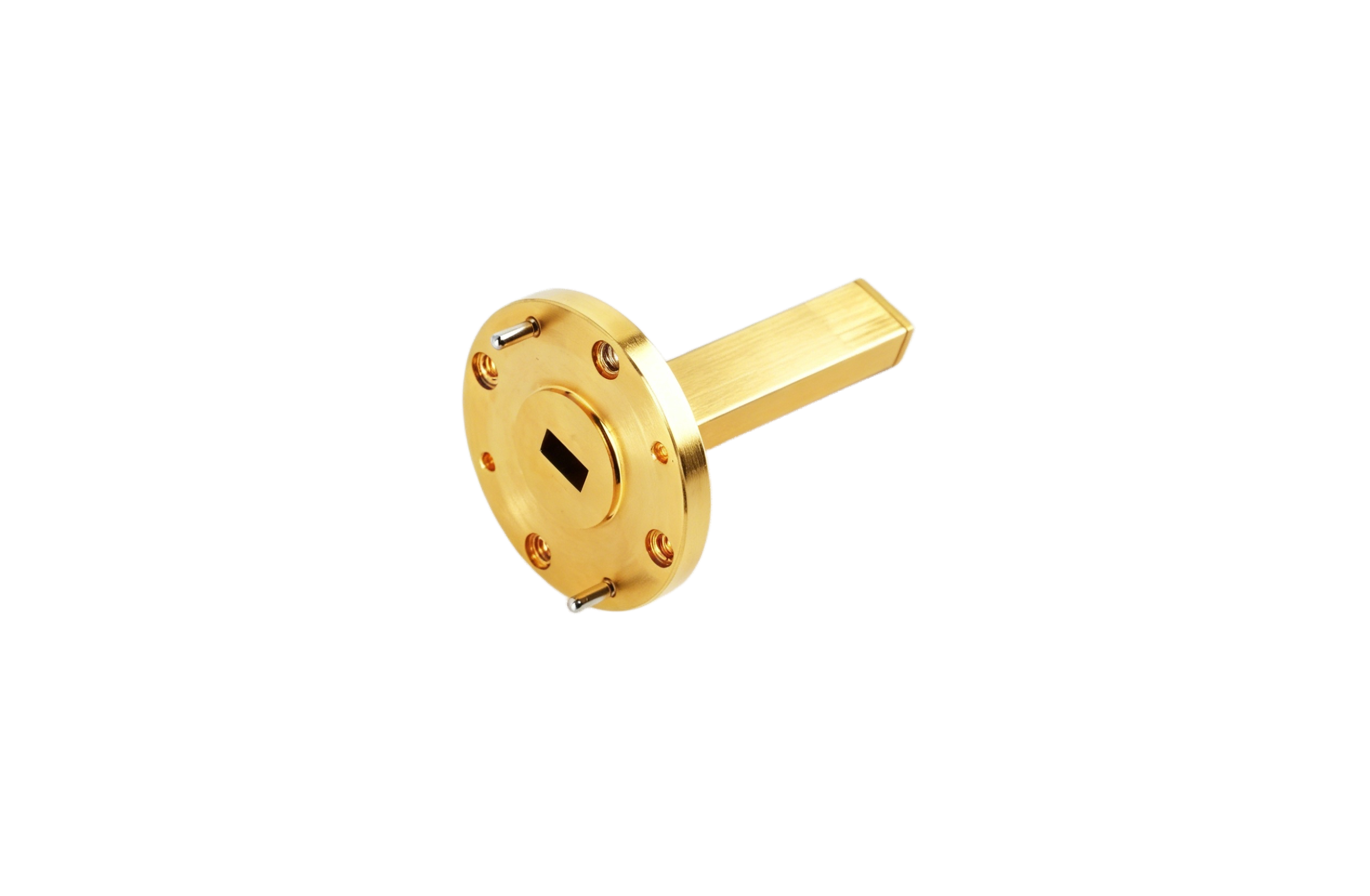
Are Unmatched Ports Corrupting Your Data? What Is a Waveguide Load and Why Is It Important in RF Systems?
In the meticulous design of modern RF and microwave architectures, engineers calculate every signal path with absolute precision. Whether you are integrating a 5G mmWave base station, calibrating a defense radar system, or setting up a highly sensitive EMC testing laboratory, your primary goal is to ensure that electromagnetic energy flows exactly where it is intended to go.
But what happens to the RF energy that reaches an unused port on a directional coupler, a waveguide switch, or a circulator?
If an open port is left unterminated, the electromagnetic wave hits a boundary of infinite impedance. It does not simply vanish; it reflects entirely backward. This reflected energy creates severe Voltage Standing Wave Ratio (VSWR) spikes, corrupting measurement data, causing phase distortion, and potentially leaking into sensitive receiver circuits where it can cause catastrophic interference.
To prevent this engineering nightmare, system integrators rely on a fundamental, yet highly precise passive component: the Waveguide Load (also known as a matched termination).
If you are asking, "What is a waveguide load and why is it important in RF systems?", this comprehensive guide is for you. We will explore the physics of microwave absorption, detail the critical industry applications that demand these components, and demonstrate how AO Microwave’s ultra-low VSWR loads—spanning from 0.32 GHz all the way to 110 GHz—can safeguard your signal integrity and keep your projects on schedule.
The Physics of Absorption: How Does a Waveguide Load Work?
A waveguide load is designed to act as a perfect "black hole" for electromagnetic energy. Its sole function is to completely absorb incident microwave power and prevent it from reflecting back down the transmission line, thereby providing a perfect impedance match for the waveguide system.
Inside the metallic housing of the load lies a precisely shaped absorptive material—typically a tapered ceramic or epoxy element impregnated with highly resistive compounds like carbon or silicon carbide.
When the electromagnetic wave enters the load, it strikes this resistive element. Instead of bouncing off, the RF energy is forced to flow through the material, where the laws of thermodynamics take over. The electromagnetic energy is entirely converted into heat.
You cannot simply place a flat block of resistive material inside a waveguide; the sudden change in impedance would cause the wave to reflect before it could be absorbed. The absorptive element must be precisely tapered (often in a wedge or pyramid shape). This gradual taper ensures a smooth, reflectionless transition, allowing the wave to be absorbed progressively. The precision of this taper dictates the load's VSWR performance.
Why Are Waveguide Loads Important in RF Systems?
Waveguide loads are not optional accessories; they are mandatory components for maintaining system stability. Here are the three most critical applications where waveguide loads are deployed:
1. Terminating Multi-Port Devices
Many microwave components have ports that are not actively connected to an antenna or a receiver. For example:
- Directional Couplers: A standard coupler has four ports. If you are only using it to sample forward power, the "Isolated Port" must be terminated with a matched load. If left open, reflected power will destroy the coupler's directivity, rendering your VSWR measurements completely inaccurate.
- Waveguide Circulators: In a radar system, a circulator directs transmitter power to the antenna and received echoes to the receiver. If the antenna is damaged or disconnected, the massive transmitter power reflects back. A waveguide load is often placed on a specific port to absorb this reflection, preventing the transmitter from blinding or destroying the sensitive receiver.
2. VNA Calibration and RF Test Laboratories
When calibrating a Vector Network Analyzer (VNA), engineers require a perfect 50-Ohm reference point to establish the baseline for zero reflection. Precision waveguide loads are used as the "Match" standard in TRL (Thru-Reflect-Line) or SOLT calibration kits. If the load has a poor VSWR, the entire calibration is skewed, and every subsequent measurement taken in the lab will be fundamentally flawed.
3. Isolating Redundancy Systems
In satellite communications (Satcom), 1:1 redundancy systems use waveguide switches to toggle between a Main Amplifier and a Standby Amplifier. The amplifier that is not currently broadcasting to the antenna is routed into a waveguide load. This allows the standby amplifier to remain powered on, warmed up, and ready to take over instantly without broadcasting interfering signals into the open air.
AO Microwave: Mastering Precision from 0.32 GHz to 110 GHz
The true measure of a waveguide load is its VSWR (Voltage Standing Wave Ratio). A perfect load has a VSWR of 1.0:1. In the real world, achieving a near-perfect match requires uncompromising CNC machining and rigorous material tuning.
Many legacy suppliers struggle to maintain low VSWR at extreme frequencies, leaving engineers with subpar components that degrade system performance. At AO Microwave, we engineer precision matched loads that cover the entire RF spectrum, delivering industry-leading VSWR performance to protect your most sensitive equipment.
Based on our extensive manufacturing capabilities, here is a snapshot of the precision we deliver across various frequency bands:
| Frequency Band | Waveguide Size | VSWR (Max) | Average Power (Max) | Flange Types Available |
|---|---|---|---|---|
| UHF / L-Band (0.32 - 1.73 GHz) | WR-2300 to WR-650 | 1.03 to 1.05 | 10W to 20W | UDR3 to UDR14 |
| S / C / X-Band (1.72 - 12.5 GHz) | WR-430 to WR-90 | 1.03 | 2W to 10W | UDR22 to UBR100 |
| Ku / K / Ka-Band (9.84 - 40.0 GHz) | WR-75 to WR-28 | 1.03 | 1W to 2W | UBR120 to UBR320 |
| V / E / W-Band (33.0 - 110.0 GHz) | WR-22 to WR-10 | 1.15 | 0.5W | UG-383/U to UG-387/UM |
Overcoming Supply Chain Fragility with Agile Manufacturing
Designing a flawless RF architecture is a significant achievement, but securing the components on time is often the greatest hurdle. For decades, the industry has endured 16 to 24-week lead times from legacy Western manufacturers for precision waveguide loads. When you are racing to deploy a new satellite earth station or upgrade an EMC test bench, waiting half a year for a termination is unacceptable. It stalls projects, frustrates stakeholders, and delays your time-to-market.
We believe that your supplier should be a strategic partner, not a bottleneck. As a true source manufacturer, AO Microwave offers deep customization capabilities. Whether you need a specific flange style, a custom power rating, or ultra-high-frequency support up to 110 GHz, our engineering team can manufacture the exact load you need. Combined with our agile manufacturing process, we deliver these tailored, industrial-grade solutions rapidly, ensuring your project stays on schedule without compromising on signal integrity.
Conclusion: Terminate Reflections, Ensure Reliability
In the unforgiving realm of microwave engineering, a waveguide load is far more than a simple end-cap; it is the ultimate insurance policy for your signal integrity. By perfectly absorbing unwanted RF energy, these components protect your measurement data, isolate your multi-port devices, and ensure your system operates exactly as designed.
By understanding the physics of microwave absorption and partnering with a manufacturer that possesses the advanced CNC capabilities to support the entire spectrum—from 0.32 GHz all the way to 110 GHz—you empower your engineering team to innovate with absolute confidence.
Ready to Safeguard Your RF Architecture?
Don't let unmatched ports and reflected signals corrupt your data or delay your project launches. Whether you need robust 20W loads for UHF radar or ultra-precision WR-10 loads for 110 GHz VNA calibration, AO Microwave has the expertise and manufacturing agility to deliver exactly what you need.
Contact our engineering team today to discuss your specific requirements, and let us provide the perfect tailored solution for your RF system.