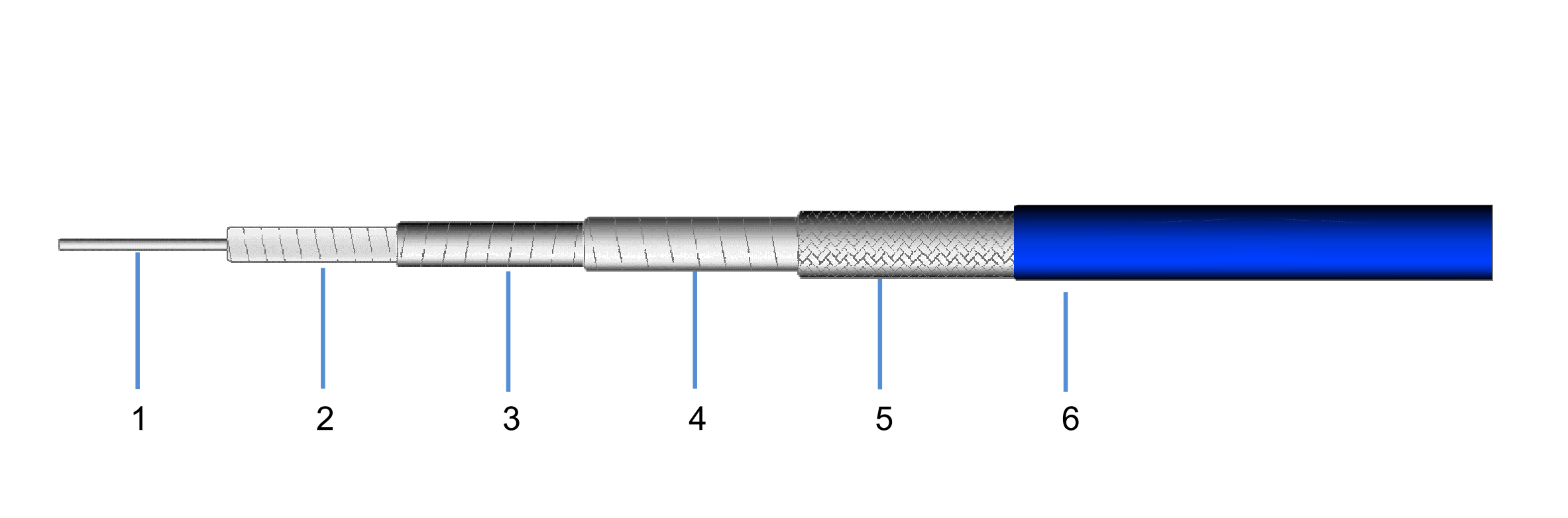
CB Series: Low Loss & Amplitude Stable Flexible Coaxial Cable
CB Series: Low Loss & Amplitude Stable Flexible Coaxial Cable provides reliable RF signal transmission with low attenuation and excellent amplitude stability across microwave frequency bands. Designed for RF communication equipment, microwave measurement systems, antenna testing platforms and laboratory instrumentation, this flexible RF cable is widely used in radar systems, satellite communication, wireless infrastructure and RF test laboratories.
CB Series: Low Loss & Amplitude Stable Flexible Coaxial Cables
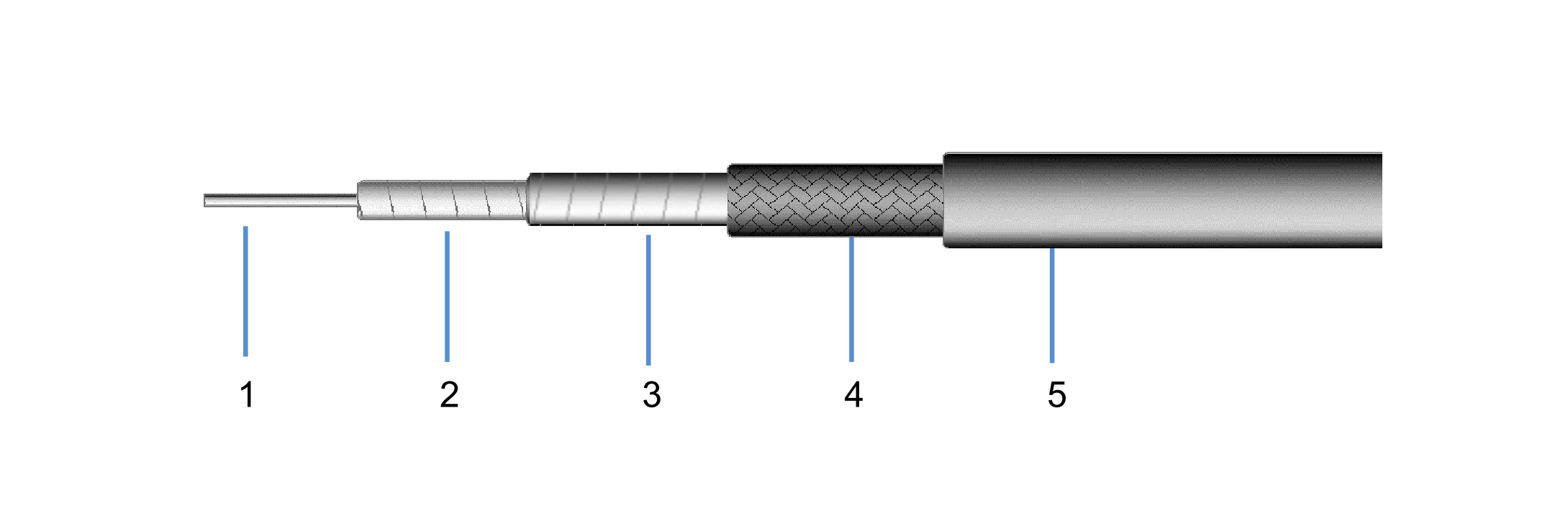
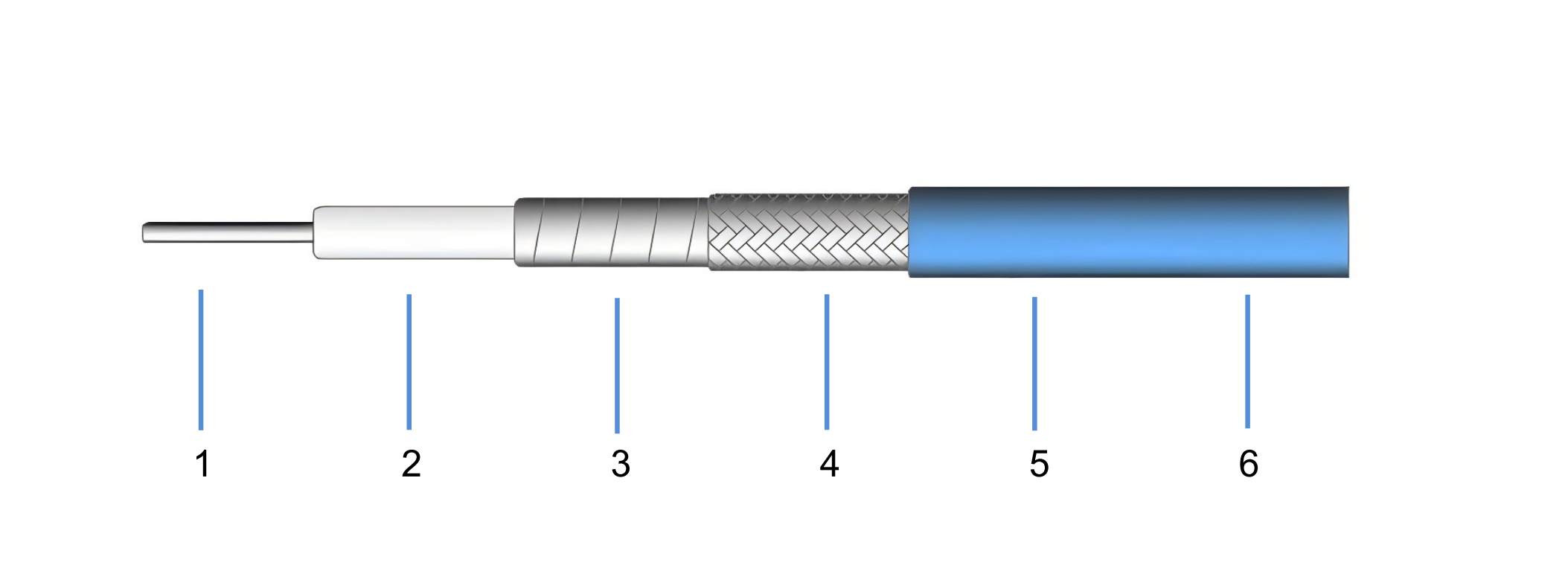
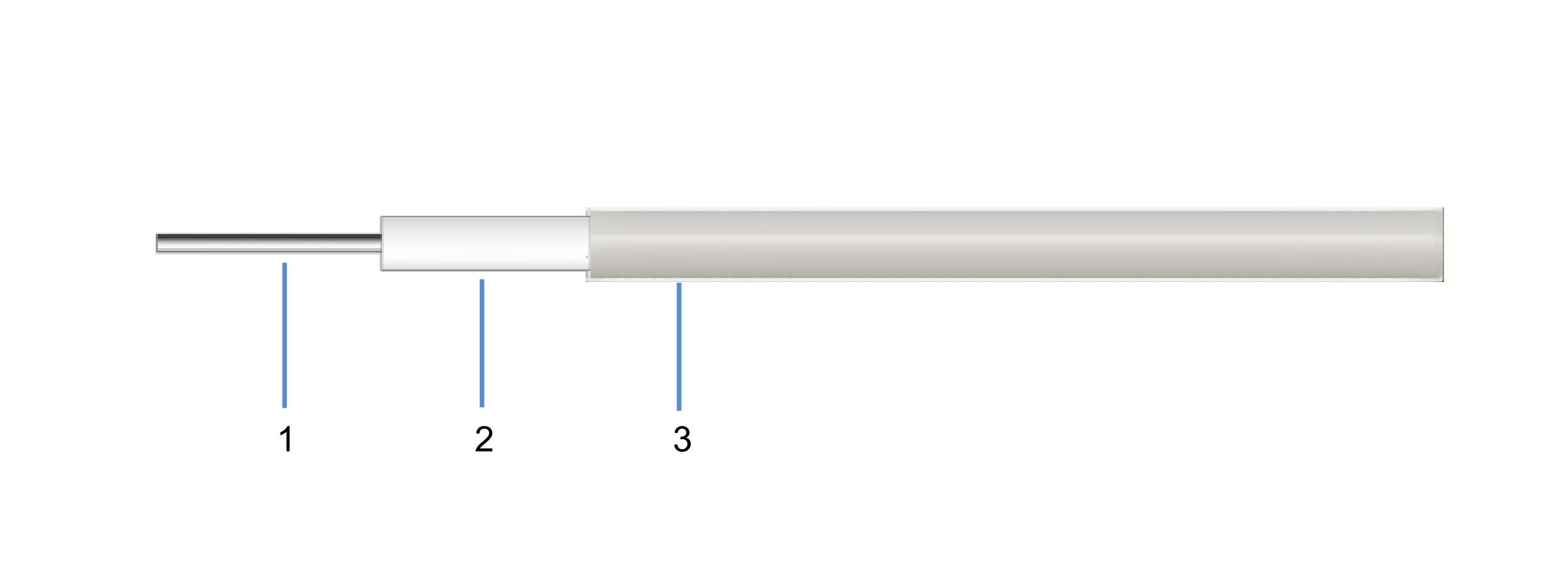
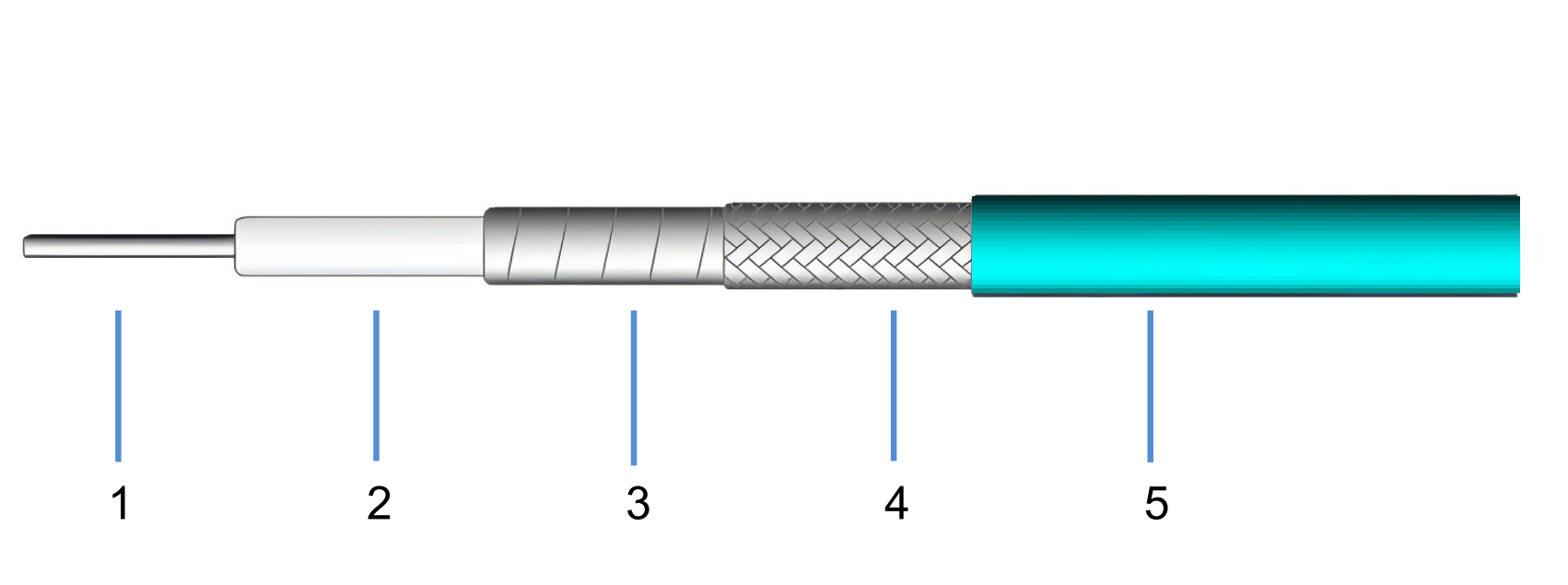
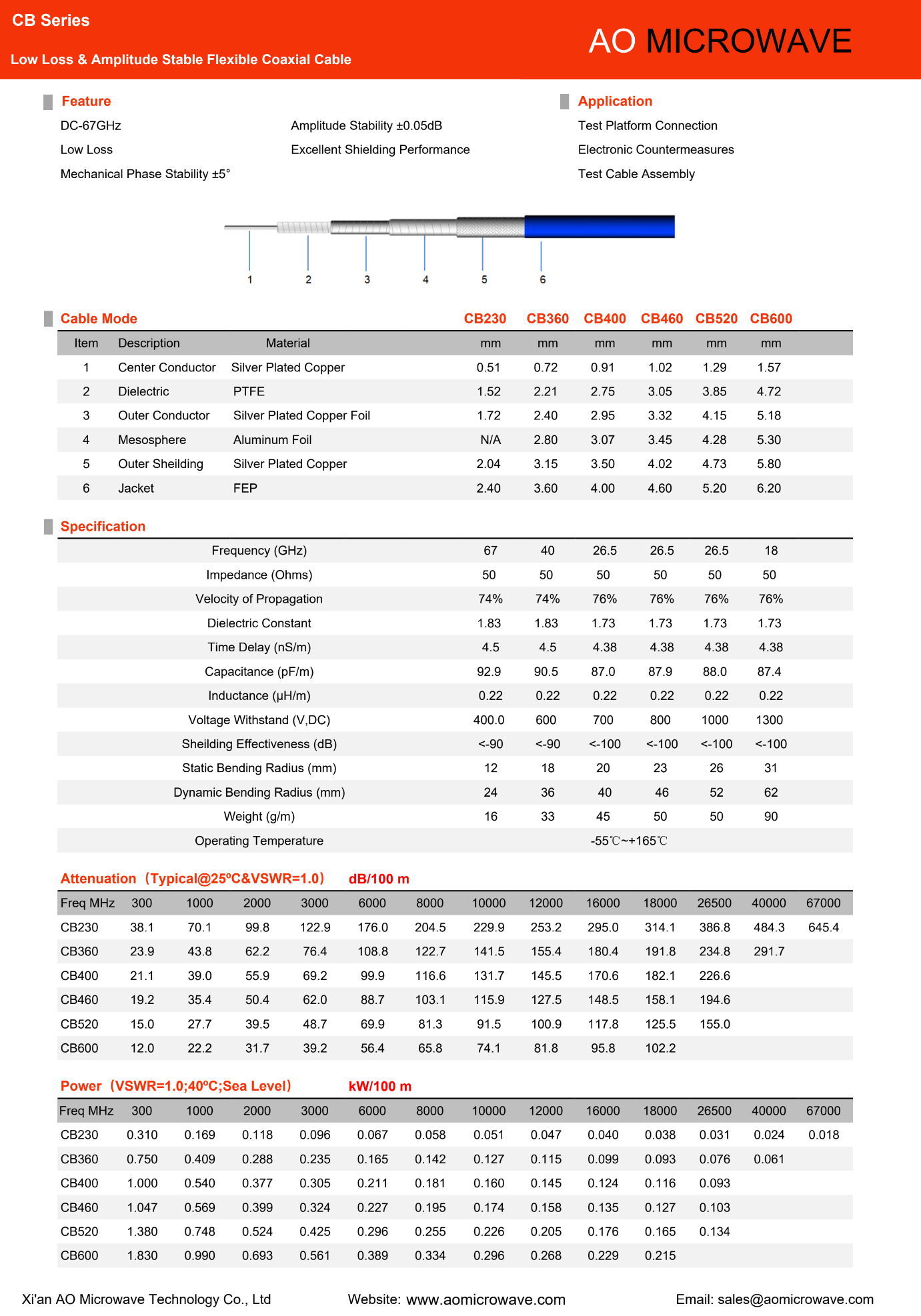
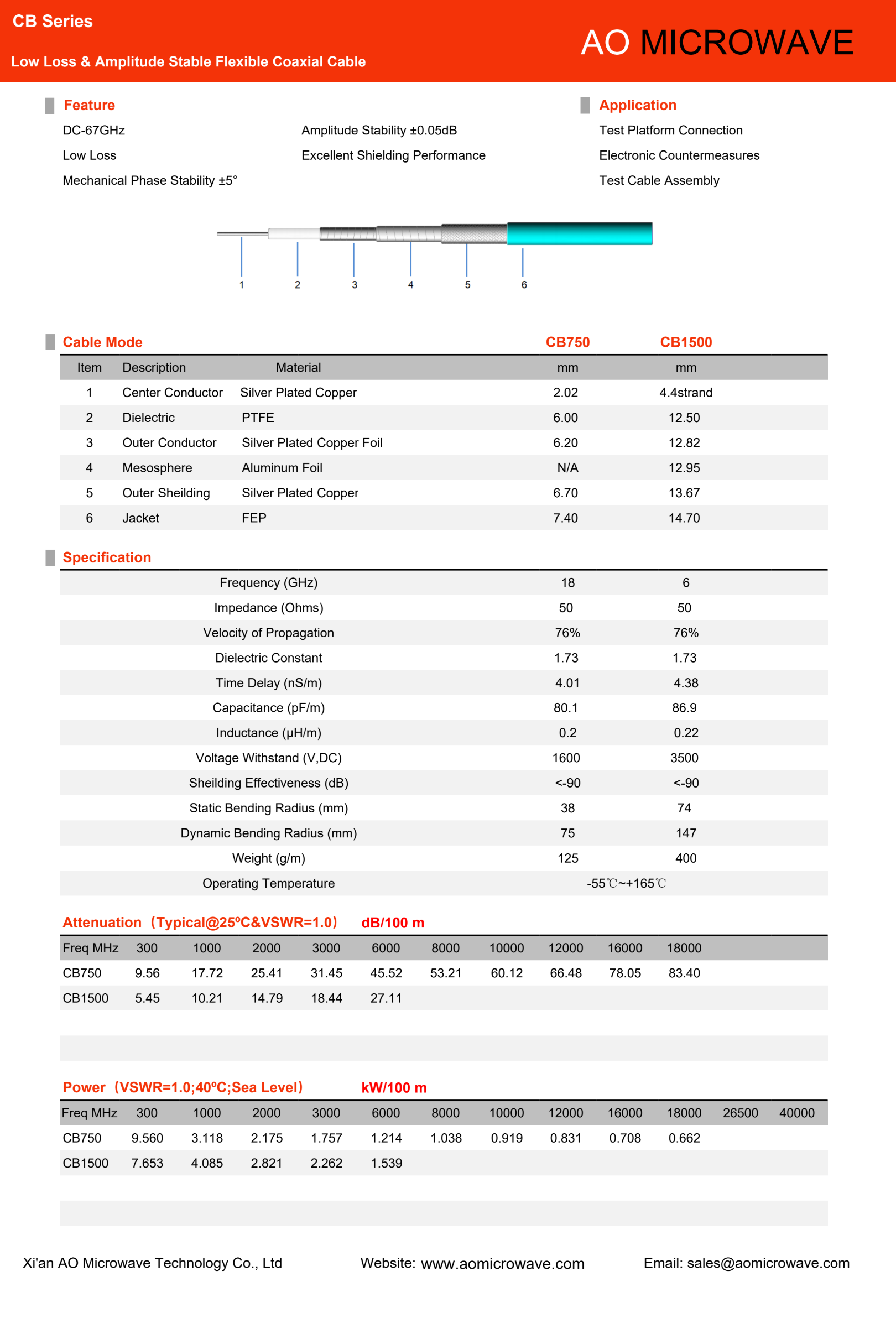
AO Microwave’s high-precision CB Series coaxial cables are designed to deliver low insertion loss alongside consistent amplitude stability under dynamic routing up to 40 GHz. Built with a solid or micro-cellular foamed PTFE dielectric, these flexible cables achieve a high velocity of propagation (Vp) of typically 76% to 78%. Encased in a high-density, double-braided silver-plated copper shield and a protective FEP or LSZH jacket, our CB Series assemblies deliver a shielding effectiveness of typically > 85 dB, low VSWR, and stable amplitude tracking under physical movement.
These durable and cost-effective cable assemblies are engineered to minimize attenuation over long runs. They are critical for high-density cabinet routing, wireless base station interconnects, and laboratory patch cables.
The Physics of Attenuation & Foamed Dielectrics
Coaxial signal attenuation is primarily caused by conductor loss (ohmic heating) and dielectric loss within the insulating material. Conductor loss increases with frequency due to the skin effect, while dielectric loss depends on the substrate's loss tangent.
To minimize dielectric attenuation while maintaining mechanical strength and affordability, AO Microwave utilizes micro-cellular foamed PTFE dielectrics. Foaming introduces tiny air bubbles into the solid PTFE matrix, lowering its density and effective dielectric constant. This foamed structure reduces dielectric loss and increases propagation velocity (Vp to 78%), ensuring stable transmission performance over long runs.
Target Applications & Operational Advantages
By providing low insertion loss and stable amplitude tracking, our CB Series flexible cables secure critical communication links:
High-Density Cabinet Routing
Function: Connects internal modules and sub-assemblies inside dense transceiver cabinets.
Advantage: Exceptional flexibility and small bend radius simplify cable routing in confined spaces, maintaining stable amplitude.
Wireless Base Station Cabling
Function: Routes RF signals between transceiver cards and power amplifier modules.
Advantage: Symmetrical double-shielded outer wire braids provide high shielding effectiveness (>85 dB) to prevent cross-talk.
Laboratory Patch Cables
Function: Interconnects test instruments and devices under test on laboratory benches.
Advantage: Low insertion loss and durable jacketing withstand repeated manual handling and physical flexing.
CB Series Coaxial Cable FAQs
Need high-performance CB Series Coaxial Cables?
Specify your connector interface (SMA/Type N), frequency range, attenuation limit, and jacket type — we'll quote in 24 hours.