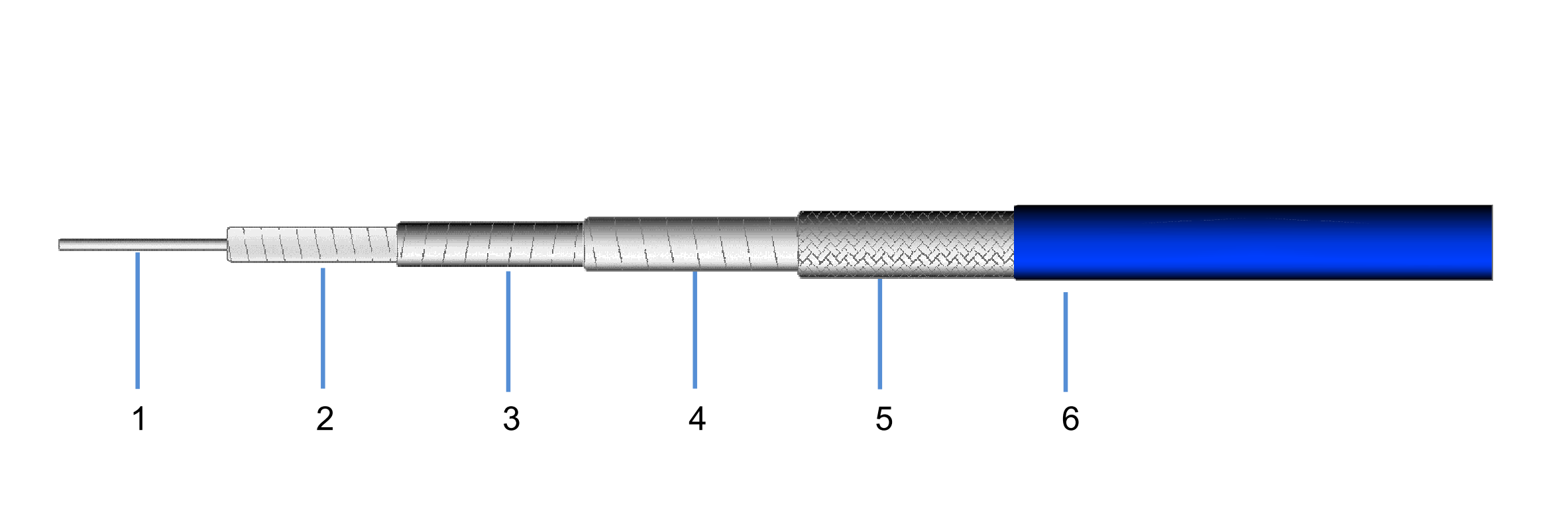
CF Series: Ultra-Low Loss & Amplitude/Phase Stable & Extremely Soft Coaxial Cable
CF Series: Ultra-Low Loss & Amplitude/Phase Stable & Extremely Soft Coaxial Cable combines ultra-low RF signal loss with extremely flexible construction for demanding microwave testing environments. This phase stable RF cable is widely used in vector network analyzer testing, RF calibration systems, antenna measurement laboratories, microwave instrumentation and high-frequency RF communication testing.
CF Series: Ultra-Low Loss & Amplitude/Phase Stable & Extremely Soft Coaxial Cables
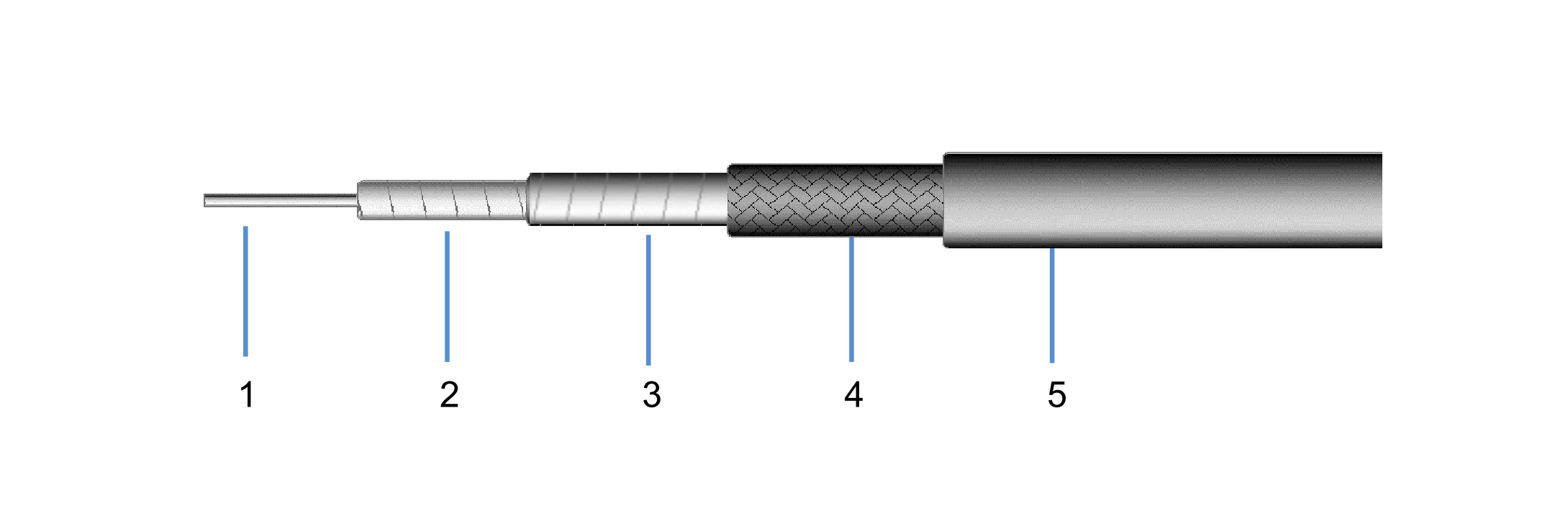
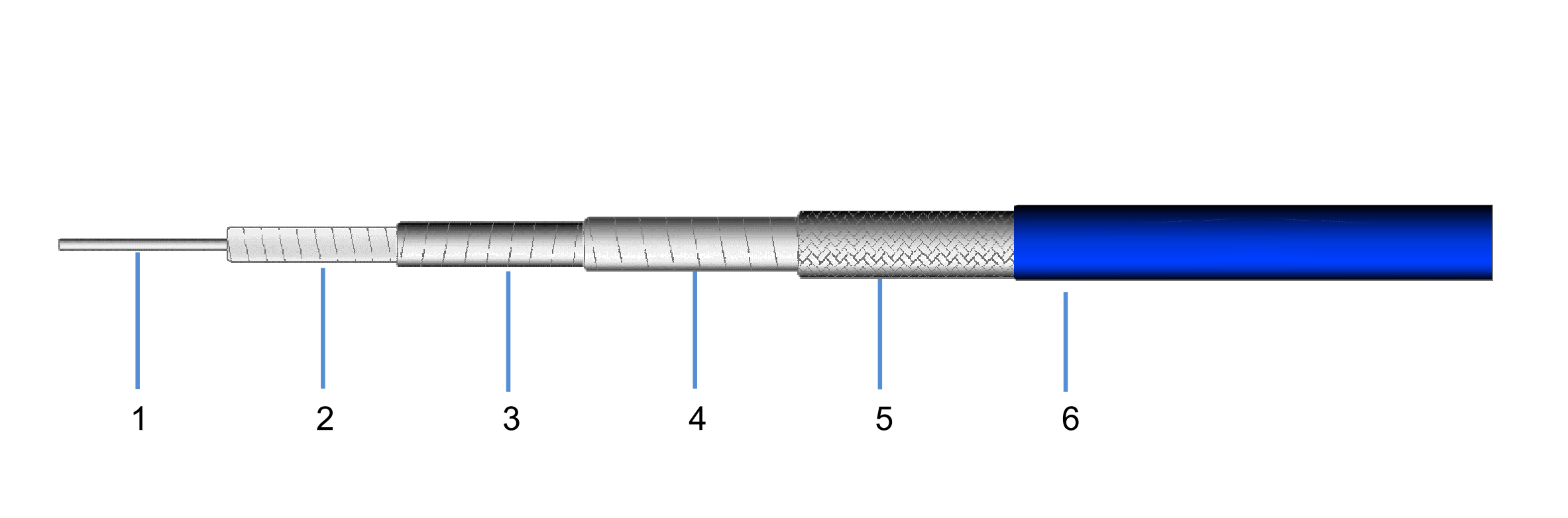
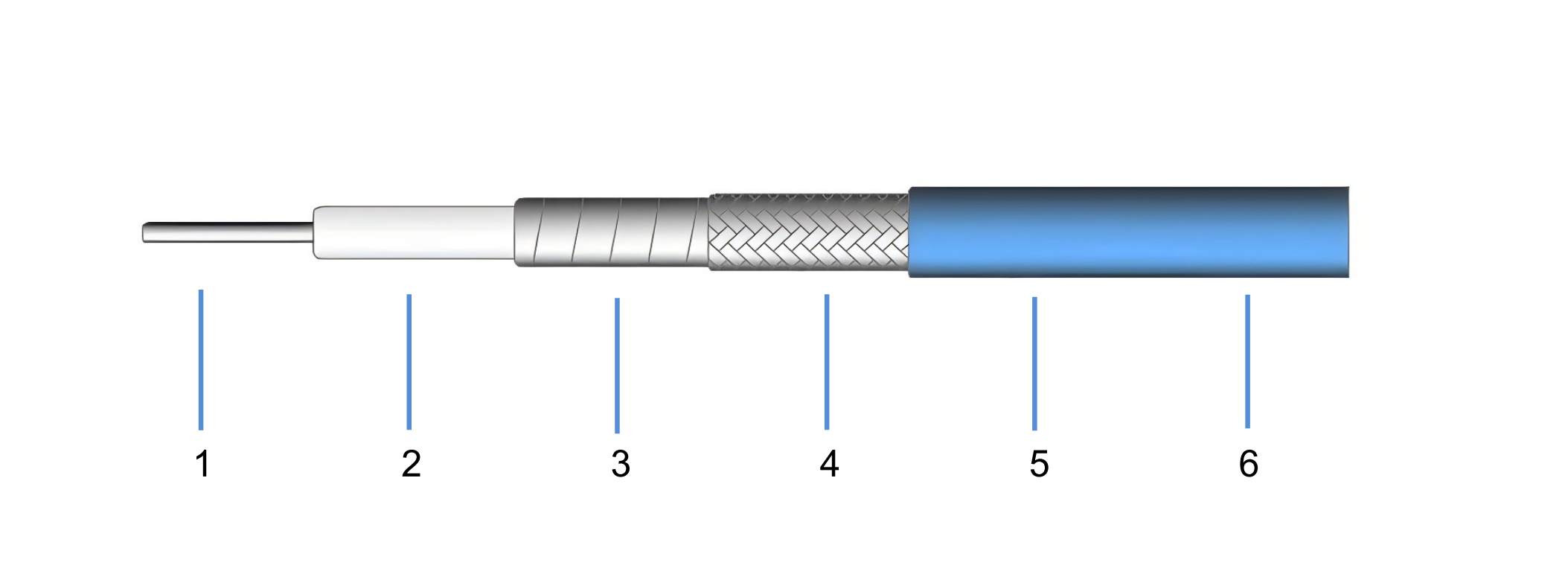
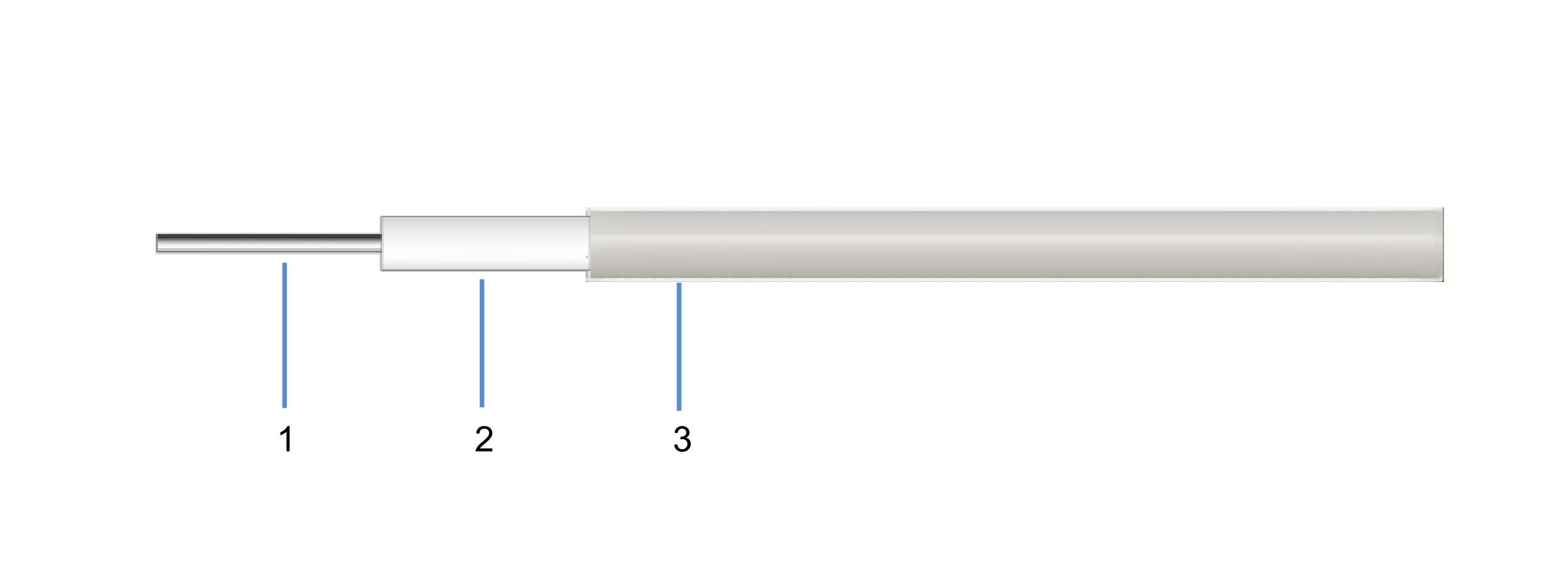
AO Microwave’s high-precision CF Series coaxial cables are designed to deliver low insertion loss alongside extreme softness and flexibility up to 50 GHz [3.3.4]. Built with an ultra-low-density expanded PTFE (ePTFE) dielectric core, these limp, highly flexible cables incorporate a silver-plated copper wire outer braid and a soft silicone or polyurethane jacket. Operating across standard bands with premium connector interfaces (SMA, 2.92mm, and 2.4mm), our CF Series assemblies achieve an exceptional typical VSWR of < 1.20:1, high shielding effectiveness, and outstanding phase and amplitude stability under repeated bending.
These extremely soft cable assemblies are engineered to minimize mechanical resistance, allowing for smooth, unrestricted manual routing. They are critical for handheld test probes, robotic/gimbal RF routing, and high-precision laboratory test benches.
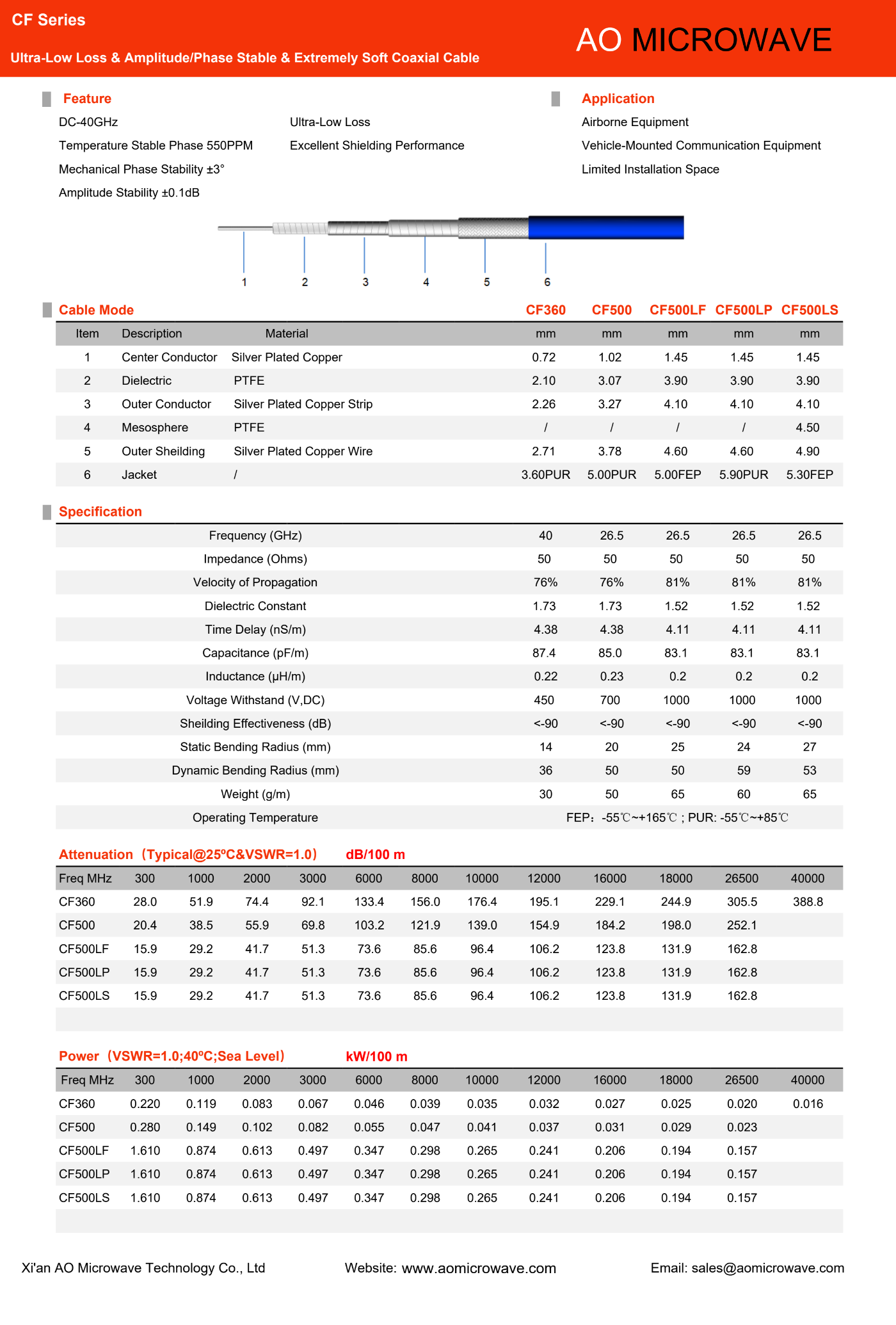
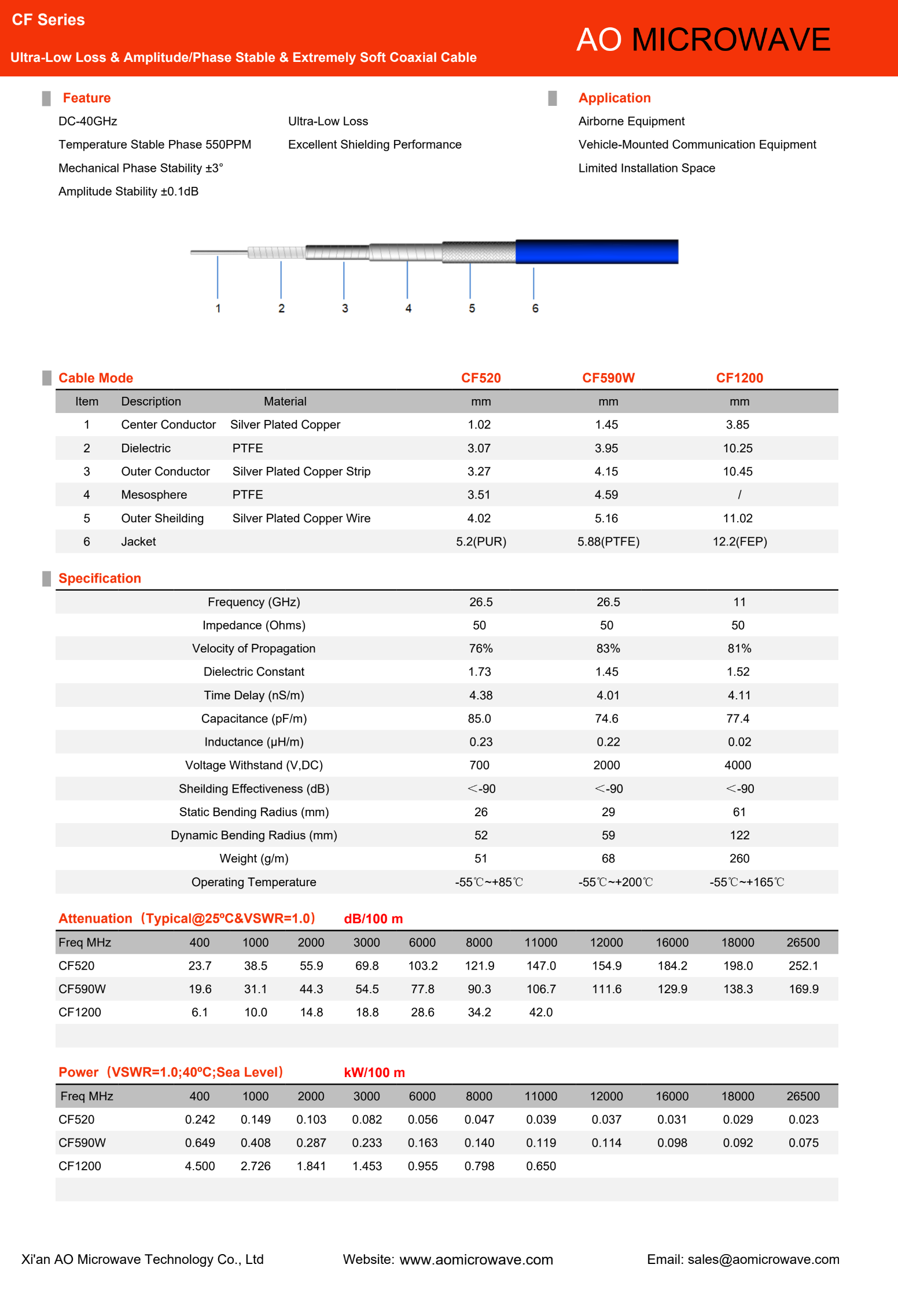
The Physics of Extreme Softness & Flexible Shielding Networks
Low-loss coaxial cables are physically stiff, utilizing thick solid conductors or heavy outer metal armoring to protect the internal dielectric. However, in laboratory testing and gimbal routing, stiff cables create significant mechanical resistance (drag), which can disturb delicate test setups or stress connector ports.
AO Microwave resolves this mechanical stiffness by using extremely soft, multi-stranded copper inner conductors and highly flexible outer shielding. By replacing solid inner conductors with ultra-fine wire strands and utilizing a soft, highly flexible silicone or polyurethane jacket, we eliminate mechanical resistance. This soft structure allows for smooth manual routing and flexible positioning while maintaining high shielding effectiveness.
Target Applications & Operational Advantages
By providing low insertion loss and high mechanical flexibility, our CF Series soft cables secure critical signal paths:
Handheld Coaxial Test Probes
Function: Connects hand-held high-frequency measurement probes to signal analyzers and VNAs.
Advantage: Extreme softness and flexibility minimize mechanical resistance, allowing the operator to position the probe freely without pulling on the test port.
Robotic & Pan-Tilt Gimbal Routing
Function: Routes RF signals across continuously moving joints in robotic arms or tracking gimbals.
Advantage: Low mechanical torque prevents drag on small positioning motors, ensuring smooth, uninterrupted tracking and movement.
High-Precision Bench Testing
Function: Interconnects active MMIC devices and test setups on laboratory benches.
Advantage: Exceptional phase and amplitude stability under bending ensure repeatable, calibration-grade measurements up to 50 GHz [3.3.4].
CF Series Coaxial Cable FAQs
Need high-performance, extremely soft CF Series Coaxial Cables?
Specify your connector interface (SMA/2.92mm), frequency range, overall length, and flexibility requirements — we'll quote in 24 hours.