
Radar Systems: Key RF DesignFactors Behind Detection, Tracking and Reliability
Modern radar systems rely on precise RF architectures to achieve reliable detection and measurement. Explore the engineering factors that influence performance across civilian/industrial applications
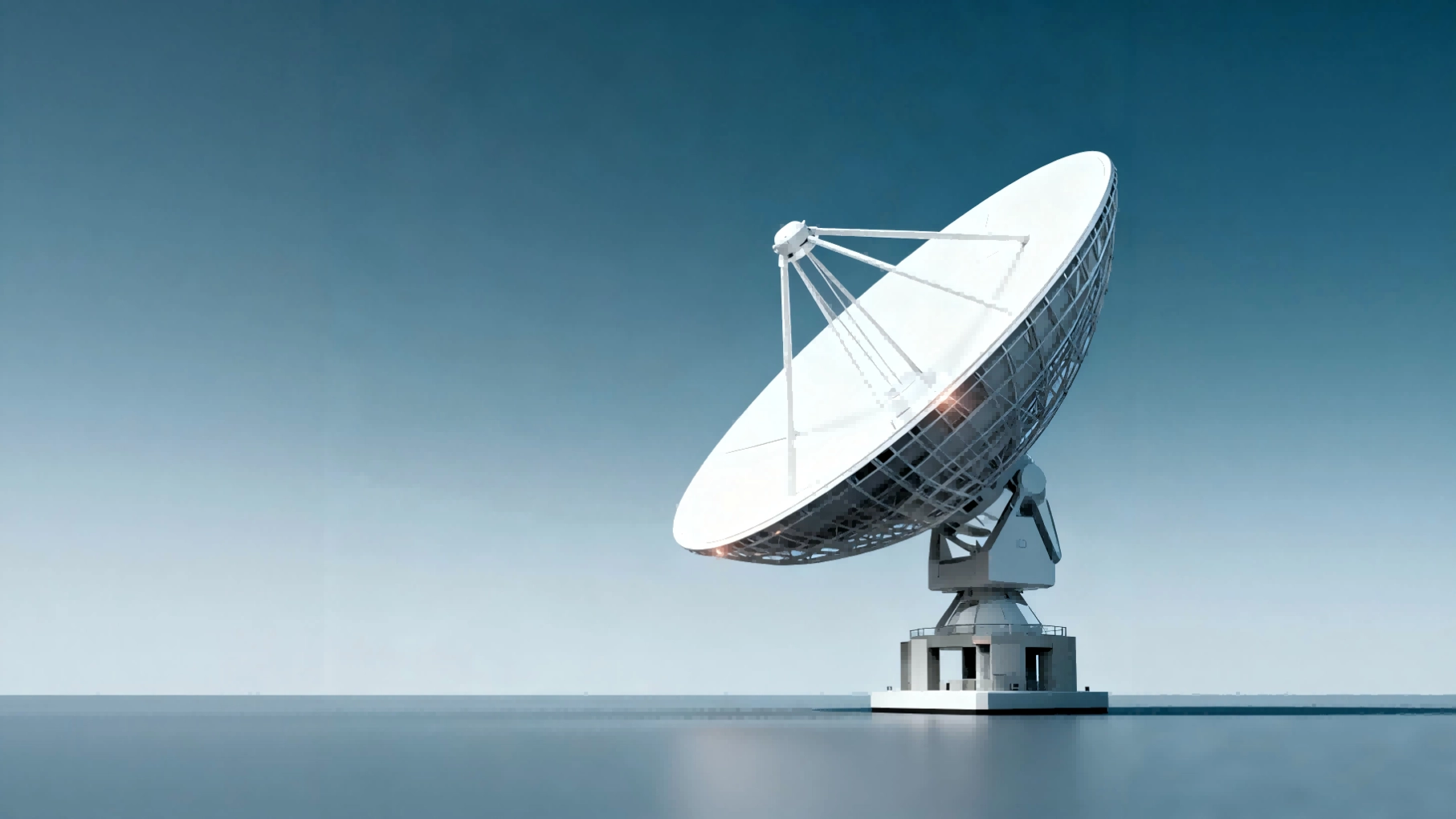
Understanding Modern Radar Systems: Key RF Design Factors Behind Detection, Tracking and Reliability
Radar technology has become an essential part of modern society. While often associated with military applications, radar systems are widely used in civilian and commercial environments including air traffic control, weather monitoring, maritime navigation, automotive safety systems, industrial automation and remote sensing.
As radar systems continue to evolve toward higher frequencies, longer detection ranges and greater target resolution, RF and microwave design plays an increasingly important role in determining overall system performance. Engineers must balance numerous factors including signal loss, power handling, antenna efficiency, environmental durability and measurement accuracy.
Understanding these engineering considerations is critical for designing reliable radar systems capable of delivering consistent performance in demanding operational environments.
The Evolution of Modern Radar Technology
Since its introduction during the early twentieth century, radar technology has undergone significant transformation. Early systems primarily focused on detecting large airborne targets. Today's radar platforms can identify small drones, track multiple moving objects simultaneously and generate high-resolution images for mapping and surveillance applications.
Advances in digital signal processing, phased array antennas, solid-state transmitters and microwave components have enabled radar systems to achieve greater sensitivity, improved accuracy and faster response times.
According to MarketsandMarkets, the global radar market is expected to continue expanding over the next decade, driven by increasing investments in defense modernization, autonomous transportation, airspace management and critical infrastructure protection.
How Modern Radar Systems Work
At its core, a radar system transmits electromagnetic energy toward a target and analyzes the reflected signal to determine information such as distance, velocity, direction and object characteristics.
Although radar architectures vary by application, most systems include several key subsystems:
- Signal Generation
- Power Amplification
- RF Transmission Network
- Antenna System
- Receiver Front End
- Signal Processing Unit
- Display and Control System
The quality of the RF signal path connecting these subsystems has a direct impact on overall radar performance. Even small losses or reflections can influence detection range, measurement accuracy and target tracking capability.
Key RF Challenges in Radar Design
Radar engineers face several technical challenges when developing high-performance systems.
Signal Loss
Microwave energy naturally experiences attenuation as it travels through transmission networks. Excessive loss reduces transmitted power and weakens received signals, limiting radar range and sensitivity.
Reflection and Impedance Mismatch
Poor impedance matching can create reflections that generate standing waves and reduce system efficiency. These effects become increasingly important at microwave and millimeter-wave frequencies.
Environmental Exposure
Many radar installations operate continuously in harsh environments that include temperature fluctuations, humidity, vibration, salt fog and wind loading. Long-term reliability depends heavily on component quality and system design.
Measurement Accuracy
Accurate calibration and signal monitoring are essential for maintaining radar performance throughout the system lifecycle.
Radar Signal Transmission Networks
One of the most important aspects of radar engineering is the efficient transmission of RF energy between transmitters, receivers and antenna systems.
For medium- and high-power radar applications, waveguide technology remains one of the preferred transmission methods due to its low insertion loss and excellent power handling capability.
Engineers frequently use straight waveguide sections to create low-loss transmission paths between radar subsystems. Compared with conventional coaxial transmission lines at higher microwave frequencies, waveguides offer superior efficiency and reduced power dissipation.
Waveguide-based transmission networks are commonly found in:
- Air Traffic Control Radar
- Marine Radar Systems
- Weather Radar Installations
- Ground Surveillance Radar
- Missile Tracking Systems
Proper waveguide selection helps engineers optimize power transfer while minimizing unwanted losses across the RF chain.
Power Monitoring and Calibration
Accurate power measurement is critical in radar systems. Operators must verify that transmitters are performing correctly and ensure that RF energy is distributed efficiently throughout the system.
Power monitoring also plays an important role during system commissioning, maintenance and troubleshooting activities.
To achieve this, radar designers often integrate directional couplers into transmission networks. These devices allow engineers to sample a small portion of RF energy without significantly disturbing the primary signal path.
Applications include:
- Transmitter Monitoring
- Calibration Procedures
- Fault Detection
- Performance Verification
- Preventive Maintenance
Reliable monitoring enables operators to identify performance degradation before it affects mission-critical operations.
Radar Antenna Considerations
The antenna system largely determines how efficiently radar energy is transmitted and received. Factors such as gain, beamwidth, polarization and bandwidth directly influence target detection capability.
Various antenna technologies are used across different radar platforms, including phased arrays, parabolic reflectors, slotted waveguide arrays and horn antennas.
For radar testing, antenna characterization and laboratory measurements, wideband horn antennas are widely used because of their stable radiation patterns, broad frequency coverage and predictable gain characteristics.
These antennas are commonly utilized in:
- Radar Development Programs
- Antenna Measurements
- RCS Testing
- EMC Validation
- Microwave Research Laboratories
Accurate antenna testing contributes directly to system reliability and long-term operational performance.
Managing Reflections and VSWR
Signal reflections remain one of the most common sources of performance degradation in microwave systems.
When reflected energy travels back toward the transmitter, it can increase standing wave ratios, reduce power transfer efficiency and potentially damage sensitive equipment.
To improve impedance matching and safely absorb unused RF energy, engineers often incorporate waveguide loads within radar transmission networks.
Proper load selection can help:
- Reduce Reflections
- Improve VSWR Performance
- Protect High-Power Equipment
- Increase System Stability
- Simplify Maintenance Procedures
Although often overlooked, effective RF termination strategies contribute significantly to long-term radar reliability.
Environmental Reliability and Long-Term Operation
Many radar systems are expected to operate continuously for years with minimal maintenance. Environmental factors can have a substantial impact on performance and service life.
Engineers must evaluate:
- Temperature Cycling
- Mechanical Shock and Vibration
- Humidity and Moisture Ingress
- Corrosion Resistance
- Solar Radiation Exposure
- Salt Fog Conditions
Selecting robust RF components and implementing proper environmental protection measures can significantly reduce lifecycle costs while improving operational availability.
Future Trends in Radar Systems
Emerging radar technologies continue to push performance boundaries. Several trends are expected to shape future system development:
- Phased Array Radar Expansion
- AI-Assisted Target Recognition
- Counter-UAS Detection Systems
- Millimeter-Wave Radar Platforms
- Multi-Function RF Systems
- Autonomous Vehicle Sensing Technologies
As frequencies increase and systems become more complex, RF design quality will remain a fundamental factor influencing detection accuracy, operational reliability and overall mission effectiveness.
Organizations such as AO Microwave support radar developers and system integrators by providing specialized microwave components used throughout transmission, measurement and antenna subsystems.
Frequently Asked Questions
What frequency bands are commonly used in radar systems?
Common radar bands include L Band, S Band, C Band, X Band, Ku Band, Ka Band and W Band. The optimal choice depends on range, resolution and environmental requirements.
Why are waveguides widely used in radar systems?
Waveguides offer low insertion loss, excellent power handling capability and reliable performance at microwave frequencies.
How do radar engineers monitor RF power levels?
Directional couplers are commonly used to sample RF signals for monitoring, calibration and performance verification.
Why is VSWR important in radar systems?
Lower VSWR improves power transfer efficiency, reduces reflections and helps protect high-power RF equipment.
What role do horn antennas play in radar development?
Horn antennas are widely used for antenna measurements, radar testing, calibration and electromagnetic compatibility evaluations.
Need Support for Your Radar RF Design?
Whether you're developing surveillance radar, weather radar, maritime systems or advanced sensing platforms, selecting the right RF architecture can improve performance, reliability and long-term operational efficiency.
References
- Skolnik, Merrill I. Introduction to Radar Systems, Third Edition.
- IEEE Aerospace and Electronic Systems Society Publications.
- MarketsandMarkets Radar Systems Market Report.
- Federal Aviation Administration (FAA) Radar Engineering Resources.
- NATO Radar Fundamentals Training Materials.
- MIT Lincoln Laboratory Radar Course Materials.