
Building Reliable Telecom & 5G Networks: RF Design Challenges Behind Coverage, Capacity and Signal Integrity
Learn how RF design influences 5G coverage, capacity and signal integrity, and explore the engineering challenges behind reliable telecom networks.
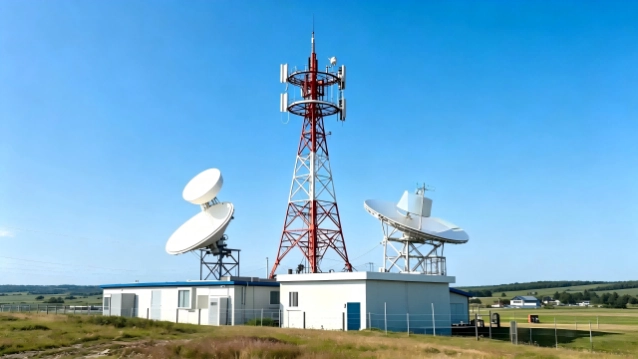
Building Reliable Telecom & 5G Networks: RF Design Challenges Behind Coverage, Capacity and Signal Integrity
Telecom networks have become the foundation of modern digital infrastructure. From mobile communications and cloud services to industrial automation and connected devices, billions of users depend on reliable wireless connectivity every day.
The transition from 4G to 5G has introduced significant improvements in speed, latency and network capacity. However, these advancements have also created new engineering challenges. Higher frequencies, denser network deployments and increasing traffic demands place greater pressure on RF system performance than ever before.
While discussions about 5G often focus on spectrum allocations and data rates, network reliability ultimately depends on countless engineering decisions made throughout the RF signal chain. Coverage, capacity and signal integrity are closely interconnected, and optimizing one often requires careful trade-offs with the others.
Understanding these RF design considerations helps network engineers build more resilient telecom infrastructure capable of supporting future connectivity demands.
The Evolution of Telecom Infrastructure
Wireless communication networks have evolved dramatically over the past three decades. Early cellular systems were designed primarily for voice communication, while modern networks support high-definition video streaming, industrial IoT, autonomous systems and cloud-based applications.
According to the GSMA Mobile Economy Report, global 5G adoption continues to accelerate across North America, Europe and Asia-Pacific regions. Network operators are investing heavily in infrastructure upgrades to accommodate growing bandwidth consumption and increasing user expectations.
At the same time, operators face challenges including spectrum scarcity, network congestion, rising operational costs and increasingly complex deployment environments.
Why 5G Creates New RF Challenges
Unlike previous wireless generations, 5G networks operate across a wide range of frequency bands, from traditional Sub-6 GHz spectrum to millimeter-wave frequencies.
While higher frequencies enable greater bandwidth and faster data transmission, they also introduce additional engineering challenges:
- Higher propagation loss
- Reduced coverage radius
- Increased sensitivity to obstacles
- More complex interference environments
- Stricter signal integrity requirements
As a result, modern telecom infrastructure requires highly optimized RF architectures capable of maintaining consistent performance under demanding operating conditions.
Coverage vs Capacity: The Engineering Trade-Off
One of the most important challenges in telecom network design is balancing coverage and capacity.
Expanding network coverage typically requires wider geographic reach and stronger signal penetration. Increasing network capacity, on the other hand, often relies on deploying additional cells, utilizing wider bandwidths and reusing spectrum more aggressively.
These objectives can sometimes conflict with each other. Engineers must carefully evaluate frequency planning, antenna placement, transmission losses and interference management strategies to achieve the desired network performance.
Successful telecom deployments require a holistic approach that considers both RF propagation characteristics and long-term operational requirements.
Managing Interference in Dense 5G Networks
As urban networks become increasingly dense, interference management has become one of the most critical aspects of wireless system design.
Modern cities may contain thousands of active transmitters operating across multiple frequency bands. Without effective filtering, unwanted signals can reduce receiver sensitivity, increase noise levels and negatively impact network performance.
To improve spectral efficiency and maintain signal quality, engineers often incorporate coaxial suspension line bandpass filters within RF transmission paths.
These filters help isolate desired frequency bands while suppressing unwanted signals and adjacent-channel interference.
Effective interference mitigation contributes to:
- Improved receiver sensitivity
- Higher network capacity
- Better signal quality
- Reduced dropped connections
- More efficient spectrum utilization
Signal Distribution Across Modern Backhaul Infrastructure
While consumer attention often focuses on cellular towers and antennas, telecom networks rely heavily on transport infrastructure operating behind the scenes.
Microwave backhaul systems continue to play a vital role in connecting remote base stations, extending network coverage and supporting high-capacity communication links where fiber deployment may not be practical.
Efficient signal distribution is essential within these microwave transport networks.
In high-frequency transmission systems, engineers may utilize waveguide power dividers to distribute RF energy across multiple signal paths while maintaining consistent performance characteristics.
Proper signal distribution helps ensure:
- Balanced network performance
- Efficient power utilization
- Reliable microwave link operation
- Scalable infrastructure design
As operators continue expanding network capacity, efficient RF distribution becomes increasingly important throughout the transport architecture.
Monitoring Network Performance and Reliability
Maintaining a reliable telecom network requires continuous monitoring and performance verification.
Network operators routinely analyze power levels, transmission efficiency and link quality to identify potential issues before they affect end users.
Accurate RF monitoring supports:
- Network optimization
- Preventive maintenance
- Coverage analysis
- Performance troubleshooting
- Capacity planning
To accomplish this, engineers often deploy broadwall directional couplers that allow a portion of RF power to be sampled without significantly affecting the primary transmission path.
Reliable monitoring improves operational visibility and helps maintain consistent service quality across large-scale deployments.
Why Transmission Loss Still Matters in 5G
Although modern network technologies receive significant attention, transmission losses remain a fundamental engineering concern.
At higher frequencies, even relatively small losses can accumulate throughout the RF chain and affect overall network performance.
Signal degradation may lead to:
- Reduced coverage
- Lower throughput
- Increased power consumption
- Higher operating costs
- Reduced system efficiency
For this reason, many telecom engineers place significant emphasis on transmission media and interconnect quality.
Applications requiring stable performance often benefit from ultra-low loss phase stable RF cable assemblies, which help minimize attenuation while maintaining consistent electrical characteristics across varying operating conditions.
As network frequencies continue to increase, transmission path quality becomes even more important for maintaining signal integrity.
Preparing for Future Network Demands
The telecom industry continues to evolve rapidly. Emerging technologies such as private 5G networks, industrial automation, smart cities, autonomous transportation and AI-driven services will place even greater demands on communication infrastructure.
Future networks will require higher reliability, increased capacity and more efficient use of available spectrum.
Several trends are expected to shape future telecom development:
- Private 5G Deployments
- Open RAN Architectures
- Industrial IoT Expansion
- AI-Assisted Network Optimization
- 6G Research Initiatives
- Higher Frequency Backhaul Systems
While technologies continue to evolve, the fundamental principles of RF engineering remain essential. Signal integrity, interference control and efficient power management will continue to influence network performance for years to come.
Companies such as AO Microwave support telecom equipment manufacturers, system integrators and network developers with specialized RF and microwave solutions used throughout modern communication infrastructure.
Frequently Asked Questions
What is the biggest RF challenge in modern 5G networks?
Interference management and signal integrity are among the most significant challenges, particularly in dense urban deployments.
Why is filtering important in telecom infrastructure?
Filters help suppress unwanted signals, improve receiver performance and increase spectrum efficiency.
How do microwave backhaul networks support telecom systems?
Microwave backhaul links connect network sites and transport large volumes of data where fiber deployment is impractical or unavailable.
Why does transmission loss become more important at higher frequencies?
Higher-frequency signals generally experience greater attenuation, making low-loss transmission paths increasingly important.
How do operators monitor RF performance across large networks?
Directional couplers and monitoring systems help engineers evaluate power levels, diagnose faults and optimize network performance.
Planning or Expanding a Telecom & 5G Network?
Reliable network performance begins with sound RF engineering decisions. Understanding signal integrity, interference management and transmission efficiency can help support long-term network success.
References
- GSMA Mobile Economy Report.
- Ericsson Mobility Report.
- 3GPP Technical Specifications and Standards.
- ITU-R IMT-2020 Recommendations.
- IEEE Communications Society Publications.
- Nokia Bell Labs Research on 5G and Future Networks.