
EMC Testing Fundamentals: RF Design Considerations for Accurate and Repeatable Compliance Measurements
Learn the RF engineering principles behind accurate EMC testing, including measurement repeatability, calibration, shielding and signal integrity.
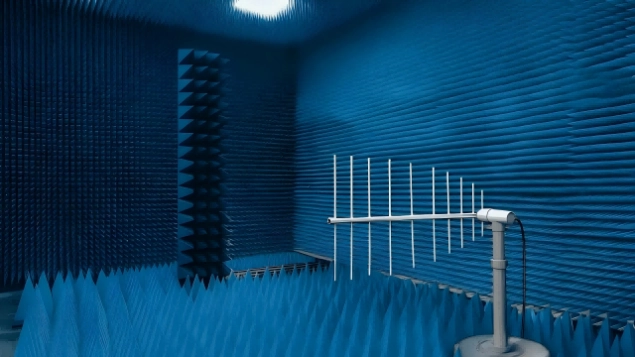
EMC Testing Fundamentals: RF Design Considerations for Accurate and Repeatable Compliance Measurements
As electronic devices become increasingly complex and interconnected, electromagnetic compatibility (EMC) has become a critical requirement across nearly every industry. From telecommunications infrastructure and aerospace systems to automotive electronics and medical equipment, manufacturers must ensure their products can operate reliably without causing or suffering from electromagnetic interference.
EMC testing provides the framework for evaluating these requirements. However, obtaining accurate and repeatable measurement results is often more challenging than many engineers expect. Small variations in test setups, signal paths, reflections or calibration procedures can significantly influence measurement outcomes.
For EMC engineers, compliance testing is not simply about passing a standard. It is about generating trustworthy data that accurately reflects real-world electromagnetic behavior. Achieving this objective requires careful RF system design, proper instrumentation and disciplined measurement practices.
Why EMC Testing Matters
Modern electronic systems operate within increasingly crowded electromagnetic environments. Wireless communications, industrial automation, radar systems, satellite networks and countless consumer devices share limited spectrum resources while generating substantial electromagnetic emissions.
Without proper EMC design and verification, these systems can experience:
- Communication disruptions
- Signal degradation
- Unexpected equipment failures
- Reduced system reliability
- Regulatory compliance issues
To mitigate these risks, organizations worldwide rely on internationally recognized standards including:
- CISPR Standards
- IEC 61000 Series
- MIL-STD-461
- DO-160
- FCC Regulations
- ETSI Requirements
Successful compliance testing ensures products can coexist within increasingly complex electromagnetic environments while maintaining safe and reliable operation.
Understanding EMC Measurement Accuracy
Measurement accuracy is the foundation of effective EMC testing.
Engineers often focus on test equipment specifications, but the overall measurement system includes many interconnected variables that influence final results.
Key contributors to measurement uncertainty include:
- Antenna performance
- Cable losses
- Connector quality
- Signal reflections
- Calibration accuracy
- Environmental conditions
- Equipment drift
Even small errors can become significant when measuring emissions near regulatory limits. As a result, EMC laboratories place strong emphasis on maintaining stable and repeatable test environments.
Common Sources of Measurement Errors
One of the most common misconceptions is that EMC measurements are entirely determined by the device under test.
In reality, test setup variables often contribute substantial uncertainty.
Signal Reflections
Impedance mismatches throughout the RF path can generate reflections that distort measured signals and reduce repeatability.
Cable Loss Variations
Changes in cable routing, connector condition or environmental temperature can influence insertion loss and measurement accuracy.
Antenna Positioning
Minor adjustments in antenna placement can produce measurable differences in received signal levels.
Calibration Drift
Measurement equipment naturally drifts over time and requires periodic verification to maintain confidence in test results.
Understanding these factors allows engineers to develop more robust measurement procedures and reduce uncertainty throughout the testing process.
Antennas Used in EMC Measurements
Antennas are among the most important components in any EMC measurement system.
Their performance directly influences field strength measurements, radiated emissions testing and antenna calibration procedures.
At microwave frequencies, engineers frequently utilize standard gain horn antennas because of their stable gain characteristics, predictable radiation patterns and excellent repeatability.
These antennas are widely used in:
- Radiated Emissions Testing
- Microwave Measurements
- Antenna Calibration
- Shielding Effectiveness Evaluation
- Electromagnetic Research
Consistent antenna performance is essential for obtaining repeatable test results and maintaining confidence in compliance measurements.
Connecting Different RF Test Equipment
EMC laboratories often utilize a wide range of instrumentation including signal generators, amplifiers, spectrum analyzers, receivers and antennas.
These devices may use different transmission technologies depending on frequency range and power requirements.
In many microwave test systems, engineers must transition between waveguide and coaxial transmission structures while minimizing signal degradation.
To achieve this, laboratories commonly use waveguide to coaxial adapters that provide efficient transitions between different RF interfaces.
Reliable interconnect solutions help preserve signal integrity throughout the measurement chain while reducing unwanted reflections and losses.
Minimizing Reflections During Testing
Reflections represent one of the most significant sources of measurement uncertainty in RF and microwave testing.
When reflected signals travel back through the measurement system, they can create standing waves, distort power levels and affect repeatability.
Proper termination is therefore essential for maintaining measurement accuracy.
Many EMC facilities incorporate waveguide loads to absorb unused RF energy and reduce reflections within microwave transmission networks.
Effective RF termination helps:
- Improve VSWR Performance
- Reduce Standing Waves
- Enhance Measurement Stability
- Protect RF Equipment
- Increase Repeatability
Although often overlooked, proper load selection can significantly improve the quality of EMC measurement results.
Power Monitoring and Calibration
Accurate calibration remains fundamental to EMC testing.
Engineers must verify transmitted power levels, monitor system performance and identify deviations before they influence compliance measurements.
Continuous monitoring helps laboratories maintain traceability and confidence in test data.
To support these activities, EMC engineers frequently utilize waveguide directional couplers that allow a controlled portion of RF energy to be sampled without significantly disturbing the primary signal path.
Applications include:
- Power Verification
- Calibration Procedures
- Amplifier Monitoring
- System Diagnostics
- Test Validation
Reliable monitoring improves measurement consistency and helps ensure compliance testing remains accurate over time.
Best Practices for Repeatable EMC Measurements
Achieving repeatable results requires more than simply following a test procedure.
Experienced EMC laboratories typically implement several best practices:
- Maintain consistent test configurations
- Verify calibration schedules regularly
- Control environmental conditions
- Use high-quality RF interconnects
- Minimize unnecessary signal reflections
- Document setup parameters thoroughly
- Monitor measurement uncertainty continuously
By combining disciplined procedures with robust RF system design, engineers can significantly improve measurement confidence and reduce compliance risks.
Future Trends in EMC Testing
The EMC testing industry continues to evolve alongside emerging technologies.
Several developments are expected to influence future testing methodologies:
- 5G and 6G Communications
- Autonomous Vehicle Electronics
- Industrial IoT Systems
- High-Frequency Millimeter-Wave Devices
- Satellite Communication Networks
- AI-Assisted Measurement Analysis
As frequencies increase and electronic systems become more complex, the demand for highly accurate and repeatable EMC measurements will continue to grow.
Organizations such as AO Microwave support EMC laboratories, research institutions and equipment manufacturers by providing specialized RF and microwave components used throughout modern test and measurement systems.
Frequently Asked Questions
What is EMC testing?
EMC testing evaluates whether electronic equipment can operate properly without causing or experiencing unacceptable electromagnetic interference.
Why is measurement repeatability important?
Repeatable measurements ensure compliance decisions are based on reliable data and can be reproduced consistently over time.
How do reflections affect EMC measurements?
Reflections can create standing waves and measurement uncertainty, leading to inaccurate test results.
Why are horn antennas commonly used in EMC testing?
Horn antennas provide stable gain, predictable radiation patterns and excellent repeatability at microwave frequencies.
What standards are commonly used for EMC compliance?
Common standards include CISPR, IEC 61000, FCC regulations, MIL-STD-461 and DO-160.
Need Support for EMC Testing Applications?
Accurate EMC measurements depend on reliable RF infrastructure. Understanding signal integrity, calibration and measurement uncertainty can help improve testing confidence and compliance outcomes.
References
- IEC 61000 Electromagnetic Compatibility Standards.
- CISPR Publications for EMC Testing and Compliance.
- MIL-STD-461 Requirements for Electromagnetic Interference Control.
- DO-160 Environmental Conditions and Test Procedures for Airborne Equipment.
- IEEE EMC Society Technical Publications.
- NIST Guidelines on Measurement Uncertainty and Calibration.