
RF & Microwave Test and Measurement: Engineering Considerations for Accurate, Repeatable and Reliable Results
Discover the RF engineering principles behind accurate microwave measurements, including calibration, signal integrity, uncertainty and test repeatability.
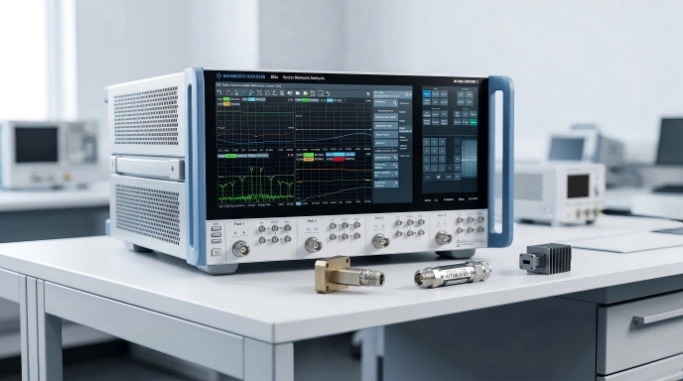
RF & Microwave Test and Measurement: Engineering Considerations for Accurate, Repeatable and Reliable Results
Accurate measurement is the foundation of every successful RF and microwave engineering project. Whether developing radar systems, validating satellite communication equipment, characterizing antennas, testing 5G infrastructure or verifying EMC compliance, engineers rely on precise measurement data to make critical design decisions.
As operating frequencies continue to increase and system architectures become more complex, measurement accuracy has become increasingly difficult to achieve. Small errors in calibration, signal routing, connector integrity or test setup configuration can significantly influence results and lead to incorrect conclusions.
For engineers working in RF and microwave applications, understanding measurement fundamentals is essential for improving confidence, reducing uncertainty and ensuring repeatable performance throughout the product development lifecycle.
Why Accurate RF Measurements Matter
Every RF system is ultimately judged by measurable performance parameters. Engineers evaluate characteristics such as insertion loss, return loss, gain, VSWR, phase stability, radiation patterns and power handling capabilities to determine whether a system meets design requirements.
Inaccurate measurements can lead to:
- Incorrect design decisions
- Extended development cycles
- Unnecessary redesign costs
- Production delays
- Field performance issues
- Regulatory compliance risks
As a result, modern laboratories place significant emphasis on calibration procedures, equipment verification and measurement uncertainty analysis.
Accurate measurement data not only improves engineering efficiency but also helps organizations bring products to market faster with greater confidence.
Common Sources of Measurement Error
Many engineers assume measurement uncertainty is primarily determined by the specifications of the instrument being used. In reality, a complete measurement system consists of numerous components that collectively influence overall accuracy.
Common sources of error include:
- Calibration drift
- Connector wear and damage
- Cable movement and instability
- Impedance mismatches
- Environmental variations
- Signal reflections
- Improper test setup configuration
As frequencies move into microwave and millimeter-wave ranges, these effects become increasingly significant. Even seemingly minor variations can produce measurable differences in test results.
Understanding and controlling these factors is a critical part of achieving high-quality measurement outcomes.
Why Calibration Matters
Calibration is one of the most important processes in RF and microwave measurement. Without proper calibration, even the most advanced test equipment can generate misleading results.
Calibration establishes a known reference plane and removes systematic errors introduced by cables, connectors and measurement hardware.
For waveguide measurement systems, engineers commonly use waveguide calibration kits to perform accurate vector network analyzer (VNA) calibration and improve measurement consistency.
Similarly, many coaxial-based test environments utilize coaxial calibration kits to establish traceable measurement references across a wide range of frequencies.
Effective calibration helps reduce:
- Systematic measurement errors
- Repeatability issues
- Connector-related uncertainty
- Instrument drift effects
- Long-term measurement inconsistencies
Regular calibration remains one of the most effective ways to improve measurement confidence.
Antenna Measurements and Verification
Antenna characterization plays a vital role in many RF and microwave development programs.
Engineers routinely evaluate antenna gain, radiation patterns, polarization characteristics and frequency response to verify design performance.
Accurate antenna measurements require stable reference antennas with predictable performance characteristics.
For many laboratory environments, standard gain horn antennas are widely used because of their well-defined gain performance, broad frequency coverage and repeatable radiation characteristics.
Applications commonly include:
- Antenna Range Testing
- Radar Development
- Satellite Communication Verification
- EMC Measurements
- Research and Development Programs
Reliable reference antennas contribute significantly to the accuracy and repeatability of measurement systems.
Connecting Test Equipment Across Different Interfaces
Modern RF laboratories frequently combine instruments that utilize different transmission technologies.
While waveguides are often preferred for high-frequency microwave applications, coaxial interfaces remain common throughout test equipment and measurement systems.
Maintaining signal integrity during transitions between these technologies is essential.
To support efficient interconnections, engineers commonly integrate waveguide to coaxial adapters within test setups.
Proper interface transitions help:
- Reduce insertion loss
- Improve impedance matching
- Minimize reflections
- Increase measurement accuracy
- Enhance overall system stability
Poor interconnect quality can quickly undermine the performance of an otherwise well-designed measurement system.
Monitoring Power During Measurements
Power verification is a critical aspect of RF testing.
Engineers often need to observe signal levels without disrupting the primary measurement path. This capability becomes particularly important when validating high-power systems, calibrating test equipment or monitoring amplifier performance.
To accomplish this, many laboratories employ crossguide directional couplers that allow a controlled portion of RF energy to be sampled for monitoring and analysis.
These devices support:
- Power Measurement
- System Calibration
- Amplifier Monitoring
- Fault Diagnostics
- Performance Verification
Reliable power monitoring improves both measurement confidence and laboratory efficiency.
Improving Repeatability and Reducing Uncertainty
Repeatability is often as important as absolute accuracy.
If engineers cannot reproduce measurement results consistently, identifying genuine performance changes becomes extremely difficult.
Several best practices can help reduce uncertainty:
- Maintain consistent test configurations
- Use calibrated measurement equipment
- Inspect connectors regularly
- Control environmental conditions
- Avoid unnecessary cable movement
- Document test procedures thoroughly
- Perform routine verification measurements
Measurement repeatability provides confidence that observed performance differences reflect actual device behavior rather than variations in the test environment.
The Growing Importance of Signal Integrity
As frequencies increase into millimeter-wave bands and system bandwidths continue expanding, signal integrity has become a major focus for RF engineers.
Modern applications such as:
- 5G and Future 6G Networks
- Satellite Communication Systems
- Phased Array Radar
- Autonomous Vehicle Sensors
- Advanced Test Instrumentation
all depend on highly accurate measurements to verify increasingly demanding performance requirements.
Maintaining signal integrity throughout the measurement chain helps engineers identify problems earlier, optimize designs more effectively and accelerate development cycles.
Future Trends in RF Test and Measurement
The RF testing industry continues to evolve rapidly alongside advances in communication, aerospace and sensing technologies.
Several trends are expected to shape future measurement environments:
- Millimeter-Wave Expansion
- 6G Research Programs
- AI-Assisted Test Automation
- Digital Twin Validation
- Advanced Satellite Testing
- Higher Frequency Calibration Standards
As measurement challenges become more complex, accurate calibration, reliable interconnects and repeatable test methodologies will remain essential to successful engineering programs.
Organizations such as AO Microwave support laboratories, research institutions and equipment manufacturers by providing specialized RF and microwave solutions used in calibration, verification, measurement and system characterization applications.
Frequently Asked Questions
Why is calibration important in RF measurements?
Calibration removes systematic errors and establishes a known reference plane, improving measurement accuracy and repeatability.
What causes measurement uncertainty?
Common contributors include connector wear, cable movement, calibration drift, impedance mismatches and environmental variations.
Why are horn antennas commonly used in measurement systems?
Standard gain horn antennas provide stable gain characteristics and predictable radiation patterns, making them ideal reference antennas.
How do directional couplers support RF testing?
Directional couplers allow engineers to monitor RF power levels without significantly disturbing the primary signal path.
What is the difference between waveguide and coaxial calibration?
Both establish measurement references, but each is optimized for its respective transmission medium and frequency range.
Looking to Improve RF Measurement Accuracy?
Reliable measurements begin with proper calibration, stable signal paths and high-quality RF components. Understanding these fundamentals can help improve confidence in every engineering decision.
References
- IEEE Microwave Theory and Techniques Society Publications.
- Keysight Technologies RF and Microwave Measurement Fundamentals.
- Rohde & Schwarz Guide to RF Measurement Accuracy.
- NIST Microwave Measurement Standards and Calibration Resources.
- IEC Measurement and Instrumentation Standards.
- Microwave Journal Articles on RF Calibration and Measurement Uncertainty.