
UAV & Drone Systems: RF Design Challenges Behind Reliable Communications, Navigation and Payload Performance
Explore the RF engineering challenges behind reliable UAV and drone systems, including communications, navigation, payload integration and signal integrity.
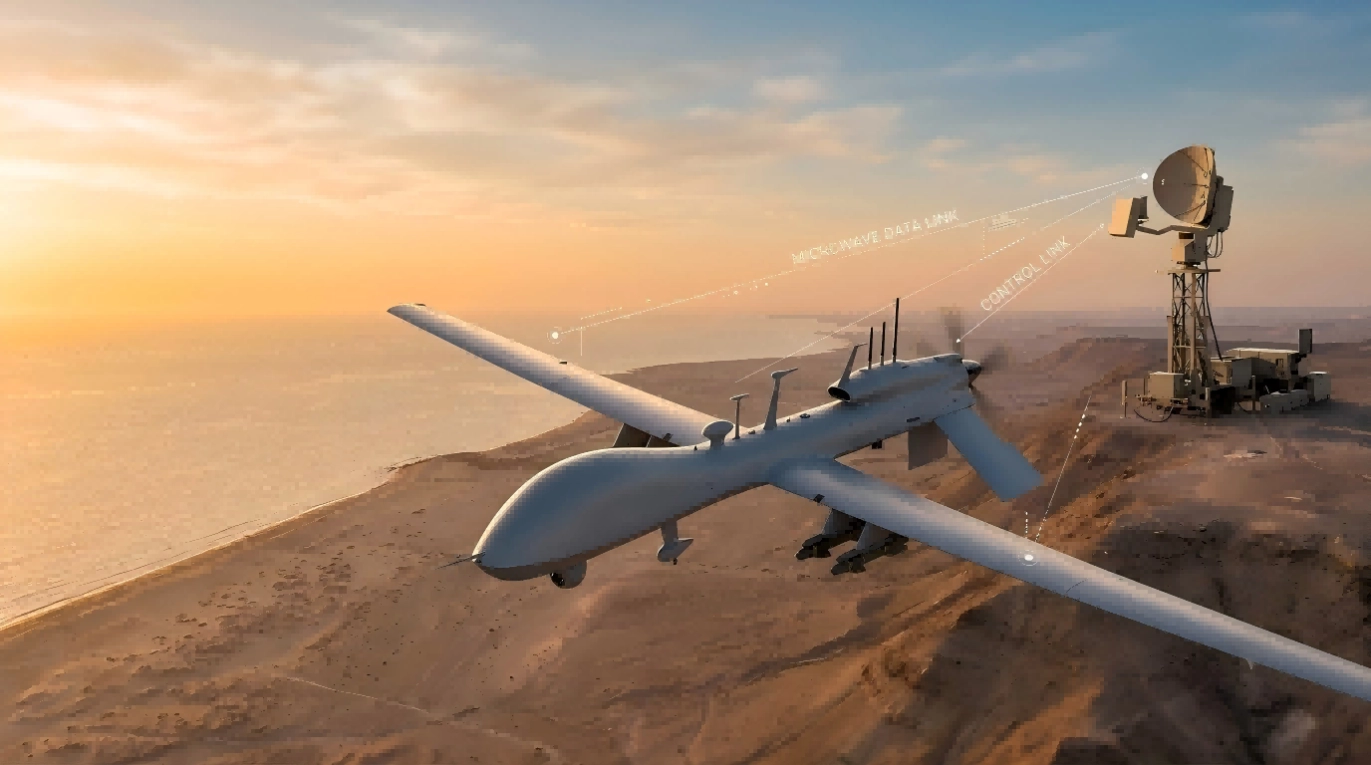
UAV & Drone Systems: RF Design Challenges Behind Reliable Communications, Navigation and Payload Performance
Unmanned Aerial Vehicles (UAVs) and drone systems have evolved far beyond their original military applications. Today, drones are transforming industries including infrastructure inspection, agriculture, public safety, logistics, mapping, telecommunications, environmental monitoring and defense. As capabilities expand, the RF and microwave technologies behind these platforms have become increasingly important.
Modern UAVs depend on multiple wireless subsystems operating simultaneously. Command and control links, navigation systems, payload communications, video transmission, radar sensors and satellite connectivity must all function reliably in dynamic and often challenging electromagnetic environments.
Achieving dependable performance requires careful RF engineering. Signal integrity, interference mitigation, power efficiency and reliable data transmission are no longer optional considerations—they are fundamental requirements for mission success.
Understanding these RF design challenges helps engineers build UAV systems capable of operating safely and effectively across increasingly demanding applications.
The Rapid Growth of UAV and Drone Technologies
The global UAV market has experienced remarkable growth over the past decade. According to multiple industry reports from FAA, EASA and commercial drone research organizations, drone adoption continues to expand across both commercial and government sectors.
Common UAV applications now include:
- Infrastructure Inspection
- Precision Agriculture
- Emergency Response
- Environmental Monitoring
- Border Surveillance
- Telecommunications Support
- Logistics and Delivery Services
- Military Intelligence and Reconnaissance
As missions become more sophisticated, UAVs require increasingly reliable communication systems capable of supporting larger data volumes, longer flight durations and more advanced payloads.
Communication Challenges in Modern UAV Systems
Reliable communication is one of the most critical requirements for any UAV platform.
A typical drone may simultaneously transmit and receive:
- Flight Control Commands
- Telemetry Data
- GPS Information
- Video Streams
- Payload Sensor Data
- Satellite Communication Signals
These communication channels often operate across different frequency bands and power levels while sharing limited onboard space and power resources.
Engineers must balance:
- Communication Range
- Latency Requirements
- Bandwidth Availability
- Power Consumption
- Weight Constraints
- Electromagnetic Compatibility
Failure to optimize these factors can lead to degraded performance, reduced mission effectiveness or even complete communication loss.
Managing RF Interference in Crowded Airspace
As drone adoption continues to increase, the RF environment becomes increasingly congested.
Urban areas may contain thousands of wireless devices operating simultaneously, including cellular networks, Wi-Fi systems, satellite terminals, radar installations and other UAVs.
Unwanted interference can negatively affect communication links, reduce receiver sensitivity and increase the likelihood of signal degradation.
To improve spectral selectivity and suppress unwanted frequencies, engineers frequently integrate coaxial band pass filters within UAV communication architectures.
Effective filtering helps:
- Reduce Adjacent Channel Interference
- Improve Receiver Performance
- Enhance Link Stability
- Increase Communication Reliability
- Optimize Spectrum Utilization
As wireless environments become more crowded, interference management will continue to play a critical role in UAV system performance.
Maintaining Signal Integrity in Compact Platforms
Unlike traditional communication infrastructure, UAV platforms operate under strict size, weight and power (SWaP) constraints.
Every component must contribute to overall system efficiency while minimizing additional weight and complexity.
Signal losses that may be acceptable in larger systems can significantly impact UAV performance due to limited power budgets and communication margins.
For this reason, many UAV designers utilize ultra-low loss phase stable RF cable assemblies to maintain signal integrity throughout onboard RF architectures.
Benefits include:
- Reduced Transmission Loss
- Improved Phase Stability
- Enhanced Reliability
- Consistent Electrical Performance
- Greater Design Flexibility
High-quality RF interconnects help ensure communication systems continue performing reliably throughout changing environmental and operational conditions.
Supporting Advanced Payloads and Sensor Systems
Modern UAVs increasingly carry sophisticated payloads including electro-optical cameras, infrared sensors, synthetic aperture radar (SAR), electronic warfare systems and communication relay equipment.
Many of these payloads require rotational movement for tracking, surveillance or scanning operations.
Maintaining uninterrupted RF transmission through rotating interfaces presents unique engineering challenges.
For high-frequency microwave payloads, engineers often integrate waveguide rotary joints that allow microwave signals to pass across rotating structures while preserving signal quality.
Similarly, many communication and sensor systems utilize coaxial rotary joints to support continuous RF transmission through rotating platforms.
Typical applications include:
- EO/IR Gimbal Systems
- SAR Payloads
- Airborne Surveillance Platforms
- Communication Relay Systems
- Tracking and Targeting Systems
Reliable rotary interfaces help maximize payload effectiveness while maintaining communication continuity during dynamic flight operations.
Navigation and Positioning Reliability
Accurate navigation is fundamental to UAV safety and mission success.
Modern drone platforms often combine:
- GNSS Receivers
- Inertial Navigation Systems
- Vision-Based Navigation
- Terrain Mapping Sensors
- Communication-Based Positioning
These systems rely heavily on stable RF performance and effective interference mitigation.
Signal degradation, multipath effects or RF interference can compromise navigation accuracy and reduce operational reliability.
As UAV operations increasingly move toward Beyond Visual Line of Sight (BVLOS) missions, navigation integrity will become even more important.
Testing and Characterizing UAV RF Systems
Before deployment, UAV communication and sensing systems must undergo extensive validation and performance testing.
Engineers evaluate antenna patterns, communication range, polarization characteristics, interference susceptibility and system efficiency under realistic operating conditions.
For many RF measurement applications, dual polarization horn antennas provide valuable capabilities for characterizing communication links and antenna performance across multiple polarization states.
Applications include:
- Antenna Testing
- Radar Development
- Communication System Evaluation
- Propagation Studies
- Research and Development Programs
Comprehensive testing helps identify potential issues early and supports more reliable UAV deployment.
Future Trends in UAV Communications
The UAV industry continues to evolve rapidly, creating new opportunities and engineering challenges.
Several trends are expected to shape future UAV system architectures:
- BVLOS Operations
- Satellite-Connected Drones
- Autonomous Swarm Systems
- AI-Assisted Flight Control
- Integrated Airspace Management
- Advanced Radar and Sensing Payloads
- 5G and Future 6G Connectivity
As these technologies mature, reliable RF system design will remain essential for supporting safe, efficient and scalable UAV operations.
Companies such as AO Microwave support UAV developers, communication system integrators and research organizations with specialized RF and microwave solutions used throughout modern airborne platforms.
Frequently Asked Questions
Why is RF design important in UAV systems?
RF design directly affects communication reliability, navigation accuracy, payload performance and overall mission effectiveness.
What causes communication failures in drones?
Common causes include RF interference, signal attenuation, antenna issues, insufficient filtering and environmental obstacles.
Why are RF filters used in UAV communication systems?
RF filters help suppress unwanted signals, improve receiver sensitivity and enhance communication reliability.
What are rotary joints used for in UAV applications?
Rotary joints enable RF signals to pass through rotating structures such as gimbals, radar systems and tracking platforms.
Why is signal integrity important in UAV platforms?
Maintaining signal integrity improves communication quality, reduces transmission losses and enhances overall system performance.
Developing Advanced UAV or Drone Systems?
Reliable airborne communications begin with strong RF engineering. Understanding interference management, signal integrity and payload integration can help improve UAV performance and mission success.
References
- FAA Unmanned Aircraft Systems (UAS) Reports and Forecasts.
- EASA Drone Market Outlook and Regulatory Publications.
- IEEE Aerospace and Electronic Systems Society Research Papers.
- Drone Industry Insights Market Reports.
- ITU Recommendations for UAV Communications and Spectrum Management.
- Journal of Unmanned Vehicle Systems.