
Why Are Waveguide Circulators Essential in Radar and Satellite Systems?
Waveguide circulators in radar AESAs and SATCOM gateways: TR module duplexing, N+1 redundancy, LEO constellation demands, and the peak-vs-average power distinction.
Why Are Waveguide Circulators Essential in Radar and Satellite Systems?
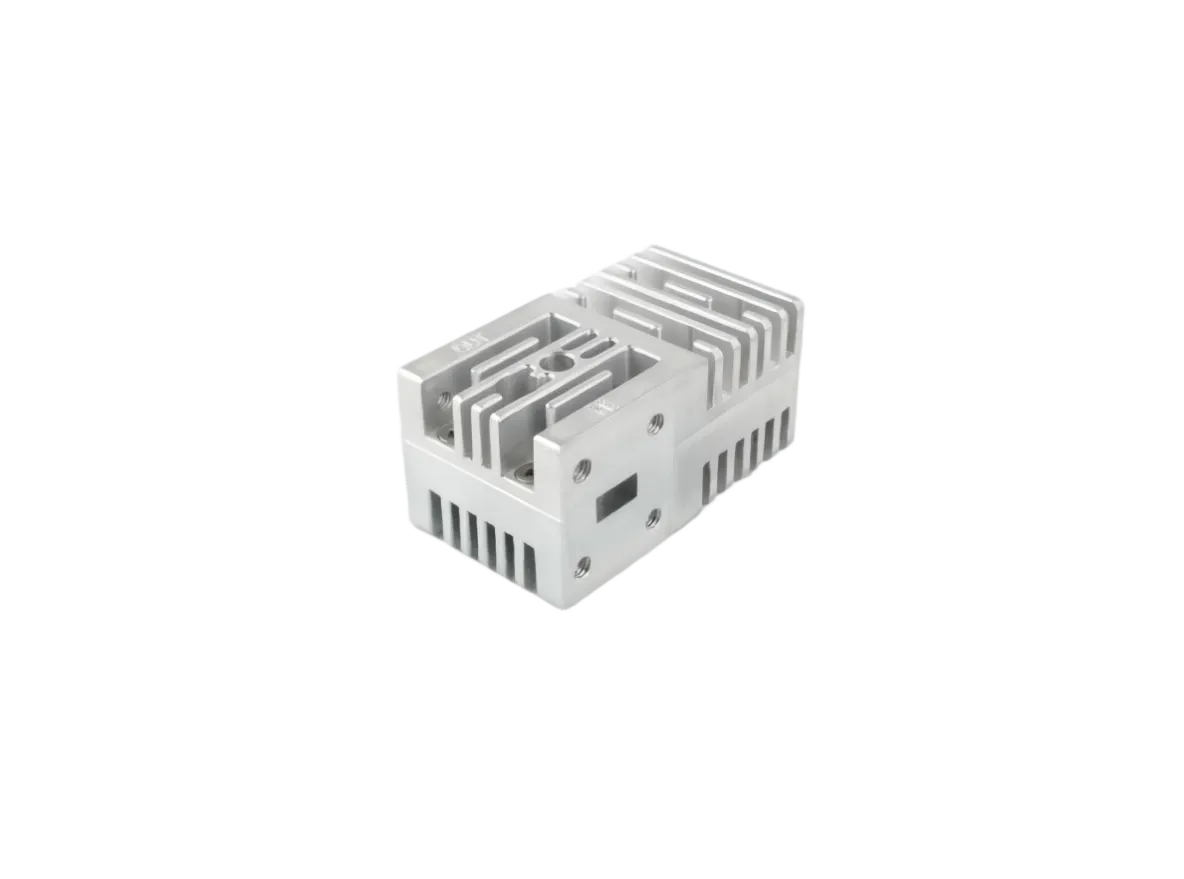
Remove the waveguide circulator from an S-band air-surveillance radar or a Ku-band satellite gateway and two critical functions vanish simultaneously: the transmit/receive duplexing that allows a single antenna to handle both, and the power amplifier protection that prevents reflected energy from destroying expensive output transistors on the first high-VSWR event. The circulator performs both without moving parts, without control electronics, and without a power supply—making it one of the few components in an RF chain that system integrators call genuinely irreplaceable.
This article examines waveguide circulators specifically as they function inside radar and satellite communication (SATCOM) systems—not generic use cases, but the exact architectures and failure scenarios that make the component essential. For engineers specifying or maintaining these systems, understanding the circulator's role in context is the difference between a reliable mission and an unscheduled outage.
Radar: The Duplexer That Never Switches
In a monostatic radar, the transmitter and receiver share one antenna. Without a circulator, the transmit pulse—megawatts of peak power in some systems—would couple directly into the receiver front-end, vaporizing the low-noise amplifier on the very first pulse. The waveguide circulator routes the transmit pulse from Port 1 to the antenna on Port 2, and the returning echo from Port 2 to the receiver on Port 3. No PIN diode switch, no timing circuit, no single point of electronic failure.
Modern active electronically scanned array (AESA) radars take this a step further. Each of the 1,200+ transmit/receive (TR) modules in a fighter radar like the AN/APG-81 contains its own miniature ferrite circulator at the element level. The circulator sits between the GaN power amplifier and the radiating element, routing the transmit signal outward while isolating the receive path. On receive, the same ferrite junction routes the weak echo to the LNA, with a limiter providing secondary protection. Without the circulator at each element, the AESA's beamforming and duplexing collapse simultaneously.
SATCOM Gateways: CW Protection and N+1 Redundancy
Satellite gateways present a different challenge. Unlike radar's high peak-to-average power ratio, SATCOM uplinks transmit continuous-wave (CW) or near-CW modulated carriers—500 W to 2 kW at Ku-band, concentrated in a narrow beam. The circulator's internal load must dissipate reflected energy continuously, not just during pulse peaks. This drives different thermal design requirements: forced-air or liquid cooling, higher-temperature ferrite grades, and conservative power derating.
The circulator also enables the N+1 redundancy architecture standard in teleports. Multiple high-power amplifiers feed a waveguide switch matrix through individual circulators. If one amplifier faults, its circulator isolates the failed chain, and a hot-spare amplifier assumes the load. No traffic interruption, no waveguide arcing, no transient propagating backward. This architecture depends entirely on the circulator's non-reciprocal property—bidirectional power flow is simply not an option in a redundancy chain.
Signal monitoring also relies on circulator physics. A crossguide directional coupler placed after the circulator senses forward and reflected power without contacting the main transmission line, feeding monitoring and protection circuits that can trip the amplifier within microseconds of a high-VSWR event.
LEO Constellations: New Demands on the Ground Segment
The LEO megaconstellation era—over 50,000 authorized satellites across Starlink, Project Kuiper, OneWeb, and Telesat Lightspeed—has transformed the ground segment from a few dozen GEO gateways to thousands of tracking terminals worldwide. Each terminal must hand off between satellites every 5–10 minutes as one sets and the next rises. Each handoff changes the pointing angle, polarization, and antenna VSWR—meaning the circulator and its termination load must operate reliably under rapidly cycling mismatch conditions, not steady-state.
At Ka-band and V-band, where LEO feeder links operate, waveguide circulators maintain isolation at frequencies where coaxial solutions suffer from dielectric loss, connector repeatability issues, and thermal expansion mismatches. The rigid air-dielectric structure of waveguide is inherently more stable across the -40°C to +55°C ambient swings at remote gateway sites.
Peak Power vs. Average Power: The Radar/SATCOM Distinction
One specification parameter—power handling—reveals the fundamental difference between radar and SATCOM circulator requirements:
| Parameter | Radar Circulator | SATCOM Circulator |
|---|---|---|
| Peak power | 10 kW – 5 MW+ (pulsed) | 1–2 kW (CW) |
| Average power | 50 W – 2 kW (duty cycle limited) | 500 W – 2 kW (continuous) |
| Dominant thermal concern | Dielectric breakdown (arcing) | Ferrite overheating (Curie temp) |
| Load duty cycle | Intermittent (pulse reflections) | Continuous (CW reflections) |
| Cooling | Conduction to cold plate | Forced air or liquid cooling |
| Typical WR size | WR-284 (S-band), WR-112 (X-band) | WR-75 (Ku-band), WR-42 (K-band) |
A circulator rated "1 kW" from a radar catalog may fail in a 1 kW CW satellite uplink because the average thermal load is fundamentally different. Always request the average power vs. ambient temperature derating curve before cross-deploying a radar circulator into a SATCOM application or vice versa.
Interface Compatibility Across the RF Chain
The circulator connects on one side to the power amplifier output and on the other to the antenna feed or waveguide switch matrix. If the amplifier uses a waveguide-to-coaxial adapter for test-port access or calibration injection, that adapter's flange must match the circulator's input flange exactly. Cross-referencing flange types before ordering prevents last-minute adapter procurement—a common schedule delay in system integration. The Standard Waveguide Flange Cross-Reference Table maps all EIA and IEC designations to their compatible counterparts.
Frequently Asked Questions
Q: Does every AESA radar element need its own circulator?
Yes—every TR module in an AESA radar contains a miniature ferrite circulator, typically fabricated as a microstrip or drop-in circulator on the module substrate. The circulator duplexes the single radiating element between transmit and receive and provides the first layer of receiver protection. At the subarray or column level, larger waveguide circulators handle power distribution and provide system-level isolation. The element-level circulator is the single most replicated component in a modern fighter radar.
Q: How do circulators enable N+1 redundancy in satellite gateways?
Each high-power amplifier in the redundancy group feeds a circulator. The circulator outputs connect to a waveguide switch matrix. If one amplifier faults, its circulator blocks reflected power from the switch from entering the failed amplifier, while the hot-spare amplifier's circulator routes its output into the common path. The switching occurs downstream of the circulators, meaning the spare amplifier is already online and protected the moment the switch transitions. No load interruption, no waveguide transients.
Q: What changes for circulators in LEO gateways vs. GEO gateways?
LEO gateways must handle rapid VSWR cycling as tracking antennas switch between satellites every 5–10 minutes. Each satellite handoff changes pointing angle and polarization, briefly degrading antenna return loss. The circulator's termination load must absorb these transient reflections without overheating or degrading. GEO gateways see near-steady-state VSWR; LEO gateways see dynamic mismatch that cycles hundreds of times per day. Thermal cycling fatigue in the termination load is a new failure mode unique to LEO operations.
Q: Why do radar and SATCOM circulators have different peak/average power trade-offs?
Radar transmits short pulses (microseconds) at high peak power but with a low duty cycle (typically 0.1–10%), so average thermal load is modest. SATCOM transmits near-CW modulated carriers, so average thermal load approaches peak power. A circulator designed for radar peak power may have insufficient thermal mass for SATCOM CW. Conversely, a SATCOM circulator with large cooling fins may not survive radar peak electric fields that cause arcing. The two domains require different ferrite formulations, magnet geometries, and thermal designs.
Q: Can a waveguide circulator fail during continuous CW satellite uplink?
Yes—the most common CW failure mode is the termination load exceeding its rated dissipation capacity. A Ku-band gateway transmitting 750 W CW into an antenna with 15 dB return loss (approximately 3% reflection) sends ~23 W continuously into the load. If the load is rated for 20 W, it will slowly overheat, degrade, and eventually fail open—leaving the amplifier unprotected. Always size the termination for worst-case reflected power at the lowest expected antenna return loss, not nominal conditions.
Q: Do waveguide circulators work at V-band for LEO feeder links?
Yes—waveguide circulators are commercially available through WR-15 (V-band, 50–75 GHz) and even WR-10 (W-band, 75–110 GHz). At these frequencies, the ferrite puck is only a few millimeters in diameter and the required bias magnet is correspondingly small. Insertion loss is higher than at Ku-band (0.5–1.0 dB vs. 0.1–0.3 dB) due to ferrite material losses scaling with frequency. Precision machining tolerances and anti-cocking flanges with alignment pins become mandatory to guarantee flush mating and leak-proof RF seals.
Market Context
The satellite ground station market is projected to grow from USD 40.99 billion in 2025 to USD 82.72 billion by 2030 at a CAGR of 15.1% (MarketsandMarkets, 2025), driven by multi-orbit constellation deployments requiring dense ground networks. The broader waveguide market—where radar and defense systems account for 39.8% of demand—is valued at USD 1.91 billion in 2025 with a projected rise to USD 2.85 billion by 2032 (5.91% CAGR). Waveguide circulators sit at the intersection of both growth vectors.
AO Microwave: Radar and SATCOM Circulators
- Full spectrum: L-band through W-band (1–110 GHz), including the high-demand S, C, X, Ku, Ka, and V bands for defense and satellite applications.
- Thermal engineering built in: Water-cooled plates for CW SATCOM, high-peak-power pulsed designs for radar, extended-temperature ferrites for outdoor gateways.
- Rapid turnaround: Custom circulators in weeks—not the 16–24 week lead times of competing manufacturers.
- Integration support: Matching components—circulators, directional couplers, waveguide-to-coaxial adapters, and loads—specified and tested together.
Specifying Circulators for Radar or SATCOM?
Send us your frequency band, peak/average power, and whether you need radar-pulsed or CW-rated components. Technical quote with S-parameters included—no obligation.
Contact Our Engineering Team