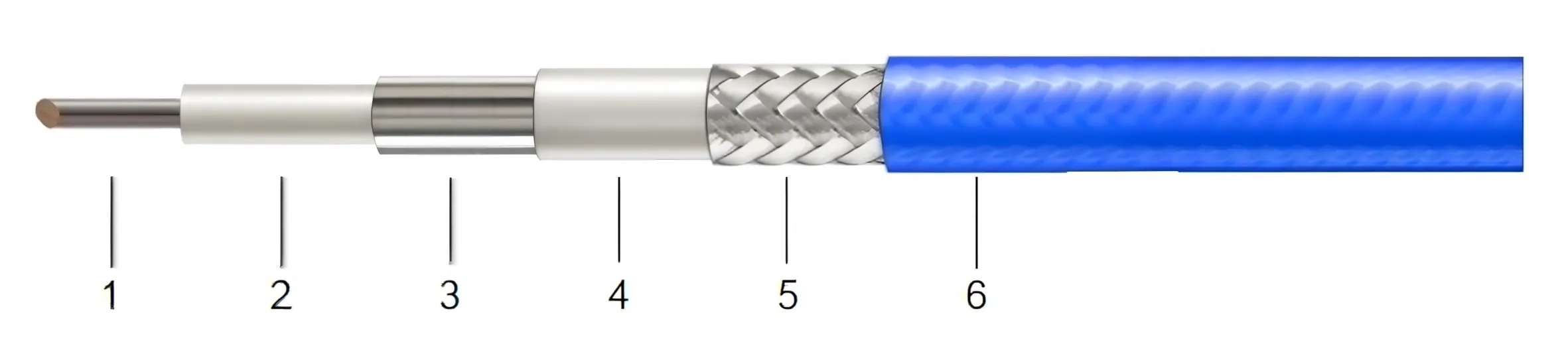
CC Series: High Precision Test Level Coaxial Cable
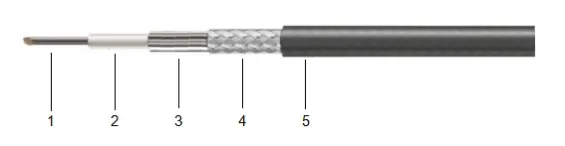
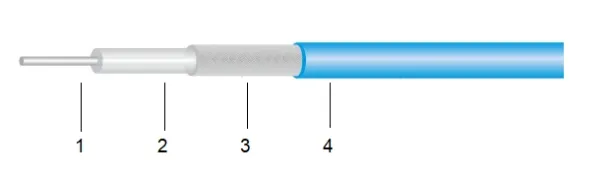
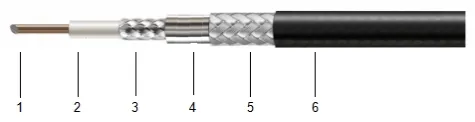
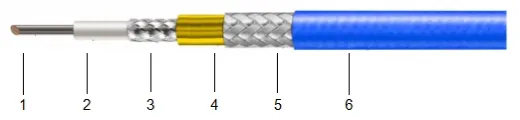
CC Series test-level coaxial cables from AO Microwave cover DC to 110 GHz across six models. Built on silver-plated copper conductors and dual-PTFE dielectric architecture, every CC cable delivers 50-ohm impedance, 90 dB shielding, and repeatable phase stability from -55 degree C to +165 degree C. Whether calibrating a VNA at 67 GHz or routing through a thermal chamber, CC Series gives your measurement chain the low-uncertainty, traceable performance that metrology-grade testing demands.
CC Series: High Precision Test Level Coaxial Cable, DC to 110 GHz
When your test bench demands absolute measurement fidelity from DC through millimeter-wave frequencies, every interconnect becomes a potential source of error. The CC Series from AO Microwave is engineered specifically for the metrology chain — delivering precision silver-plated copper construction, tightly controlled 50-ohm impedance, and attenuation characteristics you can trust from your VNA calibration standards to your anechoic chamber setups. Six models span 18 GHz to 110 GHz, with PTFE dielectrics ensuring repeatable phase stability across your entire test campaign.
Core Technology Highlights
DC to 110 GHz Broadband Coverage
The CC150 model reaches 110 GHz — covering W-band and beyond for advanced radar, SATCOM, and 5G mmWave research. Every model delivers flat group delay and consistent impedance across its rated bandwidth, so your S-parameter measurements stay trustworthy from cal to DUT.
Silver-Plated Copper Conductor System
Center conductor and outer shielding layers use silver-plated copper — maximizing surface conductivity at high frequencies where skin effect dominates. The result: lower insertion loss per meter and superior intermodulation performance compared to tin-plated alternatives.
PTFE Dielectric Stack for Phase Stability
Low-density PTFE dielectric with velocity of propagation ranging from 76% to 84%. Combined with an additional PTFE protective layer between outer conductor and shielding, this dual-PTFE architecture minimizes phase variation during flexure — critical for phased-array and MIMO test applications.
90 dB Shielding Effectiveness, Uniform Across All Models
Every CC Series cable — from the subminiature CC150 to the robust CC800 — delivers consistent 90 dB shielding effectiveness. This across-the-board uniformity means you can mix cable diameters in a single test rack without worrying about cross-talk variance between channels.
CC Series Parameter Table

Selection Guide
Determine Your Maximum Test Frequency
Evaluate Cable Loss Budget and Physical Constraints
Quick Reference — Key Specs at a Glance
CC220: 67 GHz • 63.7 dB/100m @1 GHz • 16 g/m • 0.110 kW/100m @1 GHz • Bend 12.5 mm
CC360: 50 GHz • 48.1 dB/100m @1 GHz • 31 g/m • 0.506 kW/100m @1 GHz • Bend 18 mm
CC400: 50 GHz • 40.5 dB/100m @1 GHz • 40 g/m • 0.743 kW/100m @1 GHz • Bend 21 mm
CC500: 26.5 GHz • 27.1 dB/100m @1 GHz • 55 g/m • 0.821 kW/100m @1 GHz • Bend 25.5 mm
CC800: 18 GHz • 16.7 dB/100m @1 GHz • 123 g/m • 1.604 kW/100m @1 GHz • Bend 39 mm
Engineered to Solve Your Toughest Interconnect Challenges
"My test cables drift after every temperature cycle"
CC Series PTFE dielectric stack is thermally pre-conditioned during manufacturing, and the silver-plated copper outer conductor maintains consistent contact pressure across -55°C to +165°C. Phase vs. temperature curves are repeatable cycle-to-cycle — your calibration stays valid longer.
"At 67 GHz, every millimeter of cable changes my measurement"
CC220 and CC150 use precision-drawn silver-plated copper-clad steel center conductors with diameter tolerances held to microns. Impedance uniformity along the entire cable length minimizes insertion loss ripple that masks true DUT performance.
"I need 90 dB shielding, but double-braid cables are too stiff"
The CC Series achieves 90 dB shielding effectiveness through silver-plated copper foil plus silver-plated copper braid — no double-braiding required. You get the EMI isolation your sensitive receiver tests demand, with cable flexibility your probe station needs.
"Different cable sizes mean inconsistent test data across channels"
All six CC models share identical shielding effectiveness (90 dB), impedance (50 Ω), and conductor metallization. When you scale cable diameter to match frequency requirements, your measurement methodology remains consistent — apples-to-apples comparison across your entire test suite.
Applications
Avionics & Defense
Electronic warfare and countermeasures systems operating across X through W-band. CC Series cables maintain phase-matched performance in high-vibration airframe environments — validated to MIL-STD-810 thermal profiles.
Laboratory Metrology
VNA calibration, spectrum analyzer interconnects, and anechoic chamber feed lines. Every CC cable ships with measured insertion loss data, giving your lab traceable documentation for ISO/IEC 17025 accreditation.
5G mmWave & SATCOM Test
Over-the-air (OTA) test chambers for FR2 (24.25–52.6 GHz) and beyond. CC400 and CC360 provide the combination of low loss and tight bend radius required for dense antenna arrays and near-field scanner setups.
Semiconductor Probing
On-wafer S-parameter measurements through 110 GHz. CC150 and CC220 ultra-flexible construction maintains probe contact force while absorbing manipulator motion, preventing pad damage on expensive engineering samples.
Automotive Radar Validation
76–81 GHz long-range and short-range radar sensor characterization. CC220 bridges the gap between bench-top instruments and vehicle-level integration testing with consistent 50-ohm performance across temperature extremes.
Quantum Computing Research
Cryogenic-to-room-temperature signal routing for qubit control and readout. CC Series PTFE dielectric maintains low thermal conductivity, and silver-plated conductors minimize Johnson noise in low-temperature measurement chains.
Frequently Asked Questions
Q: What distinguishes CC Series from CG or CK Series?
CC Series is AO Microwave's test-and-measurement grade line — optimized for phase stability, measurement repeatability, and broadband performance through 110 GHz. CG Series targets cost-sensitive production interconnects; CK Series adds armoring for field-deployable systems. If your cable connects a VNA port to a DUT, CC Series is the correct choice.
Q: Can CC Series cables be phase-matched?
Yes. Phase-matched sets are available on request. AO Microwave measures each cable individually and groups matched pairs or sets within specified electrical length tolerances. Contact our sales team with your phase-matching requirements and the target frequency band.
Q: What connector options are available for CC Series?
Standard connector options include 2.92 mm (K), 2.4 mm, 1.85 mm (V), and 1.0 mm for the CC150 model. SMA and Type-N are offered for lower-frequency models (CC400/CC500/CC800). Custom connector configurations can be discussed with our application engineering team.
Q: How does the CC150 achieve 110 GHz while maintaining flexibility?
The CC150 uses a precision 0.30 mm silver-plated copper-clad steel center conductor within a 1.85 mm OD jacket. The small cross-section combined with the dual-PTFE dielectric architecture achieves a 9.5 mm static bend radius while maintaining single-mode TEM propagation through W-band. The trade-off is higher loss per meter — design your test setup with the shortest practical cable length.
Q: What is the typical lead time for CC Series cable assemblies?
Standard CC Series cable assemblies ship within 2–3 weeks. Custom lengths, phase-matched sets, or non-standard connector configurations may extend lead time to 4–6 weeks. Expedited options are available — please contact our sales team for current production schedules.
Ready to Upgrade Your Test Interconnects?
Tell us your frequency, loss budget, and mechanical constraints. Our application engineers will recommend the optimal CC Series configuration for your measurement setup.
Contact Sales →