
How Do You Choose a High-Power Coaxial Attenuator? Inside a 7.5 GHz, 200W Order That Shipped in 7 Days
Real 7.5 GHz 200W N-type attenuator order: selected in 30 min with a hex-nut male connector already in stock, shipped in 7 days after photo approval. No custom fees, no guesswork.
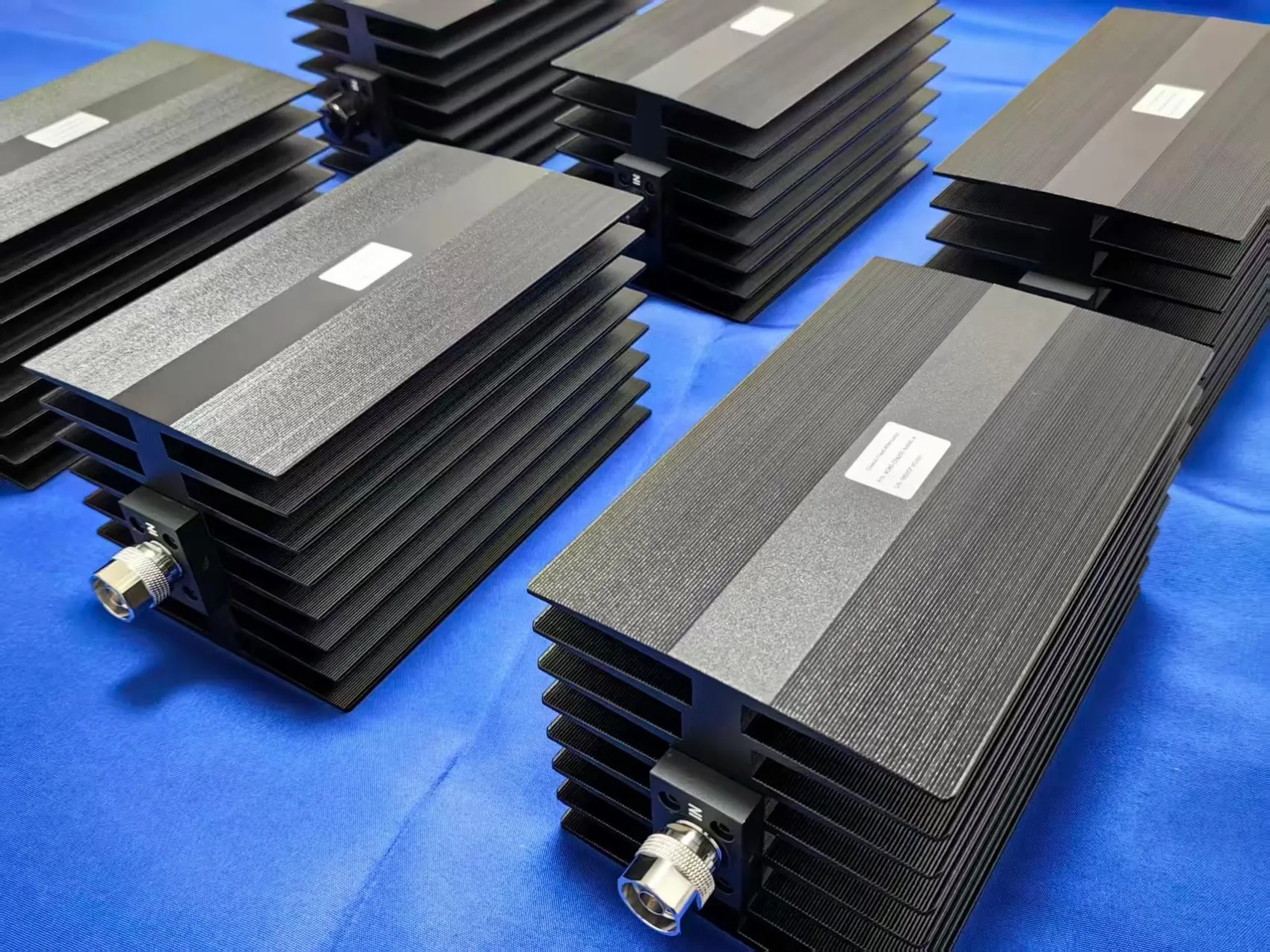
How Do You Choose a High-Power Coaxial Attenuator? Inside a 7.5 GHz, 200W Order That Shipped in 7 Days
The inquiry arrived with five specifics: a fixed coaxial attenuator, 7.5 GHz operation, 200 watts of input power, N male input, N female output. Then came the detail that told us the customer had been burned before: the N male end had to be hex nut style, so it could be properly tightened with a wrench instead of hand-loosened in service.
From first reply to confirmed shipment photos, this order took less than ten days — and the selection itself took less than thirty minutes. Here is how it came together, and what it teaches about specifying a high-power coaxial fixed attenuator without paying for "customization" you do not actually need.
Why a Hex Nut Is Not a Trivial Request
Anyone who has maintained an RF test bench knows the failure mode. A round-bodied N connector is installed, torqued as well as fingers allow, and then — months later, after thermal cycles and vibration — it works loose. The operator reaches for pliers. The pliers grip the body, the body rotates with the nut, and suddenly the center pin is taking torsional stress it was never designed for. At 200 watts, a compromised contact is not just a VSWR nuisance; it is a hot spot.
A hex nut on the male interface solves this the boring, permanent way: the body stays put while the mating nut turns. It is the mechanical detail that separates a component you service with a wrench from one you eventually destroy with pliers.
The moment we read that requirement, we knew we could say yes without a purchase order conversation. AO Microwave's existing high-power attenuator design already used a hex-nut N male interface. We replied immediately with close-up photos of that exact feature from a previous build — not a render, not a promise, actual parts — and confirmed there would be no additional customization charge, because nothing needed to be customized.
7.5 GHz Does Not Exist on a Datasheet — and Should Not
Fixed attenuators are specified by frequency band, typically DC–4 GHz, DC–8 GHz, DC–12.4 GHz, DC–18 GHz, DC–26.5 GHz and DC–40 GHz. A customer asking for "7.5 GHz" is really asking: which band guarantees rated performance at my operating frequency?
The answer was the 8 GHz version. It covers 7.5 GHz with margin to spare — no need to pay for the 12.4 GHz grade, and no reason to squeeze into a lower band with the operating frequency sitting right at the datasheet's edge. That is the whole logic of band selection: you buy the band that comfortably contains your frequency, not one that merely touches it.
The N connector itself was a non-issue: standardized under IEC 60169-16 (and MIL-STD-348 interface dimensions), N-type hardware is comfortably usable to 11 GHz and beyond, so 7.5 GHz sits well inside its capability. The remaining engineering work was thermal — at 200 watts continuous, the attenuator absorbs essentially all that energy as heat inside a finned aluminum body, which is why high-power attenuators look nothing like their little 2-watt cousins.
Thirty Minutes to Select. Ten Days to Deliver.
The entire selection — confirming the hex nut, matching the 8 GHz band, verifying N male/N female configuration and 200W rating — took under thirty minutes, because the answer already existed in a standard AO Microwave product. The customer placed the order three days later. Production was completed in under seven days.
One more step mattered. Before the shipment left, we sent the customer photos of the finished attenuator — the hex nut visible, connectors clean, marking legible — and asked for confirmation. Only after their approval did we book the freight. Nobody wants to open a carton a month later and start a dispute; a ten-second look at real photos prevents it.
The customer's closing comment was the one we value most: fast, accurate, and no markup dressed up as "customization." That last part deserves emphasis, because in this industry a "custom" surcharge for a feature a supplier already builds is not engineering — it is a tax on not asking the right questions.
Your 60-Second Attenuator Checklist
- Frequency first, band second: state your operating frequency and let the supplier map it to DC–8, DC–12.4, DC–18 or beyond — with margin.
- Power rating and thermal reality: confirm the rating is continuous or average power, and expect a finned body at 100 watts and above.
- Connector gender and style: N male input / N female output is standard; ask for hex nut on the male side if the unit will ever be re-torqued in service.
- Ask what is already standard: many "special requirements" are stock features. The honest answer costs a supplier nothing — and should cost you nothing either.
Frequently Asked Questions
Q: What does a fixed coaxial attenuator do?
It reduces signal power by a fixed, calibrated amount while maintaining a 50-ohm match on both ports. Typical uses include protecting sensitive receivers from strong sources, extending power meter range, and improving measurement-set matching during amplifier and transmitter testing.
Q: Can I use an N-type attenuator at 7.5 GHz?
Yes. The N interface is standardized (IEC 60169-16, MIL-STD-348) and usable to 11 GHz, so 7.5 GHz is well within range. Specify an attenuator rated to the DC–8 GHz band or higher so the frequency sits comfortably inside the guaranteed performance window.
Q: Why does a 200W attenuator look so bulky?
Nearly all 200 watts of input power is absorbed as heat inside the attenuator. The large finned aluminum body exists to spread and radiate that heat; without it, the resistive element overheats, the attenuation value drifts, and the unit eventually fails.
Q: What is the advantage of a hex nut on the N male connector?
The hex nut lets you torque the connection with a wrench while the body stays fixed. Without it, connectors loosen over thermal cycles and end up gripped by pliers — rotating the body and stressing the center contact, a genuine failure risk at high power.
Q: Does choosing a higher frequency band cost more?
Generally yes — DC–18 GHz parts cost more than DC–8 GHz equivalents — which is exactly why band selection matters. Match the band to your frequency with sensible margin rather than defaulting to the highest available.
Q: How fast can a standard high-power attenuator be delivered?
For this order: under thirty minutes to select, an order placed three days later, production completed within seven days, and shipment after photo confirmation. Standard-configuration parts move at that pace; genuinely custom ones simply take longer and should be quoted honestly.
Need a High-Power Attenuator That Matches Your Real Requirements?
Tell us your frequency, power, and connector details. If a standard design already covers your "custom" needs, we will say so - and quote within 24 hours.
Contact Our Engineering Team