
Jun 26, 2026News & Insights
How to Choose a Custom Waveguide Coupler for Satellite Communication Systems
Learn how to select a custom waveguide coupler for satellite communication systems, including coupling values, frequency bands, power handling and design considerations.
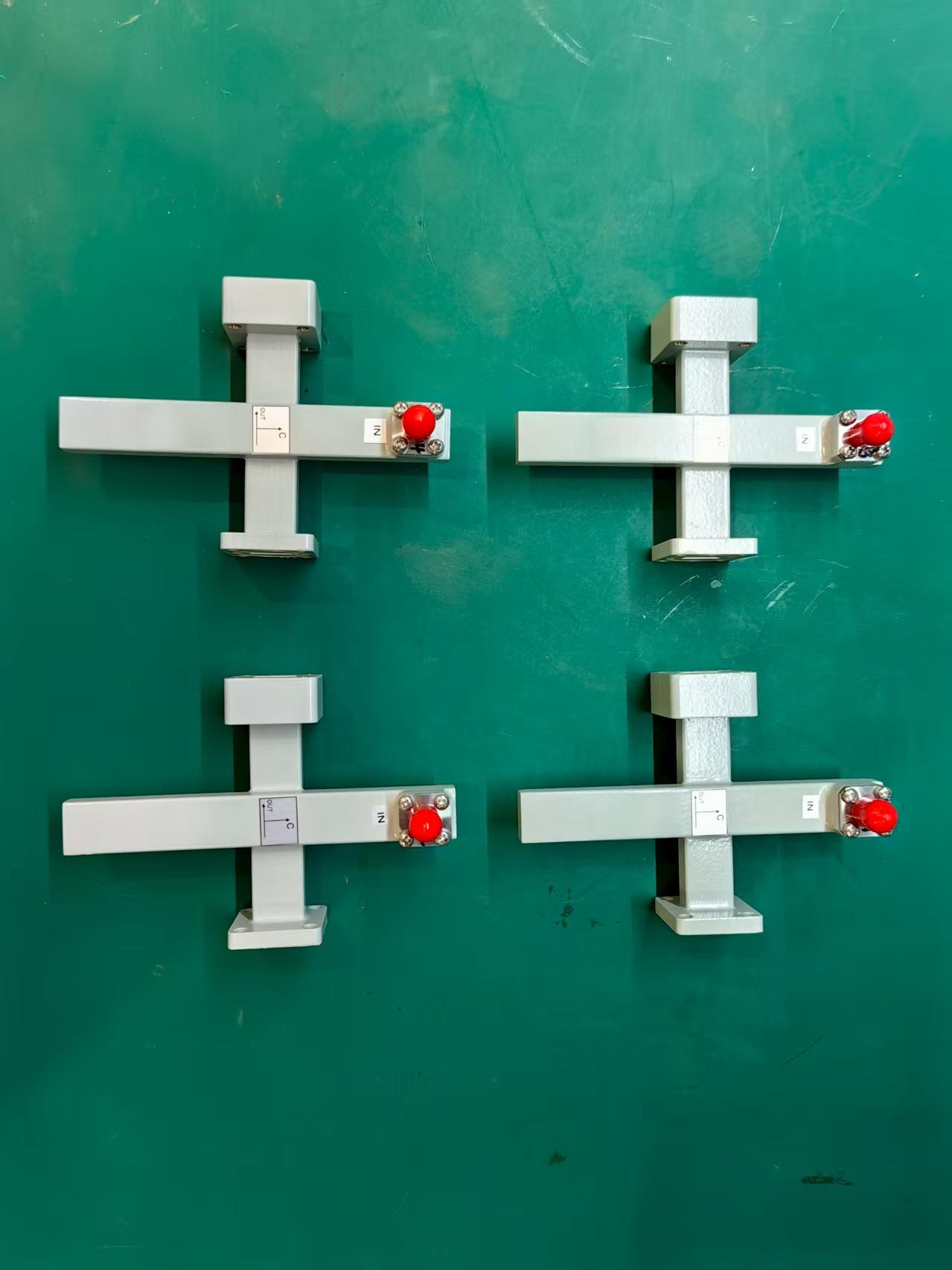
Modern satellite communication systems require highly stable microwave components to ensure reliable signal transmission. One of the most critical components in these systems is the waveguide coupler, which enables engineers to sample RF signals, monitor power levels, and perform system diagnostics.
However, many satellite applications operate under strict electrical and mechanical constraints. Standard couplers may not always provide the exact frequency range, coupling value, or power capability required. In such cases, a custom waveguide coupler becomes the best solution.
This article explains why satellite systems often require tailored waveguide couplers and what key parameters engineers should consider during the design process.
What Is a Waveguide Coupler?
A waveguide coupler is a passive microwave component used to extract or distribute a portion of an RF signal traveling through a waveguide transmission line. It allows engineers to monitor signal power without interrupting the main signal path.
Waveguide couplers are widely used in:
- Satellite communication systems
- Radar systems
- Microwave test equipment
- RF ground station infrastructure
Compared with coaxial couplers, waveguide couplers provide lower loss, higher power handling, and superior performance at microwave frequencies.
Why Satellite RF Systems Require Custom Waveguide Couplers
1. Multiple Frequency Bands
Satellite communication operates across several microwave frequency bands, including:
- C Band
- X Band
- Ku Band
- Ka Band
Each band uses different waveguide dimensions and requires optimized coupling structures. Custom couplers ensure the device operates efficiently within the required frequency range.
2. Precise Coupling Values
Coupling values determine how much RF signal is sampled from the main transmission line.
Typical coupling levels include:
- 10 dB couplers
- 20 dB couplers
- 30 dB couplers
- custom coupling ratios
Precise coupling values are essential for power monitoring and system calibration in satellite ground stations.
3. High Power Handling Capability
Satellite uplink transmitters can operate at very high RF power levels. A custom waveguide coupler can be designed with:
- optimized internal structures
- improved thermal performance
- high power tolerance
This ensures stable operation even in demanding satellite communication environments.
4. Mechanical Integration Requirements
Satellite systems often have strict mechanical constraints, especially in compact RF assemblies.
Custom waveguide couplers can be designed with:
- specific waveguide standards (WR series)
- custom flange types
- compact mounting structures
This simplifies integration with existing microwave hardware.
Key Design Parameters for a Custom Waveguide Coupler
When engineers specify a custom coupler, several parameters must be defined.
Frequency Range
The operational microwave band of the coupler.
Coupling Factor
The ratio of power extracted from the main waveguide.
Directivity
High directivity improves signal measurement accuracy by isolating forward and reverse signals.
Insertion Loss
Low insertion loss ensures the main signal path remains efficient.
Power Handling
Critical for high-power satellite uplink systems.
Proper optimization of these parameters ensures stable and accurate RF performance.
Typical Applications in Satellite Communication
Custom waveguide couplers are used throughout satellite RF infrastructure.
Satellite Ground Stations
Couplers enable power monitoring and signal sampling in transmitter chains.
Satellite Payload Testing
They are used during satellite payload integration and microwave performance verification.
RF Measurement Systems
Waveguide couplers allow engineers to analyze signal characteristics without interrupting transmission.
Microwave Laboratory Testing
They are widely used in high-frequency RF test environments.
Benefits of Using a Custom Waveguide Coupler
A customized design offers several advantages:
- precise coupling performance
- optimized frequency response
- improved system reliability
- compatibility with specific satellite equipment
- support for high power RF transmission
These advantages make custom couplers ideal for advanced satellite communication systems.
Looking for a Custom Waveguide Coupler?
If your satellite system requires a specific frequency band, coupling value, or mechanical configuration, working with an experienced RF component manufacturer can ensure optimal performance.
Contact our engineering team today to discuss your custom waveguide coupler requirements and find the right solution for your satellite communication system.