Share our success stories and industry insights

Prevent amplifier failure with the right directional waveguide coupler. Explore coupler design principles, key RF applications, and how to reduce your BOM costs.

Confused by the types of waveguide couplers? Compare Broadwall vs Cross-Guide couplers. Learn how to balance directivity, space, and BOM costs for RF systems.

What is a waveguide coupler? Learn how directional couplers work, compare cross-guide vs broadwall types, and optimize RF power monitoring for your next project.

Struggling with high power RF transmission? Discover why waveguides prevent voltage arcing and thermal melting, and how industrial-grade parts save BOM costs.

Why use waveguides instead of coaxial cables? Discover how waveguides offer ultra-low loss and high power handling for microwave, 5G, and satellite systems.

Confused by WR waveguide sizes? Demystify EIA vs IEC standards, avoid overpaying for aerospace-grade, and choose the right RF components for your next project.

Waveguide vs coaxial cable: which is better for high-frequency RF systems? Compare loss, power handling, frequency range, and applications to choose the right solution.

What is a waveguide and how does it work? Learn the fundamentals of waveguides in RF and microwave systems, including structure, types, and applications in communication and radar.

When it comes to high-performance RF and microwave systems , choosing the right filter is critical to ensuring signal integrity, system efficiency, and long-term reliability . At AO Microwave , we

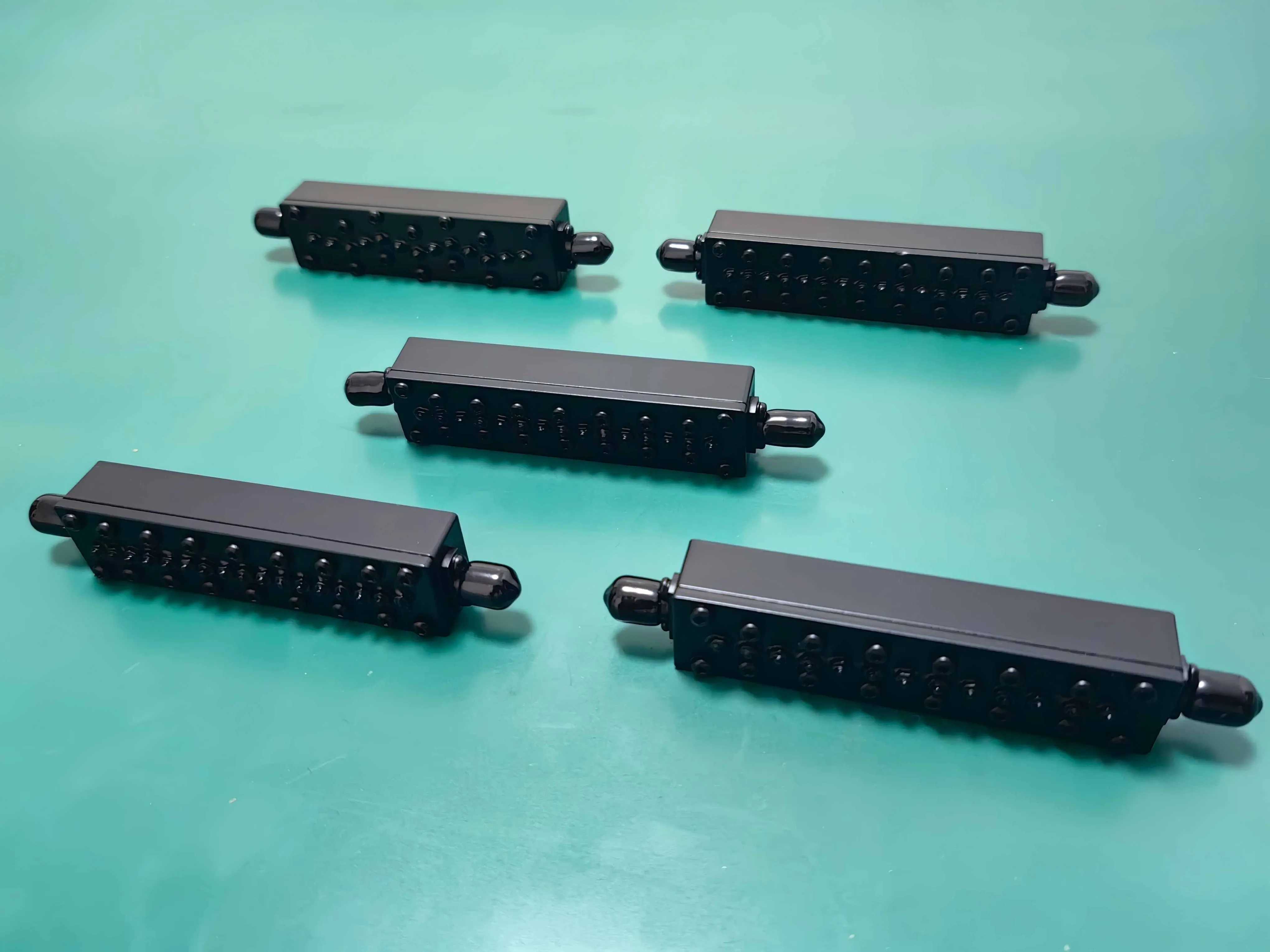
Selecting the right coaxial suspension line filter is a critical step in designing high-performance RF and microwave systems . While these filters are known for their low insertion loss, high Q fa

In modern RF and microwave systems , filtering is essential to ensure signal integrity, reduce interference, and maintain system stability. In previous discussions, we explored what a coaxial suspen

In modern RF and microwave systems , maintaining signal purity is not optional—it is essential. As frequencies increase and system architectures become more complex, engineers must deal with signal